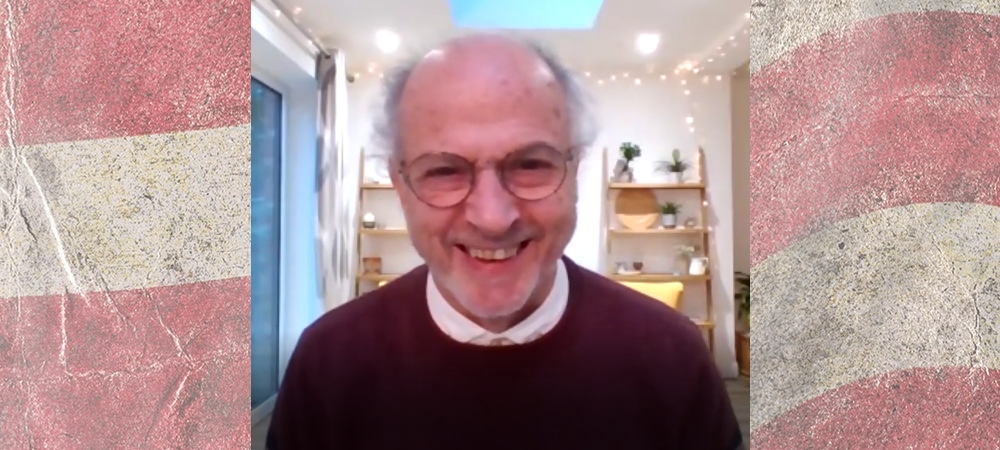
Kerry Minnear is best known as the keyboardist, vocalist and one of the principal composers of Gentle Giant, whose blend of intricate arrangements, virtuosic musicianship, and eclectic influences established the band as one of progressive rock’s most distinctive acts. A graduate of the Royal Academy of Music, Minnear brought a classical sensibility to the group’s compositions, contributing not only keyboards but also cello, vibraphone, recorder and a host of other instruments. His fascination with counterpoint, medieval music and unconventional arrangements helped shape the band’s remarkably individual sound throughout their ten-year career.
Following Gentle Giant’s dissolution in 1980, Minnear largely stepped away from the mainstream music industry, although he continued to pursue musical projects, including composing the soundtrack for the 1996 computer game Azrael’s Tear. He later reunited with former bandmates in Three Friends, while remaining closely involved in preserving and managing Gentle Giant’s musical legacy through Alucard Music.
More than four decades after the band’s final album, Gentle Giant’s music continues to inspire musicians and listeners drawn to its extraordinary combination of technical complexity, adventurous composition and sheer musical imagination. TPA’s Basil Francis sits down with Kerry to discuss the newly expanded Front Row Center box set, the creative processes and musical influences that shaped Gentle Giant’s distinctive sound, the band’s changing musical direction towards the end of the 1970s, and why their appetite for experimentation ultimately proved so difficult to recapture.
BF: Thank you so much for talking to us today.
KM: Hello!
BF: We’re here to talk about the new Front Row Center box set, which was originally released on vinyl in 2022, and is now being released on CD, expanded with two extra performances. I wanted to ask if you’ve actually listened to all of it.
KM: I haven’t. I only received it a couple of days ago. And because I was getting interviews with people like yourself, I thought I needed to know how it is, so I requested it. And it’s beautiful. It’s a lovely product. As you can see, it looks wonderful.

KM: I have listened to a couple of them. I listened to the one that was recorded at Capitol.
BF: I was just about to ask you about that one because I think that CD is fabulous. After six CDs of scratchy concert recordings, there’s suddenly this beautiful, pristine, crystal-clear audio from the studio. What did you make of it?
KM: Well, I loved it. As you say, so many of the live recordings that have been made are so difficult to hear the detail; although you can often feel the energy and the groove and the fun that we’re having, because that’s one of the things I think we used to do a lot on stage. We just enjoyed each other’s playing and so on. But with the lack of detail, it just diminishes it somewhat.
But this was like having a live performance, but with the clarity of having a studio. Except it wasn’t. It was inside, so it was lovely. I can’t remember much about the sessions, other than they were in a studio, and they must have been at the time when we were touring with that material. So it’s very confidently played, and there are some lovely solos on it.
BF: I don’t know if you agree with me or not, but I thought that the sound quality is actually better than some of the albums. Given that the songs themselves are mainly different arrangements to the original versions, are there any tracks on this recording that you would consider superior to the album versions?
KM: Yeah, I haven’t done a comparison as such. I think one of the main differences is always that the initial recording was probably never going to be quite as good as something that’s been rehearsed, ready for live, and so on. And there’s almost a throwaway energy once you know something really well; you’re not being careful anymore. There’s a release of, “I don’t care anymore. This is going to work.” And there’s that spontaneity of live performance.
Listening to the band, the recordings that I enjoy most, on the whole, are the live recordings. When I hear that we’ve locked in, and we’re just enjoying the music together, and you can hear interplay across the stage. So that’s always going to have the edge, regardless of quality, in a way.
I’ve never been a hi-fi man. Even I can listen to something through a little tiny speaker, and I can hear whether it’s got that heart and energy in it. Yeah, and that’s what counts a little bit more than sound quality. It’s nice to have both, and that’s what the Capital thing is. So this set does capture both.
BF: What you just said about not liking hi-fi is reflected in the booklet. You said you were never a technology guy. You never kept up with the latest keyboards and so on. I think I’m the same sort of way. I’ve never been a true audiophile, or into lossless or anything like that. If I just have a decent pair of headphones, I’m good.
KM: It’s always nice to have both. But you know, I’d rather hear something really played with conviction, and I was brought up on Radio Luxembourg. I don’t know if you know about that, but in the old days, one of the only radio stations that played interesting rock music was from Luxembourg, and it would just phase in and out all the time, but you could still hear whether you were enjoying it or whether it was good. And so that’s preferable.
BF: Did Radio Luxembourg ever play Gentle Giant music?
KM: No, no. That was when I was little.
BF: Would the energy when you were playing in a studio during those Capitol performances be very different to playing in front of a live audience?
KM: Well, since there was no audience, that would change it. But, I suppose, it was because the set was ready for live and we were already playing it.
When we recorded in the studio, we very often layered. We didn’t just record things all at once. And looking back on those Capitol sessions, I’m pretty sure a lot of it was just done in one take. Everyone playing together. So that would all add to that spontaneity, and I think it was because we did enjoy each other’s playing, and quite often we tried to put each other off. We got a bit bored playing the same little things, and now it frustrates me when I hear it because I can tell we’re bored and we’re playing with it, and people haven’t even heard it as it was in the first place.
But it is exciting, and we were talking about it. I’ve been chatting to the lads lately about all this, and reminiscing, and yeah, there was a lot that we got from changing things slightly to just keep ourselves amused and keep the others on their feet, and so on.
BF: On a few of the recordings, John Weathers can be heard addressing the audience. I always appreciate when artists give a bit of their personality on stage. If they just come on and just play the music and shuffle off and don’t say anything, you’re not really getting anything that you wouldn’t get from the record. But, with Gentle Giant, you’re already getting newly revised arrangements of stuff, and then you see a bit of the band’s personality as well.
KM: Well, yeah, certainly did our best. I mean, I was always reticent. I have to admit, I don’t enjoy being the centre of attention, or even being observable. But Derek and Ray, and originally Phil, the three brothers, were so used to entertaining from the Simon Dupree days. So they brought a real heritage, if you like, of how to entertain and to engage with the audience, and that really stood us in good stead all the way through.
BF: I spoke to Derek actually this summer. We did a separate interview about the new In a Glass House remix, and I could tell that he’s extremely comfortable with talking and being the face of the band. And it’s interesting to read about the different personalities of the group. I feel like the author of the booklet did a really good job highlighting your personality and John’s personality. He paints you as more of an introverted, academic…
KM: I wouldn’t go that far. *laughs*
BF: … while John is more of a rowdy Welsh extrovert. And then there’s a really funny story about how he got drunk in Canada and then got pushed out of a taxi and almost froze to death.
KM: Don’t know that one.
BF: You’d have to read the book.
KM: I will!
BF: Or you could ask him yourself.
KM: But I think that’s Alan Kinsman, isn’t it?
BF: Yes, that’s right, he interviewed you guys.
KM: He’s been a friend of all of us – not so much Derek because Derek’s always been in America. But yeah, we often meet up in Wales at John’s house. We often get down there, and I meet Alan.
BF: It’s nice to know that you all reconnect often.
KM: Oh, we do. Yeah, very. I’d love to do it more. I really would, but with the big pond between us, and Gary’s over the other side…
BF: So, when you reconnect, do you play the music as well? Do you bring your instruments or anything, or is it just a chat?
KM: No, no, we don’t do that. But I think Gary still plays a lot, and I play a lot. John is physically… he’s got some difficulties, but you’d never know it talking to him. But that’s why he’s not still playing. I’m sure he would be if he could. And Derek’s been busy, being the frontman of lots of things.
BF: He’s a busy chap. When you’re playing, is it as a hobby, or are you finding ways to do studio work or anything like that? What kind of things are you up to?
KM: I’m still trying to write some original material for my daughters. I have two daughters that sing beautifully together, and I’d love to furnish them with something. And they’ve been working in their own right in different things, but I’ve yet to come up with something that I feel pleased with.
So I have got a file that’s got songs in it that are progressing, but I find it a little bit tricky working with computers, which is obviously the way forward. But as you can tell from the live photos, I’m used to lunging. You know, there are series of keyboards that may or may not be working, and I can find out and then lunge at it. It’s quite nice to be able to do that. Nowadays, it’s all screens and menus, and I’m not great at that. Ray was great, bless him. He was a great technician, and used to get some great noises from his stuff.
BF: That leads me into another question I was hoping to ask. There was a really illuminating part in the booklet about how you actually composed your music. In it, you said that you started with a basic idea, committed it to tape and rewound the tape over and over again until you found something that fit. When I read that, it suddenly made sense how you were able to write all those labyrinthine parts.
KM: It’s very much an exercise in patience. Ray used to work differently from me because he usually wrote on the guitar, so he would be using one line at a time. My keyboard parts were always really unpianistic because there were no chordal shapes for my hands to follow. I had to follow him where he went with individual parts, but that was very good for me. It’s very broadening. But I would start with an idea, probably at the piano, and find that depth in it and decide that I’m going to work on it, and then I would just try to lay another part over the top.
One of the last things we often considered was the vocal. Songs like Aspirations and Think of Me with Kindness, ballady tunes, were done just piano and vocal. I would have worked on those, but the stuff that the band played, I was often looking for something for Gary to play, which was not just power chords, but a line that would fit together against the bass line. That was very often just a matter, like you said, of just playing lots of stuff, saying “That didn’t work… Oh, but that bit did. I’ll hang on to that bit…” and then try, and so you’re discovering stuff that way through improvisation. It’s different from the great masters who would probably have heard it all in their heads and just written it.
But we worked aurally; we were playing over the top of stuff. Other parts might arrive when we were actually doing the recording, because we would have hired instruments in the studio. The band would just let me improvise on the hired instruments – a harpsichord, say – and see if I came up with anything else. Most of it would be rubbish, but occasionally they might say, “That was nice. Can we put that in?” We were always looking for something that brought a new element to the harmonies and the textures. So yeah, there was no real one set way.
BF: Figuring out how music is composed is fascinating to me. You were with Gentle Giant from the start in 1970 during the rise of progressive rock, and when I spoke to Derek, he was adamant that the band never identified as prog or aligned with other bands. Even so, it feels like more than a coincidence that you were making such progressive music right then. When you were composing at the beginning, were you drawing inspiration from the creative boom around you—bands like The Beatles, Yes, and King Crimson?
KM: Yeah. Well, I agree with Derek in the sense that he probably mentioned we’ve got a little bit of spiel that goes with this. Which is easy for us to slot into, so I’m trying to make it fresh for you and me.
But when I joined them, I had just finished a course at the Royal Academy. So I’d been steeped in classical stuff. Although I had a great love of… without knowing it, I knew what groove meant, which a lot of people at those institutions didn’t understand what that was about: jazz swing and all of that.
So I had all that as something I was fond of, but mostly when we got together, I drew on the Renaissance stuff that I just discovered, which I loved. Ray wasn’t quite so keen, but he tolerated it, and he was more of a Bartók man on his violin, so he was a bit more obscure and a bit more contemporary. But we found things that we all enjoyed and worked on them.
And as far as influence, I didn’t know about progressive rock. It wasn’t a term I knew. One of the first bands I ever saw was King Crimson. When I heard 21st Century Schizoid Man, I was so overwhelmed by the volume. I almost thought, “Oh, it’s too loud.” But the power of it got to me.
I also saw Pink Floyd over in a pub at Ely in an upstairs room, before they breached into the mainstream. So I knew about that, but I hadn’t been a follower or bought any records.
BF: Hypothetically speaking, if you had found each other in 1965, would you have still been making the same music?
KM: No, I certainly would have been short of ideas about five years earlier, because I’d been playing in a functions band at school. I was playing Beatles and Rolling Stones and a few imports from the States. That’s where I cut my group teeth, as it were.
BF: But if you were five years older and had had your Royal Academy education by then?
KM: Who knows?
BF: As a younger listener, it’s fascinating to me to wonder why the prog explosion was so concentrated in the late 60s and early 70s.
KM: Prog’s a big umbrella, isn’t it?
BF: Of course.
KM: For me, prog is so big that I don’t really know how we fit into it in a way because so many of the things we did weren’t very proggy. Really, we did indulge in long solos over chord progressions. That tends to be one element.
BF: The time signatures… that’s a huge giveaway.
KM: Well, perhaps, but people ask, “What time did you write that in? Where’s the one?” and things like that. And we never worked it out. We just said, “This is how it goes.” We just played it how it felt.
And so I never set out to do weird things. It’s just how it came out. And when John joined us for the Octopus album, that gave us something that was lacking on the earlier albums. I think the that that that steady rhythmic influence that gave us the right to do weird things over the top without losing people too much.
BF: So we’ve talked about the beginning of the band’s career, and because this box set does focus on the last years of the band right up to 1980, I did want to talk about the end of the band’s career.
As I was doing research for this box set, it was the first time I ever listened to the last two albums by the band because I’d never approached them before, just because of their reputation. But I finally listened to Giant for a Day!, as well as Civilian, and in my personal opinion, Giant for a Day! was a bit shocking in how simplistic it was compared to what had come before, and then Civilian was a bit better. There were more refined ideas and catchier songs. To be honest, I actually put Civilian on a few times afterwards. I wanted to know what your personal opinion was of those two albums.
KM: It’s changed a little bit. This is another stock answer, I’m afraid, but I did find that period a bit difficult, because I didn’t know how to contribute. I think I’d probably be better at it now than I was then. It was a very different feel.
BF: So you were providing fewer ideas at the time?
KM: Yeah. I don’t think I contributed any less; it was just a different thing than we were trying to do, but I don’t know if I was that gifted at it, but I had a go. Giant for a Day! I did struggle with it, but with Civilian, I found a couple of those tracks quite powerful.
BF: As a journalist, I can only speculate what changed between The Missing Piece and Giant for a Day! for the music to change so drastically, I wanted to ask what practically happened within the group. Was there ever a conversation where someone said, “We can’t write how we used to anymore,” and if so, why?
KM: I don’t think anyone ever said that we can’t write like we used to. We had lost some of that adventure. Ray, particularly, was quite quick to embrace something different, and he began to write in a more punky sort of way. He could see the value of what punk was about: people being able to express themselves in angry ways. I don’t know if he would look back now and say it was maybe not the best thing, but at the time he led the way with Giant for a Day, the track itself.
I’ve always been a bit of a servant, so I tend to write what the band is looking for, so I was happy to try and contribute what I could towards a more rocky thing. On different days, you wake up in a different frame of mind, and you want to listen to different stuff. So I think there was an element where we were genuinely trying to find a voice in that style.
But I think there may have been a decision commercially to try and broaden our impact. But we needn’t have worried. It’s clear to see that the earlier albums are the ones that tend to win people over.
BF: Well, the earlier albums are really the ones where Gentle Giant had that unique voice, while the final two just seem like an attempt to capitalise on a trend and become mainstream, but unfortunately it wasn’t in the cards for you. I’m sure that’s more obvious in hindsight.
I don’t fault Gentle Giant for trying to do what you did. I think all the progressive bands at that time were under a lot of pressure and only a handful managed to transition with any grace.
KM: That’s fair enough.
BF: When you were in that transition, was there any part of you that wanted to return to more complex writing?
KM: Yeah. We moved to the States to write Civilian. Ray and I both found it hard. I was in a flat just around the corner from the Chinese Theater. I’d just had my first child, Sally, and all I had was a Wurlitzer piano and a tape recorder, and that’s what I was working on.
Ray and I both struggled, but we got those tracks in the end, and I found them a lot stronger than some of the ones on Giant for a Day!.
BF: I agree, and it’s hard to say why. I think there’s just a bit more soul, energy and meaning to those tracks, whereas Giant for a Day! feels more like an exercise in trying to be as simple as possible. Like “This is our challenge to play simple, 4/4 music.” But on Civilian, there are proper songs. That’s how I feel about those albums.
KM: I’d endorse that.
BF: When you were playing that final tour, I noticed you played six out of the eight songs from Civilian. Given that you knew it was your final tour, were you not tempted to play some of your earlier, iconic material?
KM: I think it was all about the new album, really. When it was booked, I think the band was still intending to continue. We still had the contractual obligation to Chrysalis.
The decision to stop came at the beginning of the tour, and so we went into the tour and planned it with a view to it just promoting the album rather than saying “Do you remember this one, do you remember that?” Which would have been good, now you mention it. *laughs*
BF: It’s just funny to me, because I reckon if you were to do a reunion gig now – which I know isn’t really in the cards – I don’t think you’d be playing six Civilian tracks. I don’t think you’d be playing any Civilian, to be honest.
KM: Probably not, although I’ve performed Inside Out and that was quite a powerful song to perform live.
BF: I would be happy to see that. I became rather addicted to that song; I was playing it in the car on a loop, both the live and studio versions. I like the way it keeps going; it’s quite hypnotic.
KM: Like Ravel’s Boléro.
BF: Well, it’s been fantastic to talk to you, Kerry. I’ve learned a lot about the inner workings of Gentle Giant today.
KM: You’re welcome. Bye!
LINKS
Gentle Giant – Website | Facebook | Boxset info on Gentle Giant site | Boxset info on Burning Shed/Madfish | YouTube | X | Instagram