
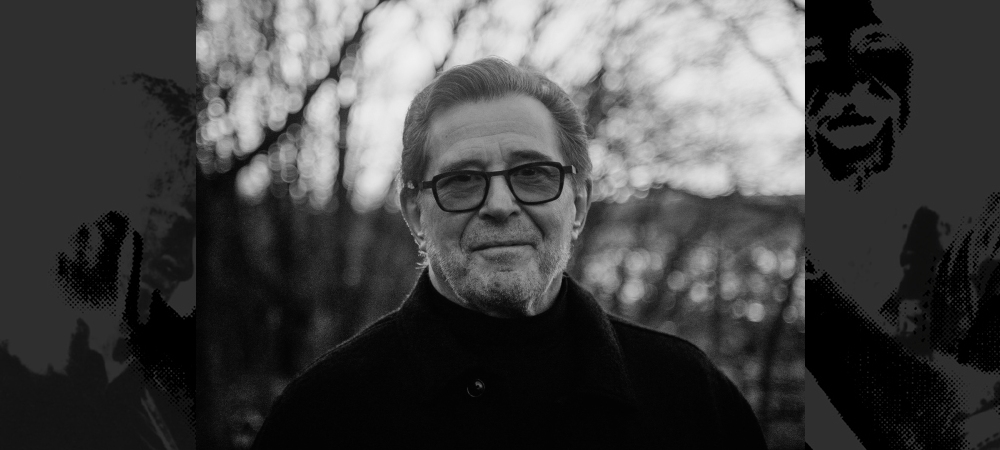
Derek Shulman is best known as the lead vocalist and frontman of Gentle Giant, whose blend of intricate compositions, virtuosic musicianship and eclectic influences earned them a devoted following throughout the 1970s. Alongside his brothers Phil and Ray, Shulman helped shape the band’s distinctive sound, which drew on rock, classical, jazz, folk and medieval music while pushing the boundaries of what progressive rock could achieve.
Following Gentle Giant’s dissolution in 1980, Shulman embarked on a successful career in the music industry, holding senior executive positions at major record labels including PolyGram, Atco and Roadrunner Records. During his time as an executive, he played a role in signing or developing artists including Bon Jovi, Dream Theater and Slipknot, giving him a unique perspective from both sides of the music business.
Last year, he released his book of memoirs entitled Giant Steps: My Improbable Journey From Stage Lights to Executive Heights. More recently, he has used the power of AI to restore and remix the band’s transitory 1973 album In a Glass House. TPA’s Basil Francis sits down with Derek to ask him how he used AI for this project, the musicality of Gentle Giant and how he came to launch the career of Dream Theater.
Hello, Derek! Very nice to meet you. We’re here to talk today because of the upcoming release of the new In a Glass House remix, which happens to be my favourite Gentle Giant album. The first time I heard it, I was scrolling on Facebook, and the advert for it popped up. Even through my tinny iPhone speaker, I could hear that it sounded really different. Afterwards, I was selected to review the album, and as soon as I put on The Runaway, I heard the enveloping bass, improved clarity and punchy drums. It was an incredible sonic improvement, far more immersive. This was an album that I already thought sounded good, but now it’s light years from what it used to be.
How do you feel about the final product?
Oh, I’m delighted by it. Sonically, this album has gone from like being kind of “okay, but not really” to becoming one of the best-sounding albums we’ve got. It’s light years away from where it used to be.
Originally, In a Glass House was recorded, written and mixed in about four to five weeks. And we had literally no time to really make it sonically the way we wanted to do it because we had an upcoming US tour and Columbia was supposed to put the record out and we were supposed to be promoting it. Ultimately, Columbia got the record, and they deemed it too uncommercial to release. And so we went over to tour the album, and they didn’t put it out, but it came in the US on import as probably the biggest import of that year.
Concerning the old feelings that you used to have about this album: did you still have those in the process of remixing this album, or did they melt away now that it sounds better?
The old feelings were to do with this album. In a Glass House was the first album we recorded without my brother Phil. Originally, we were a six-piece, but he left, and then we were a five-piece. So Ray and I took on the mantle of being the co-leaders, and I was the monkey in the front of the band.
It was a tough one because Phil, my brother, had been with us from the start. We were three brothers in the band, and suddenly he wasn’t there. So we had to sort of rethink who we were, what we were and how we were going forward. It was a tough one emotionally and a bittersweet experience; a tough record to make.
Now I can look back and be objective as opposed to subjective. I’ve been working with an incredible producer/engineer called Eber Pinheiro from Brazil. It’s gone from one of my… I wouldn’t say least favourite… I knew the music was good, but listening to it was hard both emotionally and even sonically.
And when I listened to it after remixing, I was almost in tears from how much better it sounded. So now this album is probably one of the best albums we made. Now I could hear the various parts so well and so clearly. And Ray – who unfortunately passed away a couple of years ago – he would love it because his bass lines are coming through and the drums are coming through the way they should, and all the parts are clear, and everything just comes together. So it sounds really, really powerful, and I’m just delighted by it, actually.
I’m so glad that restoring this album has been a healing process for you, because I understand how hard it can feel to be good about something you’ve produced when you can sense the imperfections in it.
A lot of the comments on the advert I mentioned before were wondering how this album was remixed when the master tracks for this album had gone missing. Steven Wilson skipped this one in his Gentle Giant remix project. You’ve mentioned in previous interviews that AI was used to remix this album; could you let me know in more detail how you used AI?
AI was simply used as a way to separate the tracks. That’s all. We didn’t have AI produce anything; everything you hear was originally on the album. Eber was able to produce ten to twelve stems. This is brand new technology which we used to separate the twenty-four tracks. And it was incredible how he did it because we were able to separate the kick drum from the snare to the cymbals, the bass lines, everything. And there were no artefacts, absolutely zero. So we were able to get it back down to what we wanted.
Yes, it sounds really authentic. I suppose I’d been a little on the fence about AI in music production before, but as soon as I heard this new remix, I could tell that this was the way forward. The proof is assuredly in the pudding.
The program that we used is just technology. That’s it. If we were in the studio today, we’d use a bit of reverb, we’d use a bit of echo, or we’d double-track vocals or whatever. That’s all technology used to enhance the sound as well; that’s all this was.
This technology has me excited to hear other sonically improved albums that haven’t had the resources to create remixes until now; for example, Carmen, who also had their first two albums produced by Tony Visconti, just like Gentle Giant.
I wanted to ask a specific question about a song from In a Glass House. As a fan to an artist, I’ve always wondered about the coda of Way of Life; after the song seems to come to a natural close, there are some organ stabs that last about two minutes afterwards. What was in your mind when you were composing that particular ending?
Funnily enough, that’s the track we put out for the public to hear before the album is released to hear what the new mix sounds like. Before that ending, the theme that Kerry composed is majestic.
Oh, I know. I’m a drummer, and I always go so hard whenever I’m playing along.
And afterwards… why? Just because. Because we wanted to. Because that’s who Gentle Giant is. We could have ended it with a full stop, but we wanted to end it with something that drifted into nowhere. That’s who we always were; we wanted to experiment with something that no one else was doing.
It’s not what most people would have thought of. Let’s talk more about the musicality of the group. As a drummer, what I find so satisfying about learning and playing Gentle Giant music is that it’s like conquering a difficult video game where you need to memorise all the parts. Were you conscious of this aspect of the music when you were writing, or was it something that came more naturally to you?
Our boredom threshold was very high. Any time we had four to eight bars of the same thing, we’d stop and try something else. But I only contributed about 10% to 15% of the music; Kerry and Ray were the main composers, and they’re classically trained. So when you hear Gentle Giant music, it’s all thematic, even the vocal lines. You’ll hear the theme of the keyboard part later on in the bass part, and then you’ll hear that in the guitar parts and even the vocal parts. So there’s not a lot of strumming along with three chords and a drum beat. They’re interlocking parts, but they come together in a way that I guess a lot of classical music is put together.
We weren’t self-indulgent, and we didn’t take ourselves as seriously, either. We took our music seriously, but we had a lot of fun doing what we did to interplay those kinds of parts and make them work together. John on the drums and Ray on the bass were the glue that kept these integral parts coming together.
On the cover of Gentle Giant’s second album, the band’s manifesto essentially says that you’re throwing all of your combined knowledge into your work to make songs as unique and adventurous as possible. A lot of bands have followed suit ever since, but not many of them can balance complexity and musicality as well as Gentle Giant did. How were you able to know where to find that line?
Honestly, when we were together, there was no script to adhere to. We were a group of highly trained musicians, but there was no real plan. When we came together, it was like an open book. We just took the influences of our collective musical tastes and upbringing, stirred them in a pot, put it in a funnel and out dripped the sound of Gentle Giant.
We lived in Portsmouth on the South Coast and didn’t consider ourselves part of a scene. In those ten years, we worked our arses off to make twelve albums. When we weren’t recording, we were writing; when we weren’t writing, we were rehearsing; when we weren’t rehearsing, we were recording. And we were also on tour all of the time. We devoted an enormous amount of time to perfecting our music, and what you hear is the product of that work.
Let’s switch the conversation to something close to my heart. I actually have you to thank for being here and interviewing you today, because back in 2008 I was introduced to a little band called Dream Theater, who you signed back in 1991 when you were the president of Atco Records. Dream Theater was my gateway to progressive rock as a genre, and I wouldn’t have discovered them if they weren’t as prominent as they were. I wondered what you first heard in their demos that made you think they would be successful?
Dream Theater was an unusual one. As you know, I was president of Atco Records and one of my A&R guys told me there was a guy called Mike Portnoy from Dream Theater. They were new, but we’d basically heard of them. They had one record out before, and they were dropped.
Mike came in, and I asked what he had, and he gave me a four-track demo with no singer on it. I listened to it in the office with him, and it sounded really great. But there was no singer. So I told him, “I think what you’re doing playing-wise is just incredible. I’m going to give you six months and some money to develop the band and find a singer. Then you can come back, and we can hear what you’ve got.”
Within about six to seven weeks, Mike called me and said, “We’ve got a singer, and we’ve recorded vocals on top of this stuff. In fact, we’ve done about 10 or 11 songs.” So they walked in, and I met the singer – his name was James, from Canada – and they put on the first track, Pull Me Under. As soon as I heard it, it was exactly what I hoped I would hear.
After that, I told Mike that we’d sign them to a deal to go into the studio and make an album. They came in and finished the album – Images and Words – and we figured that we could get Pull Me Under on the radio and MTV; back in those days, before the Internet, that was the only real marketing. We edited that track down from eight minutes to about four, and it became a huge hit record for them, and Dream Theater were on their way.
Tell me more about that. As a huge fan of Dream Theater, I’ve always been shocked that the heavy, progressive Pull Me Under was their breakout hit and not a more commercial song like Another Day. What are your thoughts about that?
We had a great team when it came to marketing music. We noticed that this track had a chorus, but it didn’t come in until three or four minutes, so we had to edit it down to come sooner. At first the band were sceptical about getting it edited, but I convinced them to get it edited because it would be a slog to market the album otherwise back in those days.
It’s something that Dream Theater and Gentle Giant had in common, since our music was also tough to get on the radio. Back in the late 70s, AOR had changed things, and you needed to have a hit song to help the album become a hit. So that’s what we did for Dream Theater, and they agreed to go along with it, and sure enough, it really worked for them.
I’m really happy that it took off and that we’re still great friends. I’m glad Mike’s back in the band and that Jordan became the keyboardist, and the band are still fantastic.
I think Dream Theater has evolved since, with each album sounding different from the previous one, but the credit has to go to you for giving them such a large jumping-off point, which allowed them to continue and thrive. So thank you for that.
I just wanted to show you the new vinyl edition of In a Glass House. As you can see, it’s got all the bells and whistles, including the die-cut window cover, and if you’re in America you can also get the clear vinyl.
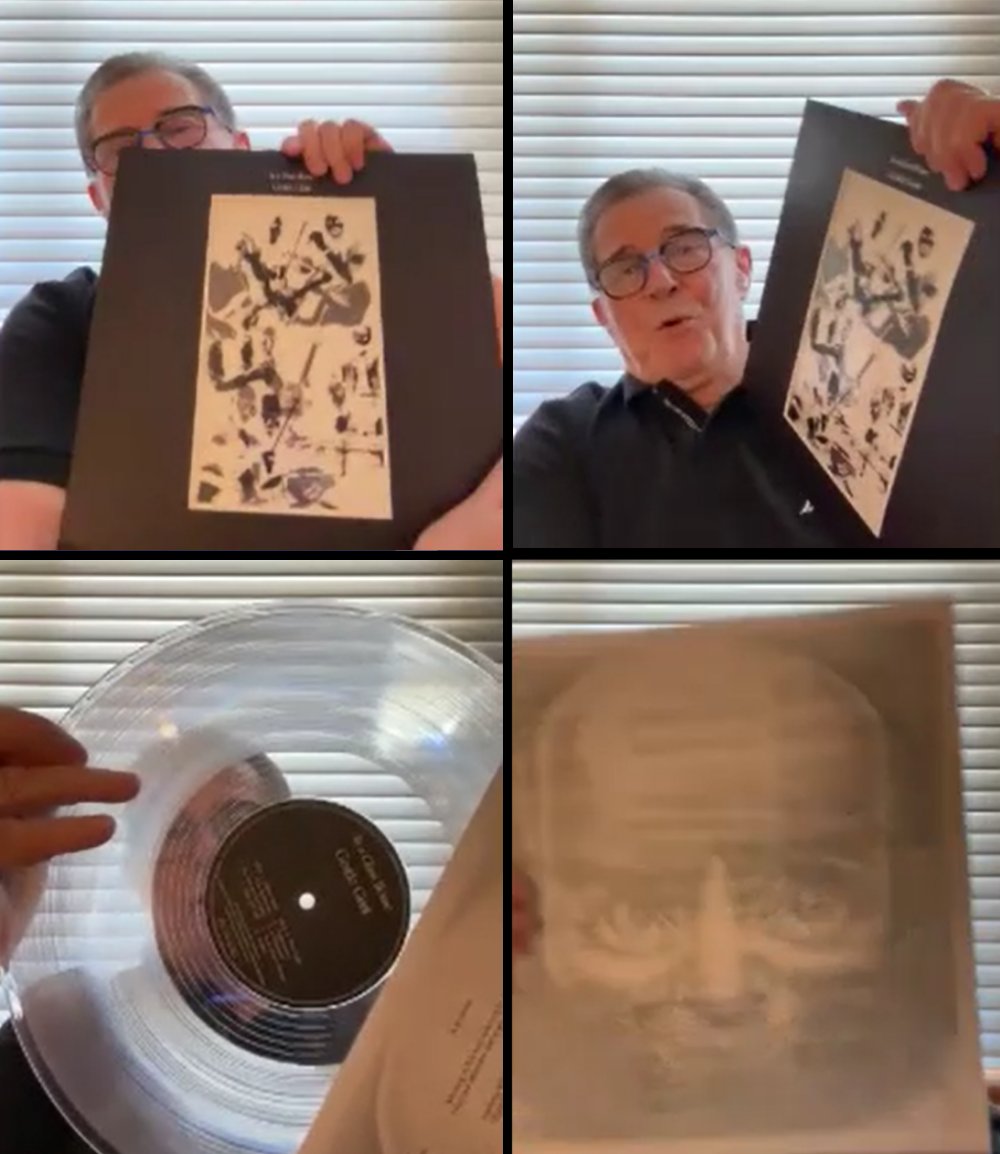
That looks so nice. I’m really envious. I’ve had a lot of fun listening to this all over again. I think it’s Gentle Giant’s best because it has more of the harder-tinged prog that I like.
Me too. Actually, it’s gone from being one of my ‘not so great’ records to being among my most favourite.
It’s funny how Experience can really shape how you feel about something, if you’ll pardon the pun.
Absolutely.
It’s been a great pleasure and privilege to speak to you, Derek. Thank you so much.
Thank you, Basil. Nice to speak to you as well.
LINKS
Gentle Giant – Website | Facebook | YouTube | X | Instagram


