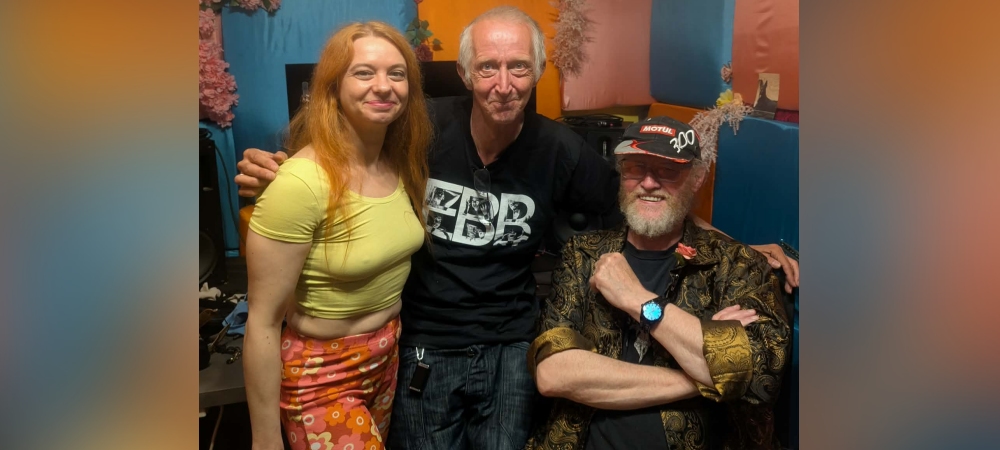
On Friday 24th July 2026, EBB were preparing for an intimate show that evening held at their home base, The Lodge. During the afternoon, two of the band’s central creative forces Finn McGregor (known affectionately as Bad Dog) and Nikki Francis kindly agreed to chat with TPA’s Chris Simmons. Collectively they talk through the band’s ‘behind the scenes’ approach to the writing and production side of The Mirror, the band’s most ambitious and critically acclaimed album to date.
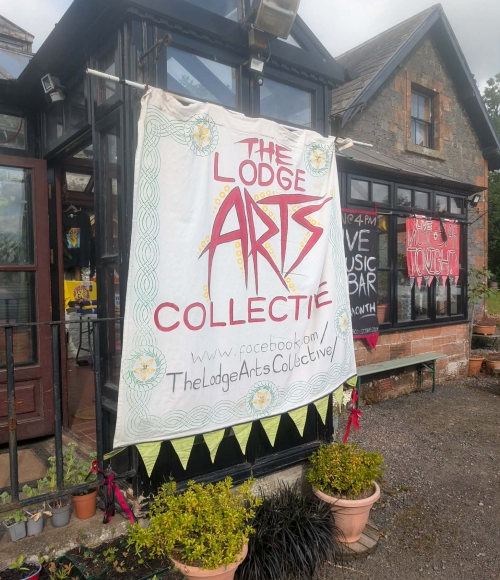
Many thanks for agreeing to do this for TPA. So… the idea behind this afternoon is to offer an insight as to what goes on behind the scenes. A look into how the band approach their song-writing, how the songs develop and how they go about the recording and production. At the end of last year you released The Mirror, so I’d like you to talk us through the writing process, ie how the songs start off… I believe Erin writes much of the material. So I’m curious, does she just turn up with a fully crystallized song? Or a basic chord structure and lyrics, or a mixture of both, and then the band put their own individual stamp on it.
Finn started the conversation: “There’s two main ways of doing it. One, which is a typical one for us. Tonight we’re doing a new song from the new album we are currently writing, and we are going in a certain direction with it. Erin is a very prolific songwriter and as with all of her songs, she hasn’t tried to copy people. Erin writes songs which, although some of the chord structures are relatively complex and quite dense, because like most singer songwriters it’s about the lyric, and the passion, and the cadence of her tune. It’s then Nikki and my job to tease that apart and make it more emotionally symphonic. We try to make the music sound like what the words are saying, an aural soundscape that moves the emotions in the way that the lyrics would make more sense.”
“Sometimes we work in one way and we’re quite chaotic” Nikki explained. “For one song it comes out music first and some songs come out song first.” Finn just seems to know how to tease everything out of everybody, that’s one of his main skills.”
Finn then moved on to the engineering process. “Every sound engineer, particularly studio engineers understands that you need little pockets, as you don’t want your kick drum and your bass guitar or bass synths hitting the same frequencies. Basically you are arranging the instruments in a way that when you come to mastering the whole sound lifts up. This is something we also do at the writing stage.”
On the album there’s quite a great variety of songs. Reason for instance. What did it sound like when you first started rehearsing as opposed to what we hear on the album?
“Reason’s an interesting one. It started as a piano motif”. Nikki recalled the early rehearsals. “It started as a piano riff in 13/8, then there was a main seven times riff, and then Erin just put her genius on it. I don’t know how she did it.” The song’s evolution was quintessentially EBB from there on as Finn continues on how the song grew from this point. “We recorded Erin’s part and then she just ****** off into her bedroom saying “oh hang on, give me that”. “Later in the day Erin wandered back downstairs with these lyrics, backing vocals followed, and we continued shaping the track in the studio adding woodwinds, keyboards, and subtle layers until the emotional architecture felt right.”
What unfolded across the afternoon was not a conventional interview, but a great insight of a band whose internal chemistry, creative philosophy, and sheer work ethic have forged a sound that feels both fiercely modern and deeply rooted in progressive rock’s exploratory spirit.
Initially, bassist Finn carried the full weight of engineering and producing in the studio. A solitary, high‑pressure responsibility that eventually proved unsustainable. That raised the question of how Nikki entered that role, and how the partnership behind the desk gradually took shape. Finn explained his long background as a studio engineering/producer and how it made sense for him to take on the role with EBB, but it drove him completely mad being on his own all the time, especially as everybody else having fun. Eventually he made the decision to step away from it saying, “**** ** everyone, you get another producer”. However things were really taking off for the band.
Nikki stepped in during the recording of Management of Consequences and it was from that point the partnership just evolved explains Finn: “Sometimes I’d come up with something and Nik would go, there’s no ******* way that’s going to work. Other times she would say, my God, that’s so good. So we get off on complimenting each other and feeling good about stuff“. Equally as Nikki notes: “I’m often suggesting we could do this, we could do that, how about this? Finn would then say I think that’s great, but maybe we shouldn’t do that there… maybe. He just sort of thins out the ideas a bit.”
“There’s an interesting one”, recalls Finn, “Take To The Stars we stuck ‘the cuckoo’ on because we had the beginning where the synth drone rises, and then we have that dissonant riff that doesn’t sit well with any particular key. Nik’ can read pretty fluently, and on a lots of instruments. She also understands musicality so she’s able to make those ideas work.”
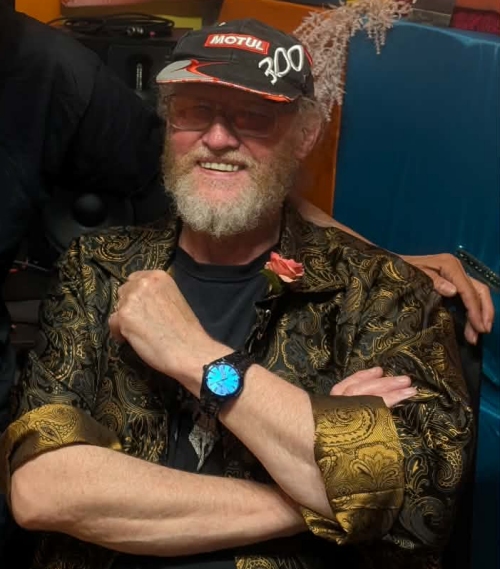 “I’m more a stumble bum bassist, but I’ve got an ear for what should come next, and that I haven’t thought of. Working together it stops me being too arty farty and playing against the key. And this also stops Nikki becoming too – ‘No, no, no you can’t do that’ and we laugh at each other.”
At this point we moved the conversation onto the studio planning. I asked if touring while recording The Mirror proved challenging. To cope, the band adopted a rigorous system where every rehearsal was multi‑tracked, allowing them to step back, listen critically, and refine arrangements. Once a structure felt right, they rebuilt the track to a click map, although never for live performance, where they refuse to be “tethered to a click”.
“Yeah, when we were doing The Mirror”, Nikki says “we messed it up in so much, as we were touring at the same time as we were trying to record. Finn expanded: “So it’s actually trying to find space. We try, we try. A few days off equals a week. To get around the problem, and to use a film analogy we ‘get it in the can’. So basically all of our group practices we record, all of them, multi-track so that we can go away, have a cup of tea, come back, hit play, and we can hear what we’ve just done. That gives us the ability to go – Yeah, no, that bit doesn’t work. Let’s just take that out and somebody will go, why don’t we just take out the drums? And so it evolves.”
“When we’ve got that, we’ll do it to a click track, for us it’s generally a series of clicks because we don’t use clicks on stage. Anna (Fraser) will play to a click and we’ll put it on the computer screen. And then Nik and I can go to work on it and start to mess around with the recording process. But it’s rough. In fact it’s a rough right until the proper recording goes down. We keep the same project but we’ll just re-record everything properly.”
I was curious to know whether their onstage energy was something Finn thought to capture in the studio?
“No, we tend to be a bit methodical about it. It’s a hard question as you can’t capture the live feel, I’ve tried them all and it always sounds like somebody in the studio.”
So is it more about seizing the moment, or if they tend to run through multiple takes – one, two, three, or more before choosing the version that truly lands.
“We’ll it depends on who’s playing. I mean Anna is the one take wonder, but I insist she does two takes at least because I like choices as an engineer.”
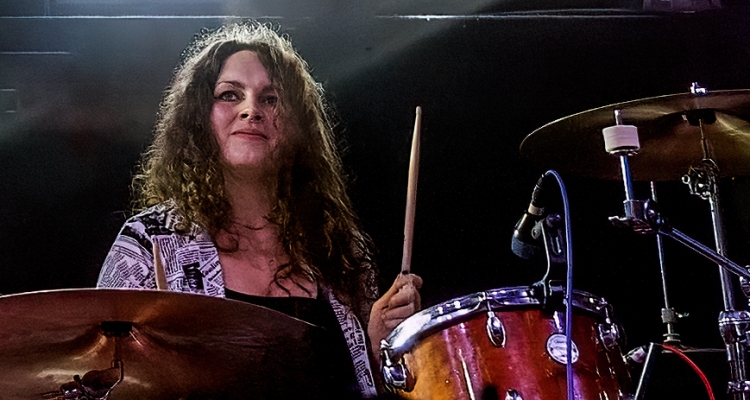
“When I do the bass, I’ll play a lot of approaches, to explore a lot of different ideas. Nikki tends not do that, she knows exactly what she is doing, writes it down and then just plays it.”
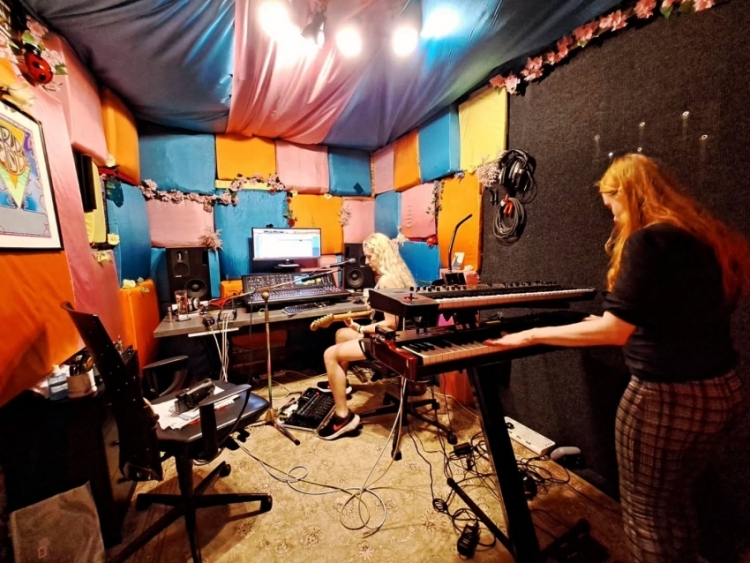
So your studio set up, do you record in here (we were housed in a small booth), or do you have another room?
“We’ll do vocals right in here, keyboards right in here. For guitars, particularly acoustic guitars, we use the corridors in this house, or we’ve got a tool room, which is really great for guitars. We just feed everything straight through to here. This room is isolated. You can fire a gun in here and you can’t hear it anywhere else.”
I asked Finn about the recording process and was it done digitally with a software program?
“We use Digital Performer, it’s a Motu product. It’s similar to Pro Tools. It’s expensive, but I prefer it because I used to have a film company, a small commercial one really, and you can integrate film and write film scores on it, better than anything.”Finn recalled his time in Hamburg in the mid 90s. “The interesting thing is the studio used Pro Tools. I hadn’t seen Pro Tools in fact I’d never heard of it. So when we sat down in the studio surrounded by all this computer stuff, I thought, this is going to sound awful. But actually, it was the first time in my life that if the artist was in the recording booth and singing, and I’m in the control area, I couldn’t hear the difference between the playback and them live. There was no hiss, there was no warm analogue sound, there was no nothing. It was just pure reproduction.”
“You can spend millions, if you like, on valve gear and everything else, but you’re going to hear the gear. If you want that, that’s fine. I don’t.”
The conversation then moved on to the burning question – will The Mirror become available on vinyl, Nikki responded:
“We did Management Of Consequences, but it took a while to sell.”.
Only 100 copies were produced I believe to which Finn responded that it was a labour of love, but…
“The big thing is everybody says, Oh, God, yeah, I’ve got it on vinyl. Vinyl’s in. I’ve heard all the hype. I remember saying I’m not up for the vinyl, not because of the sound, or because I’m against vinyl. I said, guys, I don’t believe it’ll sell. Our merch girl said everybody is asking for it on vinyl. Okay, so we went for it, and it was sort of expensive, but it was fun. We went to the factory. They were lovely, great people. So we went there. But it just didn’t bloody sell! And I remember one guy bought two. I said, why do you want two? He said, I haven’t even got a record player… he just wanted to help the band…” 🙂
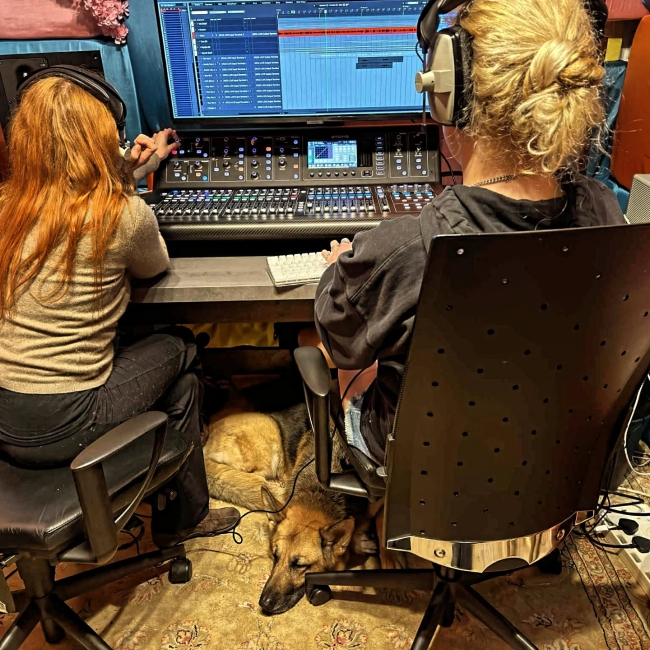
Swiftly moving the conversation back to the recording 😉 I asked about their approach your overdubs? Backing vocals, additional keyboards, guitars? With digital recording programs offering multiple tracks do they have to rein yourselves in?
Nikki jumped straight in “Well, that’s usually me as I want to put loads of stuff down.” Finn was quick to agree: “She does! She will come along and say, hmm, I can hear a clarinet there or a couple of saxes. What instead of? To which which Nik will say. No, as well as!” At this point the room erupted into laughter, finally agreeing a line in the sand occurs when Finn says ‘we’re finished now’.
Mmmm, my next question, and I think I already know the answer now, but given the amount of software available do you look for different sounds, especially for your keyboards Nikki, or simply use the sounds you already have? “Oh Yes! I’m forever ‘this sound might be better’, or ‘no, no, no, no, that sounded great, that one’. But then again there might be a better one.” Again there was much laughter…
So when you’ve done the final mix of a track and listen to it later wonder what you were thinking?
Finn “We do that all at every stage.” Nikki backed up Finns comment adding: “Yeah that does happen if you work for too long. You get tired ears, and then you listen the next day and you go: you we should have just stopped when we felt tired.”
Finn “And your ears go blind.”
So, when the band come in to listen to the ‘final mixes’ you’ve done and say: Oh, that sounds good, or that sounds not so good. Does that happen?
Finn replied: “Not so much, actually. We’re aiming for an emotion, and if we don’t see the emotion in our friends, then we know we’ve got it wrong.” Nikki added “So, you get a feeling for how they’re hearing the the songs.”
The tracks are all completed and everyone is happy with your final mixes, have you considered mastering them yourselves?
Finn: “I used to do. Mastering is its own thing. I can master, I did all of our earlier albums. But, if you really want to be able to know that your track is finished. You’ve got the ISOC codes and it’s copyrighted. Everything’s great. You have it. Then it’s got to work in a car, earbuds, PA systems, radio, internet, it’s got to work, everywhere.”
“We came across Ed Woods. Erin knew him through his wife. The Proclaimers used this guy, and a whole bunch of other people mentioned The Who used him. So I phoned him up, he’s a great guy, really great. Just chatting away, clearly he’s just so knowledgeable. We talked about all different albums and and housing sound, and he really knew his stuff.”
“When he sent the stuff back, and it’s just like, **** I can get it louder, but so could he probably. I reckon he’s got it exact. I mean, I just kept comparing it with everything I’d done. I wasted a few nights trying to master that good using my equipment, and I’m not bad at it, to be honest. A lot of people say I’m good, but I ain’t Ed Woods.”
The conversation then moved on to their first European dates with the Pulterkammer Festival in Norway at the end of August, returning to the UK for this year’s Nene Valley Rock Festival (NVRF) in mid September, before the band embark on a short run of Dutch dates…
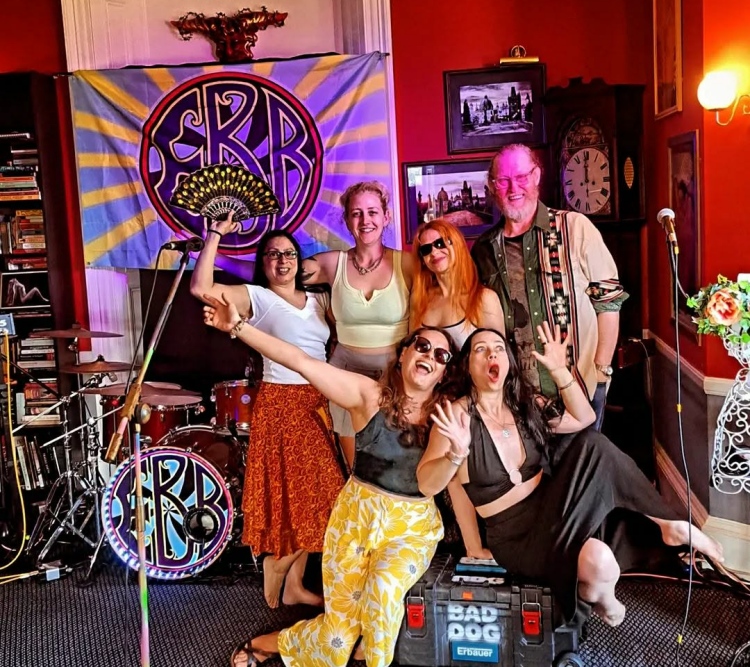
And with a wary eye on the clock and preparations needed for the evening’s concert we turned off the recording – and then we continued to talk on, and on, and… 😉
LINKS
EBB – Website | Facebook | Facebook (Group) | Bandcamp | YouTube | X | Instagram