
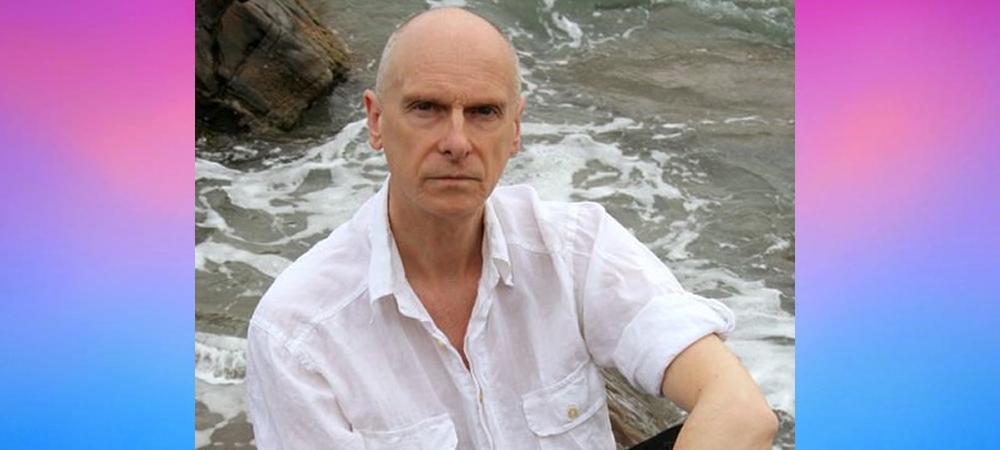
I wanted to start by hearing how you got into music at an early age and how Celeste came about.
In truth, my relationship with music is connatural with my family. Therefore, since I was a child, I was “cradled” by music. Between grandparents and uncles who played countless instruments, a first cousin who was the first violinist of the Teatro alla Scala in Milan during the 1930s, a great-uncle who was an orchestra conductor and director of all-brass bands, and another relative who, back in the 1920s, at the dawn of early cinema, played the piano placed right beneath the screens of the first movie theatres, commenting on silent film images with improvised music, and a father passionate about jazz, it was fatal and almost inevitable that my destiny was already sealed.
However, to truly embrace an instrument, I had to wait until I was sixteen, when, thunderstruck by “Aftermath” by The Rolling Stones, I decided music would be my life forever, and that I would become a drummer. From that moment on, I never stopped, later moving on to the transverse flute (nearly completing my degree), the study of the oboe, the study of the piano, and classical composition, before finally arriving at the deep study and programming of every type of synthesiser.
The band CELESTE was born after the dissolution of my previous group, IL SISTEMA, which operated from 1969 until the second half of 1971. It was a band characterised by a sort of proto-prog, where we interpreted classical pieces in a Rock key, alongside covers and our own original compositions. We were the very first in 1969/70 to propose Mussorgsky in a rock key with the symphonic suite titled “Night on Bald Mountain“, adapted directly from the original orchestral score.
Unfortunately, the band left no official discographic testimonies, but only hours and hours of archival rehearsal room recordings, which have now been collected across 5 CDs and presented on a dedicated profile on Bandcamp.
From the ashes of this band, CELESTE and MUSEO ROSENBACH were subsequently born. It was precisely a very strong personal need of mine to temporarily distance myself from the very “heavy” atmospheres of IL SISTEMA, which consequently matured in me and in the other surviving members of IL SISTEMA the desire to tread new paths, almost like a challenge. To recover a more “soft” aspect and create new musical languages. It was not easy.
I’m astonished to learn of the deep links between Celeste and Museo Rosenbach because their sole album Zarathustra is one of my favourite albums of all time. Could you elaborate further on the connection between the two groups?
The tight artistic link lies within specific individuals and compositions. Enzo Merogno, the original guitarist of IL SISTEMA, officially joined the newly forming lineup of Museo Rosenbach. Concurrently, Leonardo Lagorio, our keyboardist/flutist from IL SISTEMA, participated as a special guest during the historical recording sessions of “Zarathustra”. Furthermore, Luciano Cavanna bassist, vocalist, and co-founder of IL SISTEMA alongside me, generously let the rising Museo Rosenbach have a portion of the musical compositions that belonged to our IL SISTEMA repertoire, tracks we were actively preparing just before our dissolution.
What do you think about the controversy surrounding the group for apparently having right-wing inclinations (Wikipedia mentions an image of Mussolini on the cover of Zarathustra, and Nietzsche-inspired lyrics)?
Regarding the sterile controversy surrounding Museo Rosenbach’s apparent right-wing inclinations, I prefer not to venture into this territory. My positioning is, and has always been, strictly apolitical, and I do not wish to express judgements. However, regarding the infamous Mussolini bust on the cover, I know for a historical fact that the artwork was absolutely not the choice of the band. As was standard in those years, it was crafted by an obscure graphic designer working for the record label that signed them. This designer created a collage of miscellaneous imagery, which I personally always found to be of questionable taste, and somehow that specific picture was included. It was likely just a coincidence; mere speculation and nothing more. I know nothing about the political colours of the band members, and regardless, I believe politics should never be confused with Music.
I asked Vittorio Nocenzi of BMS why he thought prog rock became so big in Italy, but I wanted to ask the same question of you. Why do you think Italians took to prog rock more than other countries? And what makes RPI (Rock Progressivo Italiano) so different from other genres of prog rock?
The reasons can be, and indeed are, more than one. First of all, the Italian people are naturally very curious. We are open to welcoming new cultures and have always developed new expressive languages. Thanks to the melting pot and the blending of various diverse cultures throughout history, our peninsula has continuously created new ways of expressing itself. Over the centuries, we have mixed all kinds of origins and processed them to create different artistic styles. A prime example is Opera (Musica Lirica), which we can somehow consider a forerunner of Progressive Rock. I believe that Italy welcomed the arrival of this new expressive form with great enthusiasm precisely because the country was ready for it. Let us not forget that giants like Genesis and Gentle Giant were deeply appreciated, and almost discovered with immense enthusiasm for the very first time, precisely here in Italy.
Furthermore, I think the uniqueness of Prog Rock in Italy is due to the fact that our local folkloric and traditional roots made all the difference. From the North to the South of the peninsula, musical styles change drastically, and all the realities of the bands from those years brought those unique regional differences as a gift, shifting and merging them with the universal language of Rock.
When composing music for Celeste, were you inspired by Italian prog artists, foreign artists or other sorts of music?
My sources of inspiration have always been multiple and diverse. I never had any issue listening to The Who, Small Faces, or Jimi Hendrix. I am a child of the 1960s, and I was born with the Beat movement; I immediately bought the Beatles’ “Love Me Do” when it was first released in Italy, only to then serenely place Vivaldi’s “Four Seasons” or Beethoven’s “Ninth Symphony” on my turntable. While always keeping myself updated on every international release, but at the same time maintaining an eye and an ear toward tradition and classical music, I have always moved with ease from one genre to another. For me, barriers do not exist. I do not love definitions. I use them only because they help people understand each other, but to me, Music is one single entity. Therefore, I believe that what I write and compose is the direct result of all those listening experiences that I have always frequented and that still keep me company today. Even now, if I want to feel a deep emotion, I listen on repeat to Mitch Mitchell’s magical drum fill when he enters Jimi Hendrix’s “Little Wing“. My soul is varied, but always deeply Rock. Even Baroque Music, which I love immensely, possesses a profound, deep-seated Rock Spirit.
I can hear the language of RPI clearly in Celeste’s music: the flutes, acoustic guitars, pastoral melodies, Mellotron… Other RPI bands would also feature this soft side before switching to a harder dynamic. Celeste, meanwhile, always stays soft, with few drastic shifts in dynamics. What informed your decision to keep the music of Celeste sounding so soft and restrained?
Certainly, all of this, the delicacy, the softness, as you rightly observe, resides in the fact that the compositions Mariano Schiavolini brought to the band when we first met were inherently carriers of a unique world that could not be disrupted. The arrangements we subsequently contributed followed those already well-defined atmospheres, making it impossible to give a cut that would take the project in another direction. Therefore, it was not a forced inspiration. The compositions already spoke for themselves and defined a genre that was later called Pastoral and Symphonic Rock. We saved and preserved that acoustic Soul, which subsequently became our defining characteristic.
In this article, you mentioned that the record label shelved Celeste’s debut album for two years because they were afraid that the public would not accept it. Speaking personally, I can see their point: I became a fan of Italian prog rock around 2010, and quickly tried to listen to all the best material out there. On ProgArchives, Principe di un Giorno is rated the 20th best Italian prog album of all time, which is extremely impressive and a testament to the artistry on display. But when I tried listening to it myself all those years ago, I was put off by how soft and delicate the record was. Admittedly, I’m still finding it difficult to get into now, but I’m fascinated by the sharp contrast this album makes with the rest of the genre, where there is more of an emphasis on virtuoso playing and loud, complex sections. Do you recognise that the soft, subdued sounds of Celeste might be a hard sell for some audiences?
Well, Basil, pleasing everyone would be completely impossible! But that is not a flaw. If CELESTE’s “Principe di un Giorno” were to please everyone, it would mean that the project was utterly devoid of personality. I actually appreciate how you express yourself when you say you find it difficult to fully embrace it, yet you remain deeply fascinated by it. The fact that within the vast production of those years, which counts hundreds of releases, CELESTE’s “Principe di un Giorno” has consistently ranked at number 20 demonstrates that the public has rewarded, and continues to reward, that project. Even today, after more than 50 years, sales remain significant. For years now, it has been periodically reissued on Vinyl and CD, and even digital downloads are steadily growing. More and more people, including the newer generations, appreciate it and wish to own it in both physical and digital formats upon discovering it. We worked extensively on the concept of “Less is More”, a motto coined by the German architect Ludwig Mies van der Rohe, which adapted perfectly to us since our focus was precisely on removing rather than adding. After all, Music and its structures are nothing less than architecture.
Had the album been released on time in 1974, do you think there would have been a dramatic difference in record sales? I understand that musical tastes moved pretty quickly back then.
On this point, I really wouldn’t know how to answer you. Who can be certain of what the commercial destiny of CELESTE’s “Principe di un Giorno” might have been had it been released immediately? Back then, social media did not exist. Everything was in the hands of press office initiatives, mostly belonging to small independent labels that answered to producers who often didn’t even know what they actually had in their own catalogues. It is true that tastes shifted abruptly, and the music scene was predominantly centred around live concerts and band performances across all those pop festivals that were springing up like mushrooms throughout the country. Unfortunately, CELESTE was never a band that performed continuously on stage, unlike my previous group, IL SISTEMA, which spent far more time performing live on stages than inside a recording studio.
I see that you’ve been composing new Celeste music in the last decade. When did you decide to come back to this project?
After various attempts carried out over the years to reconstitute the band with the original members from the 1970s, which unfortunately did not succeed, following the final refusal, in 2017 I decided that the time had come to breathe new life into a journey that, for me, had never truly faded away. I gathered all the material I had set aside over the years, as it was not suitable for my solo projects, but which I felt was deeply aligned with and imbued with the style of those past years and close to the Spirit of CELESTE, and I began to develop it. I was left alone. The sole survivor of the original line-up. Therefore, I carried a great responsibility. I created several folders on my MAC and discovered that I had hours and hours of compositions that would have been sufficient for at least 4 or 5 albums in the style of CELESTE. I then looked around in search of musicians who could bring new blood to the project, and I found all the right elements for the continuation of the project in the years to come. Unmovable are the drummer and the bassist, who still constitute the rhythmic engine of the new band today. Yes! I introduced the drums on a stable basis, perhaps slightly betraying the original Spirit of when I had almost banned them from “Principe di un Giorno“, but I felt that new solutions needed to be implemented. And the response from the band’s fans, who showed and still show their appreciation, comforted me on the goodness of an apparently daring choice. Then came the flautist, the pianist, and the guitarist, the cornerstones of the formation. Furthermore, each project has seen, sees, and will see the participation of guests who will alternate depending on the needs of the project, covering various instruments that can range from percussion, oboe, and vocals to electric and acoustic guitars. This even went as far as recruiting a full symphonic line-up, as was the case with the “CELESTE with CELESTIAL Symphony Orchestra” project in 2023, bringing an entire Symphonic Orchestra to side with the rock band in a continuous dialogue and mutual interpenetration. I see no limits.

Your new release is the debut album re-recorded with English vocals. In the press notes, I read that this has been a vision of yours for the past 50 years since the album’s release. Have you specifically been wishing to hear the album in English? If so, why?
Certainly. In 1972, when the CELESTE project first took off, our original idea was to have a native English-speaking female singer, with lyrics obviously performed in English. The lyrics would have been my own, adapted into the new language. But unfortunately, things did not go that way. After an initial phase in which Nikki Berenice Burton actively participated in the writing and adaptation of my lyrics into English, as well as in the rehearsals before entering the recording studio, she had to return to the United Kingdom due to personal problems. Consequently, the project had to be adapted with new solutions. However, this initial idea always remained within me as an unresolved, unexpressed situation. Thus, in 2026, on the occasion of the fiftieth anniversary of the release of “Principe di un Giorno“, I felt that the time had come to do justice to that original purpose. That is, “Principe di un Giorno” had to become “Prince of One Day” once again.
What made you want to revisit this album rather than forge ahead and make new music?
Following the dissolution of CELESTE, which occurred in 1977, I moved forward with the creation of two other bands, ST. TROPEZ and LA COMPAGNIA DIGITALE, dedicated to a very space-oriented and cosmic Progressive Rock, with stylistic nuances reminiscent of Gong and Steve Hillage. Once those experiences concluded, I decided to dedicate myself entirely to my solo career, releasing my first solo album in 1980 titled “SOLARE”, which was entirely performed using synthesisers, sequencers, drum machines, and MELLOTRON. I have continued to write and produce albums of instrumental music as a solo artist, with classical orchestras, small acoustic ensembles, and works for solo piano up until 2016. I have never stood still.
However, I always felt that CELESTE deserved attention once again, also because throughout all the years that separated me from the dissolution, I never stopped managing and keeping alive the spirit and the message of the band and its sole album published in 1976. I maintained steady contact with the fans who, over the years, always asked me why we hadn’t continued, why we weren’t thinking about a reunion, and so on. In essence, I maintained a press office for a band that practically no longer existed. The reason why I felt the urge to resume the discourse of CELESTE, alongside my solo career, is that I had never felt the end of that project and of that historical period, which I felt was still alive and ready to give so much more. Here, too, I see no differences.
How did you audition Siobhán Owen to sing on the album? Had she heard of Celeste before? Did you visit Australia for the process of capturing her vocals, or was this done remotely? Are the English lyrics a translation from the original, or are they new? Who wrote them?
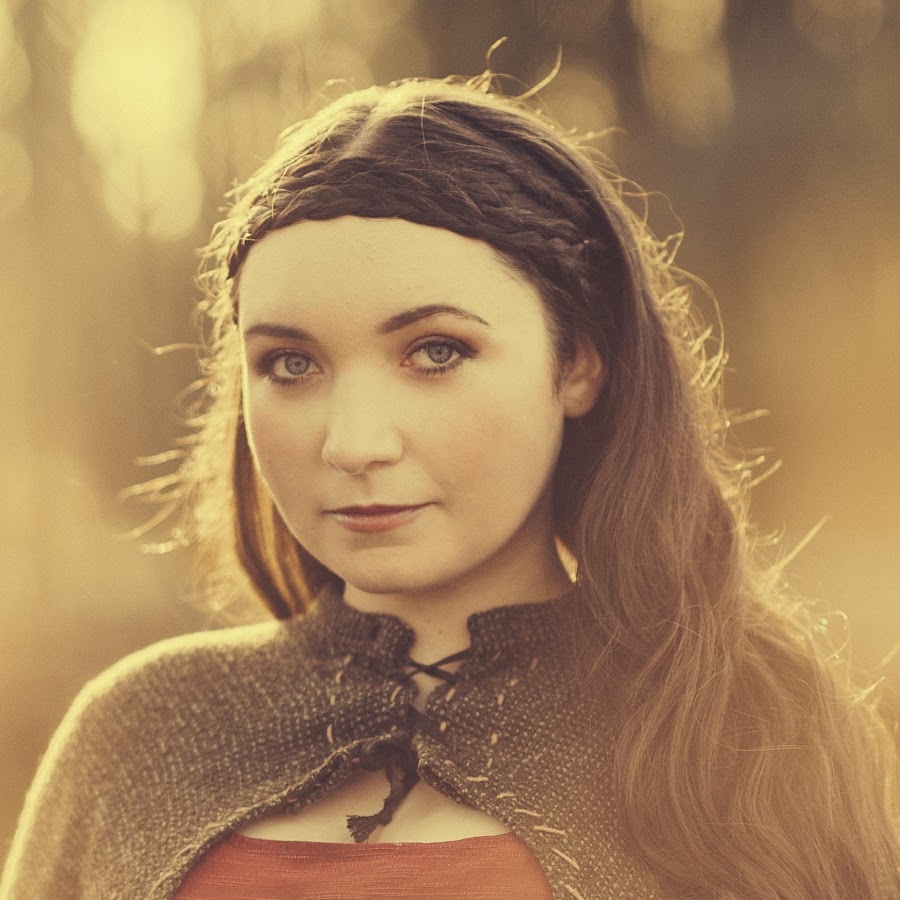 The choice of Siobhán was our final trump card, after having conducted countless auditions with native English-speaking singers scouted here and there, some who had been residing in Italy for years but held British citizenship, others contacted via the web in the United Kingdom, and a few in Canada and the United States. However, I constantly felt that those voices, although beautiful, did not evoke emotions and did not embody the Spirit that 50 years ago had led us to conceive a solution of that kind.
But in the end, my closest collaborator Marco Canepa, Sound Designer and pianist for all my solo projects as well as CELESTE, pointed out this extraordinary Australian singer of clear Welsh origins, with whom he had collaborated years earlier on a project in France, which was followed by a series of concerts throughout Europe. It was like a flash of lightning. We contacted her immediately. She examined the project, approved the lyrics that I had in the meantime revised and adapted, performed a few trials in her studio in Adelaide, and in less than a month we had her vocals recorded over the original 1976 backing tracks of “Principe di un Giorno“, which by then had officially become “Prince of One Day“.
Siobhán Owen did not know CELESTE previously, but she immediately became enthusiastic about the project. The lyrics were originally written by me in Italian and subsequently adapted into the English language by Nikki Berenice Burton, the singer who was originally supposed to be part of the first line-up of CELESTE, but who later, as I previously mentioned, could not continue the collaboration with us due to personal problems. This was the exact reason why I ended up becoming the lead vocalist of CELESTE for “Principe di un Giorno“. However, my lyrics, adapted by her, remained in the band’s inheritance, and I dusted them off specifically for this special occasion.
I have conflicting information that you can help me with: my pipeline editor mentioned that the album had been restored from a mint-condition LP because the master tapes had been lost. On Bandcamp, it says that the album was restored from the master tapes. Which is true?
You are actually right. A lot of confusion has been generated by information that, often due to errors generated during translation processes, ends up being misleading. The correct version is this: we obtained and created new masters which have been, over the years and on multiple occasions, remastered with every new possibility offered by emerging technologies in order to constantly improve the original recordings. But yes, as I noted earlier, the new masterings were indeed derived from a mint vinyl that had never once spun on a turntable. In fact, the original master tapes were tragically lost in a catastrophic flood that struck the city of Genoa back in the 1970s, where they were being stored at the time.
If the album was restored from vinyl, how was the process of scrubbing your vocals from the original recording performed? Was it done by AI? It’s quite impressive how Owen’s vocals slot in place of yours.
Logically, Marco Canepa was the one who took care of this recovery and restoration operation. No, there was absolutely no intervention by AI, but rather a patient work of digital craftsmanship, intervening directly on the frequencies of my voice without “damaging” the frequencies of the other instruments present when the vocal lines occurred. A patient work that took a long time but ultimately restored perfect backing tracks where my voice was completely removed to make room for Siobhán’s vocals in all their purity and brilliance. Fortune had it that my voice in the original and definitive mix had been placed exactly at the centre of the stereo image, and that the reverb and effects supporting my voice were also perfectly centred. Therefore, the intervention, although delicate, was somewhat facilitated. And in the end, the backing tracks were restored as if no vocals had ever been recorded. And, as you and others have noted and are noting, the two voices, Siobhán’s and mine, integrate perfectly.
Does the album have a concept? What is Prince of One Day about? Do you still think it tells a relevant message 50 years later?
The album is indeed a concept. The project was originally conceived, based on my lyrics, as a trilogy that should have expressed itself and been followed by two other albums. This did not happen. And that is why, when I resumed the project in 2019, the first release after nearly 50 years picked up the threads right from the atmospheres left suspended in “Principe di un Giorno“. The title “Il Risveglio del Principe” (The Awakening of the Prince) indicated that the Prince had finally awakened and returned to the World. The subsequent album, “Il Principe del Regno Perduto” in 2021, concludes this trilogy to make room for the band’s new projects.
The story is very simple. The sad Prince, weary of human baseness, decides to take refuge at the bottom of a mountain lake with his white horse and his faithful squire. A throne awaits him there. Later, he decides to return to see if the World has changed, if he can still live in harmony. But he decides once again that it is not yet the moment. The World does not deserve him. In fact, the very last phrase and the final words in the closing grooves of “Il Principe del Regno Perduto” (The Prince of the Lost Kingdom) read as follows: “Will the Prince return? Perhaps… Perhaps”. I will attach the complete story of the Prince for you in a separate document.
The artwork for the new release is quite simple… a lot like the original white album cover. Is there a reason for this?
Yes, of course. The simplicity of the first completely white, clean, and limpid cover was something I deeply desired to be remembered and repeated in this new/ancient project. The significance of the colours I chose for this “Prince of One Day” release lies within the specific layout: the Celeste/Light Blue colour at the bottom represents the past and my own male vocals, while the gradual fading upward into a softer, pink and rosy tone highlights that the voice is now female and that the ultimate destiny of this project is finally fulfilled.
How do you feel about the completed product? Has the 50-year quest finally come to an end?
I feel fulfilled. I feel that the initial idea from 54 years ago is now complete; it has finally arrived in its safe harbour. Now, the two versions can serenely coexist, but what had been conceived and desired over half a century ago has ultimately found its true and righteous path.
What’s coming up for you and Celeste?
By now, it has been almost ten years since CELESTE resumed its journey, following nearly 50 years of inactivity from a project realisation standpoint. The inner need that I felt back in 2017 sustains me to this day, and I have a vast amount of music in store to direct toward the CELESTE project. This project has evolved significantly since its beginnings, not in its core Spirit, but in its execution, in the sense that I have breathed new strength into the rhythmic section by permanently inserting a drummer. In the original line-up of “Principe di un Giorno“, I had deliberately “sacrificed” and excluded this element, a choice that, through its very “absence”, allowed the band to achieve an originality that other bands simply did not possess. To this day, CELESTE has published 7 official albums.
There is a brand new one coming by the end of this year titled “CELESTE meets Celtic Harp”, featuring Claudia Murachelli, an album that we are actually finishing mixing these very days. Furthermore, next year will see the reissue and complete reimagining of “Principe di un Giorno“, entirely re-recorded by the current live band in light of how we perceive and feel that project today. We will give much more emphasis to the rhythmic section, the very one that was “sacrificed” in the 1976 original, thus bringing the bass and drums into much greater prominence. It is going to be a beautiful challenge. I have already written all the arrangements, and during the upcoming winter/spring, we will enter the recording studio to begin this brand-new adventure.
Thank you so much for speaking to us, Ciro.
LINKS
Celeste (Ciro Perrino) – Website | Facebook | Bandcamp | YouTube | X
Here are some extra materials that Ciro supplied that fans may be interested in reading through:
THE COMPLETE ALLEGORICAL STORY OF THE CELESTE TRILOGY
Document Annex for The Progressive Aspect Interview
The allegorical tale of the Prince represents a profound reflection on human nature and spiritual purity, unfolding across a symphonic trilogy spanning half a century of musical history.
The story is beautifully simple yet deeply philosophical. The Prince, filled with an immense sadness and weary of human baseness, selfishness, and the spiritual decay of the modern world, decides to withdraw from society. He leaves everything behind to take refuge in the absolute silence and peace of a remote mountain lake. He descends into the crystalline depths of the water, accompanied only by his faithful white horse and his loyal squire. Deep beneath the surface, a majestic submerged throne awaits him, where he remains in a state of suspended contemplation.
In the 2019 chapter, “Il Risveglio del Principe” (The Awakening of the Prince), the Prince finally awakens from his half-century slumber and decides to return to the surface, stepping back into the World. His return is guided by a glimmer of hope: he wishes to see if humanity has evolved, if the world has changed for the better, and if it is finally possible to live in perfect harmony and cosmic connection with others.
However, as chronicled in the final chapter of the trilogy, “Il Principe del Regno Perduto” (The Prince of the Lost Kingdom) in 2021, the Prince looks around and witnesses that human nature has not changed; the baseness and greed remain. Realising that the modern world is still not ready for his message of pure beauty and harmony, he understands that it is not yet his time. The World simply does not deserve him.
He thus chooses to return once more to his silent, protective sanctuary, leaving humanity with an open, haunting question. As the final words in the closing grooves of the vinyl record ask: “Will the Prince return? Perhaps…. Perhaps.”
To discover the absolute roots of this symphonic journey, listen to our legendary 1969/70 proto-prog orchestral adaptation, “Una Notte sul Monte Calvo”, recorded live during our historical session and preserved straight from the master archives.
To dive further into our high-fidelity acoustic layers and secure your physical copies of the limited-edition vinyls, explore our official international store on Bandcamp.
CELESTE – PRINCE OF ONE DAY
Inner Garden Records
Catalogue Number IGR 015
THE STORY
2026 marks the 50th anniversary of the release of CELESTE’s “PRINCIPE DI UN GIORNO.” And that’s why we decided to revive this project just as it was conceived and as it was intended to be presented 50 years ago. In fact, it was originally supposed to be sung in English and with a female voice. The Italian lyrics of the Prince saga had been adapted into English without betraying the spirit and meaning in the slightest. For a series of reasons, the singer was unable to fully fulfil her role at the time, so, with the tracks already recorded, the task was entrusted to Ciro Perrino, who thus became the band’s singer. Despite himself. Today, half a century later, the vision of that period is taking shape again, and with the extraordinary voice of guest Siobhán Owen, a dream can be released. A belated testimony to what that project should have been. Siobhán’s voice was added to the recovered base of the original project, from which Ciro Perrino’s voice was removed. A bold move that yielded unexpected results.
The ideas and atmosphere of 50 years ago were fully restored. And what’s more, a new mastering has been done, restoring body, power, and clarity to the sounds of those years.
And at the end of the year, the project dedicated to this anniversary will be completed with the reinterpretation of the album, with a version completely replayed by the current band that today composes CELESTE, thus giving an updated vision of how “Principe di un Giorno” is perceived today.
THE TRUE STORY OF THE PRINCE
FROM “PRINCE OF ONE DAY”
Prince of One Day
Ancient Fables
Eftus
Games in the Night
The Great Island
Far White Halo
The Merchant
For many years, I had been wishing to write something about the inspirations that drove me to create the figure of the Prince, the main character of CELESTE’s first album, titled precisely “PRINCE OF ONE DAY”.
Going back with my Mind and my Heart to those moments, the very first vision I had dates back to when I was 14 years old.
It happened during a summer camp and a subsequent hike, during which I crossed the Alps on the border between Italy and France, together with a group of peers and a guide, Father Daniele Fontana, whom I consider my spiritual father. After an endless walk, we reached a small clearing surrounded by high peaks. It was decided that we would spend the night there; so, leaving our backpacks under a providential rock, we camped on the shores of a small mountain lake, after setting up the tent that would shelter and protect us.
Under the wise and expert guidance of Father Fontana, we prepared our shelter for the night, which was approaching fast. The fatigue was immense. Despite our young age, we struggled quite a bit. In perfect “Survivor” style, we laid the bottom of the tent on the water-soaked ground; the tent was very large, designed to accommodate about a dozen boys. Still under the rain, we drove the poles into the ground, raised the tent, and then, one after another, secured the tension ropes.
After having a cold meal, we retreated inside our shelter to rest. After an amount of time that I cannot define, I felt as if drawn by a distant call; I couldn’t fall asleep and so, escaping the supervision of our guide and without raising any suspicion, I went outside. Slowly and quietly, I approached the surface of the body of water. The night had become perfectly clear again, bringing silence with it. The inhabited towns were far away, and no sound came from the valleys surrounding the place where we had stopped. I went closer and closer, almost touching the surface of the water. The Moon that night was my friend, creating reflections and allowing me to see the bottom of the lake. Everything appeared blurred, but certain shapes down below were becoming clearer and clearer.
The first outline I recognised was that of a throne.
I then entered a sort of lucid dream, and the memories are still vivid today; I am certain I truly lived those moments where space and time had lost all meaning.
A Prince – my Prince – had taken up residence down there; who knows when. He was waiting for someone willing to listen to his story, his hardships, his disappointments, but also his joys, and what had been his triumphs.
His court was now limited to a loyal squire and warmed by the presence of his beloved white horse, in whose saddle, on a night perhaps very similar to the one I was living, he had decided to abandon his life on Earth. He had spurred his mount with tender gentleness and then, slowly and quietly, had disappeared beneath the surface of the water.
A new existence awaited him. Down there, he would have all the time to process his life, contemplate, and meditate.
The experience I lived that night allowed me to come into contact with a world that would never leave me again.
I do not know how long I remained in that state of suspension.
The Moon was moving, and its silver light slowly changed the reflections. A thin mist hovered in some remote spots. Near the shores, they seemed to be souls in motion, in harmony with the deep breath of the mountains that all around witnessed that scene.
I wondered, and I still wonder today, why on that summer night I found myself in that magical setting, as the sole witness to events balanced between two or more Worlds.
What I know today is that the Prince has decided to return. He still has more to tell, and he needs to reveal himself.
After more than 50 years, I decided to return to those mountains, and I found that very same small lake.
I went back there alone because I knew I could meet again that figure to whom I owed so much. Confident that with a certain care I could call him and find myself talking to him just like half a century before. I have been his storyteller. Through the lyrics of Celeste’s “Prince of One Day”, I made known the hardships and sorrows of such a noble and solitary man of a distant time, disappointed by the actions of his contemporary men—a time remote and faraway but, alas, still so relevant today.
His world is full of Ancient Fables (Favole Antiche)
His loyal squire is Eftus
The dream of The Great Island (La Grande Isola)
The solitude of Games in the Night (Giochi nella Notte)
The resonance with the story of a new and ever-ancient Ulysses in Far White Halo (La Danza del Fato). Whether the Prince chose voluntary exile or not, whether it was forced upon him, matters little. This took him far away from his loved ones, as often happens to Heroes.
The circularity of returns, of eternal returns
The chimera of The Merchant (L’imbroglio)
His white horse
When the time came to write the lyrics for Celeste’s first album, the memory of that experience, of that magical night, re-emerged. The lyrics flowed with extraordinary naturalness. They seemed already complete, as if waiting to be discovered and revealed to the world.


