
First of all, thank you for taking the time to talk with TPA. As promised, I have a list of questions regarding your latest album, First Day.
TPA (John Giordano): For such an exemplary musician, your songs are very lyric centred. Is there a sense of exorcism when you write so personally, or do you feel removed from the subject matter after a period of time?
JG (John Greenwood): Lyrics are very important to me and take different forms. My favourite form is telling a story through the eyes of multiple characters. This format was used in A Little Piece of Rosco Vidal from Dark Blue (a song I have referred to as my Get ‘Em Out By Friday). I revisit the format on Christmas Present on First Day. Although I don’t use this format often, it allows for the use of accents, different sexes to tell the story, varying perspectives on the subject of the song and the use of musical themes to represent different characters (a bit ‘Peter and the Wolf’). This is hugely enjoyable. In other songs, I like to deceive the listener into thinking the song is about something else. Probably the best example is Heartless (from Dark Blue), which I tried to make sound like a bad breakup with a girl, when in fact it’s about a sour end to a business deal. I enjoy word play, so phrases like “controlling disinterest” are really satisfying. Inside is another example, it’s about a hugely difficult and challenging patient, but I try to make it sound like a troubled woman that the singer has left his family for. Word play in songs like All Over (battle-speak), euphemism like in The Girl, and using complex rhyming and words not in common parlance, preserving a heightened use of English are critical to me. I think Ian Anderson is a marvellous inspiration as a ‘poet’ and he is not afraid to employ any of these aspects of language in his libretto. Unfortunately, in those songs where I am opening the bag of my pent-up emotion and darker life experience (Inside, Heartless, Coming Home, First Day, Last Day, Ghosts, etc), the catharsis of committing such memories and feelings into words and then into song, does nothing to dull the pain (much of which has been with me for decades).
TPA: The album feels so deeply personal and yet the topics feel universally relatable. What inspires your stories or inspires you to share them with the world?
JG: I believe that you should write about what you know. If that knowledge is couched in such a way as to be slightly obscured, the sensation behind the knowledge is transferrable to other peoples’ experiences, even if those experiences are not remotely similar to mine. In that way they can share the sentiment in their own way. If that generates any release, or closure, that’s a fortuitous side-effect. I share my experiences, because they’re mine to share. I don’t see why everyone else shouldn’t suffer as well!
TPA: Can you describe what your songwriting process is like? Does it vary by the song or is there a level of consistency?
JG: The song-writing process is not consistent generally. The only thing that is consistent is that it never starts with the words. I am fortunate that I have a number of instruments to write on. So, a song might start with me messing about on the piano, or any of the guitar formats I have (acoustic steel 6 or 12 string, nylon, electric 6 or 12, clean, distorted), or (quite frequently) with a theme I have in my head where I can ‘hear’ an orchestral score and put that down using BBC Symphony Orchestra. Recently, I wrote a song on Sean Timms’ mandolin (which I borrowed to put Christmas Present down). That piece will go on the fourth album!
TPA: Who would you consider your role models both instrumentally and lyrically?
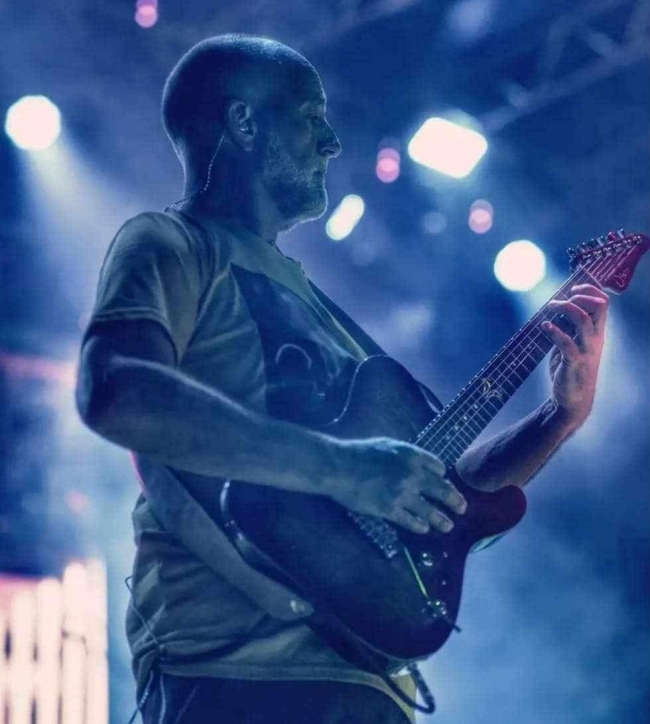
JG: Instrumentally, guitarist role models are Steve Hackett and Steve Vai above all others. Hackett has this magnificent versatility, equally at home on electric or acoustic instruments and possesses an incredible live sound that I could only dream of emulating. His back catalogue is vast and varied and, as far as I’m concerned, his performances on Seconds Out are the best examples of progressive guitar playing ever recorded. The Firth of Fifth solo he wrote for Selling England by the Pound is treated to an almost ghostly, ethereal cry. Spellbinding! I loved Van Halen as a teenager, but although I learned Spanish Fly from the record, I felt his California rock couldn’t be emulated by a working class northern lad (in the way that Delta blues shouldn’t be played by rich, white guitarists). But when I first heard Vai’s Passion and Warfare, I was blown away by modal styles and incredible speed. I bought a Jem, and I learned Anthem (which I played live in a band) and For the Love of God from Passion and Warfare, and Tender Surrender and Juice from Alien Love Secrets. Amazing! Lyrically, although Genesis are my ‘go to’ band for inspiration and the Gabriel era lyrics are excellent (culminating in the staggering darkness of The Lamb Lies Down on Broadway), it is the innate Englishness of Ian Anderson’s lyrics from Songs from the Wood to Broadsword and the Beast which inspire my rather naïve poetry!
TPA: I like how your three albums to date are connected thematically and in terms of personnel. Do you enjoy working in a close and familiar space, and does it present any sort of challenge?
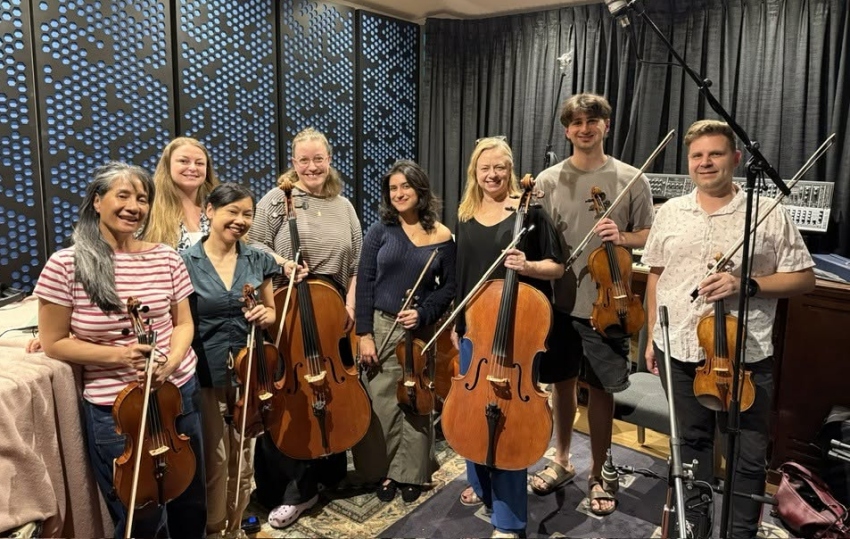
JG: I do work with certain individuals always, because I love them. Emma (my daughter) will always be my go to female voice. She is astounding, effortless and perfect; Sam (my son) I preferred on piano on Dark Blue and The Boy, but on First Day I used him for a clear, soft and beautifully vibrated voice on Ghosts. Obviously Sean Timms is (IMHO) the best sound engineer going, but is also a great MD, keyboardist and facilitator. I used my daughter-in-law, Sarah, and her sister, Nicola (violin and flute) on Dark Blue because they were happy to do it, but used a professional string section and woodwind players for The Boy and First Day, purely because it meant that I didn’t have to record one violinist 16 times to get 8 first and 8 second violins!
Drum wise, I had three drummers on Dark Blue (Ben Todd, Mike Giuffreda and Craig Blundell). I wanted Chester on The Boy but his health precluded it and Alphonso Johnson put me in contact with the awe-inspiring Simon Phillips, who did the whole album. Chester’s health massively improved and he plays all the drums on First Day. I had Unitopia colleagues Don Schiff and Steve Unruh on The Boy, but wanted to stick with my own basslines on First Day. Mark Addy was superb on The Boy and we became friends during and after the process. I was chuffed that he came on board to reprise his narrator role for The Girl on First Day and read the ‘First Day and Last Day’ poem in Despair. The only challenge with using family (Sam and Emma) is availability! Both have young families of their own and very busy professional lives. I just have to work around them! International guests (like Chester, and Roger King on First Day) obviously have to have their own recording facilities.
TPA: What sort of music do you listen to at home and how does it affect your own music, if at all?
JG: Ridiculously, when I’m writing and recording, I only listen to what I’m working on, over and over again. It drives Helen up the bloody wall! Other music I’ve listened to recently are Steve’s recent live and studio albums (including The Circus and the Nightwhale) and Nick Magnus’ back catalogue which I bought after he had me play on Blood Money on his brilliant A Strange Inheritance album. I was recently treated to Steve Unruh’s Resistor new offering and I’ve listened at length to the tracks from the Unitopia upcoming offering Spark (mainly to convince myself that what I’ve contributed to each track is worthy of my position in the band!)
TPA: The actor Mark Addy has been on your records as a narrator. Is there a musical hero you would enjoy that sort of collaboration with, or would you feel that doing so might dilute your own unique voice?
JG: There are loads of people I’d love to collaborate with. Obviously, musician-wise, Steve (Hackett) would be right up there, Tony Banks, Mike Rutherford, Nick Magnus (again), Rick Wakeman, Ian Anderson, Steve Walsh…… but those are just pipe dreams. Basically, I have been honoured, and would be honoured, to work with anyone who feels I have anything to offer! Voice-wise, I am under no illusion about my voice. It is adequate and it is free, and that is all. I am not precious about being the only male vocal on my stuff and would willingly write material in any key that Phil Collins, Peter Gabriel, Sting, Robert Plant, John Farnham, Steve Walsh, Ian Anderson, etc. asked me to! I know that those guys are lining up to ask (as if!)
TPA: The use of live strings is such an inspired decision. How do you decide when to use the live strings and when do you feel synthesized strings are appropriate?
JG: I write all of my string parts on BBC Symphony Orchestra because I like the fact that each of the five sections (basses, ‘celli, violas, 1st and 2nd violins) can have their own parts without confining me into keyboard chord shapes for synthesised strings. It also allows me to ‘bring out’ parts (like a line in the ‘cello, or viola) rather than those frequencies being lost in a chord. On all three albums, I have been brought to tears by hearing my pieces played by serious and excellent classically trained musicians. You can’t get that richness from synths.
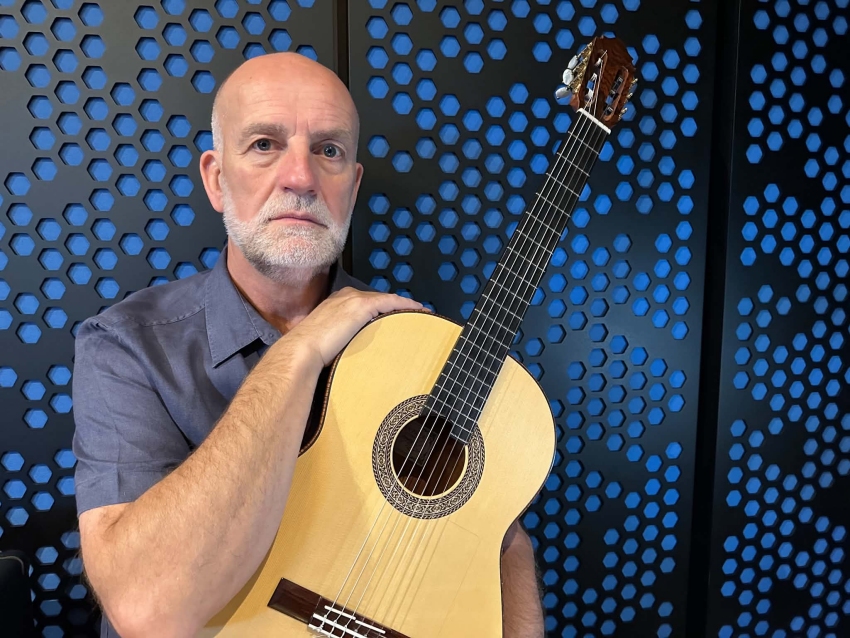
TPA: You are known for your guitar work with Unitopia, but you are quite adept on any number of musical instruments. Do you have a favourite instrument that you use for inspiration, or does the song tell you where you need to start?
JG: I like to sit down, as I said in an earlier answer, on any form of guitar, or on my piano (I recently purchased a Yamaha C7), just to mess about with chords and melodies. What comes out of the piano, is often not playable on the guitar, and vice versa. Sometimes, what I come up with is naturally the start of a song (like Inside from Dark Blue). Sometimes, the starting piece becomes preceded by an unexpected and unrelated passage (like Some Days from Dark Blue where I started with the 12-string piece, and put a huge orchestral bit before it!)
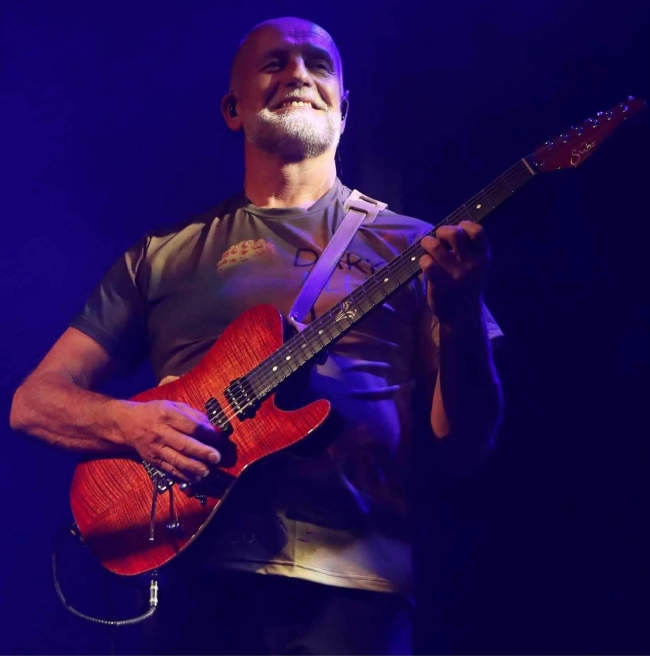
TPA: How difficult was it to transition from medicine to music full time and what do you miss about one while doing the other?
JG: I don’t miss medicine. I worked over-hard, with little peer support, for too long. I miss the nurses, physios, OTs, psychologists, anaesthetists and theatre people with whom I worked daily to run the service we built together, but I became very aware that there was a good chance I would die in the job and wanted to live before I did. Because of music, the transition from working to retirement was made easier because it filled a chunk of time and gave me a sense of independent purpose. It also kept me out of Helen’s hair which has enabled me to stay alive a bit longer! For the 20 years of running the Adult Burns Service, I missed playing and writing music in the 20 seconds of free time I had during each 24 hour day!
TPA: Many thanks for sharing your time.
[You can read John Giordano’s review of the First Day album HERE]


