
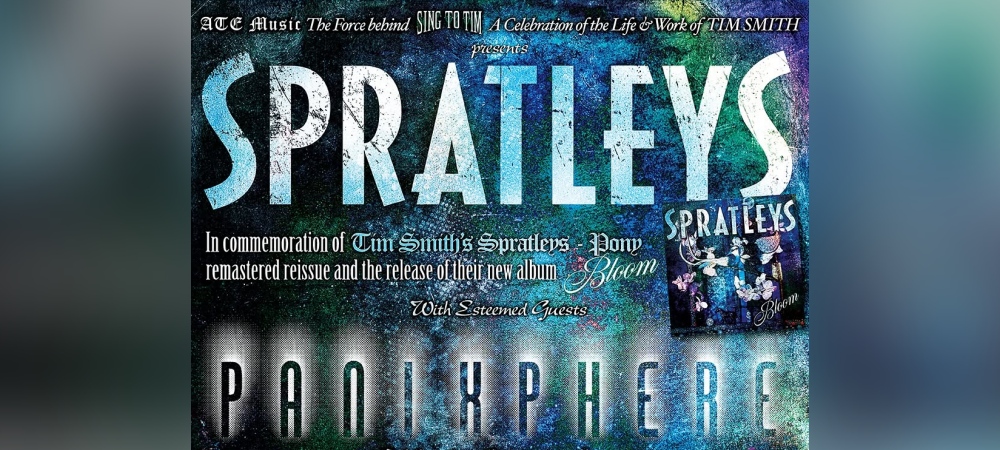
The Garage, Islington, London
Friday, 11th September 2026
PANIXPHERE
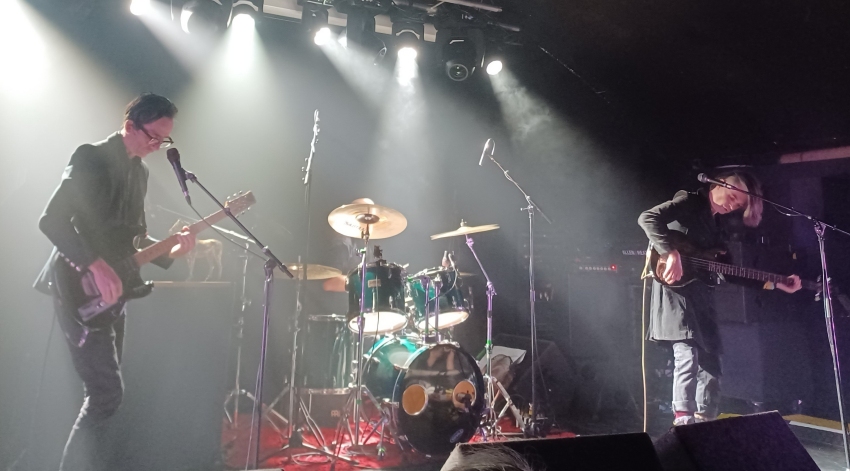
Panixphere have been around for almost as long as Bic Hayes has. It’s just that they’ve been almost terminally intermittent. Over the years, they’ve taken a back seat or a mothballed desk drawer to Bic’s more starred work as part of Cardiacs, Levitation and Dark Star (or, more recently, with the somewhat-more-secret Mikrokosmos, ZOFFF and MUMMY). But Panixphere is Bic’s original home; his first solid expression of musical will. Having shown up very occasionally over the years for brief spatters of live gigs before disappearing back into cold storage, they’ve only this year pulled things together enough to trot out a long, long-delayed debut album, mostly using songs written during their start-up years back in the mid-1980s.
With assorted Cardiacs, Levitationeers and south London hippy-punks having passed through the ranks – and with Bic as the only constant presence – the band sometimes gives the impression of having swapped out more components than the Ship of Theseus. Actually, tonight’s Panixphere is only the fifth working lineup in a forty-odd year lifespan. Count ‘em, and count ‘em. Cardiacs drummer Bob Leith sits behind the kit these days, while brand new recruit Nick Howiantz (once of Ham Legion, WTVR and Little Trophy) is on bass to cover for an absent Jon Poole, who’s currently hurtling around the USA in the Adam Ant band.
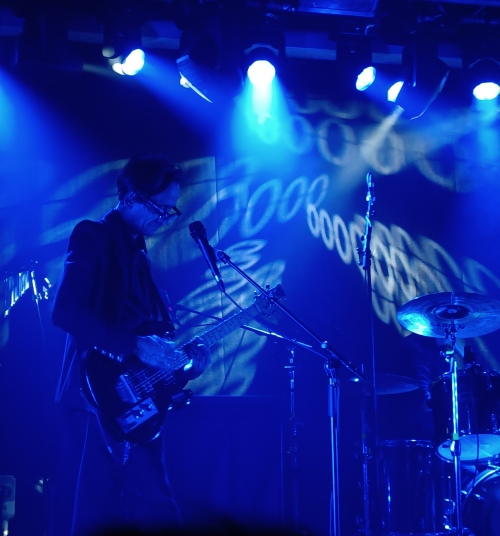
That leaves Bic as both the power-trio capstone and the band lodestone. A man who’s maintained a perpetual teenage-waif look for an inordinate amount of time, he’s finally begun to assume a more schoolmasterly appearance – heavy-rimmed glasses, and a top-heavy, beaky, peering manner. When he chooses to be, he’s one of the finest textural/effects-juggling guitarists of his generation: on a par, in his way, with players as diverse as Robin Guthrie, David Torn, Nick McCabe and John McGeoch. Initially, it looks as if he might treat us to more of that. As he focusses on his microphone, he makes small, precise adjustments to his slabby Great-Western-green Shergold guitar, which looks as if it’s spent decades in a shed being maintained by a mysterious retired engineer, coming and going like a whispering fog.
Panixphere, however, are Bic’s blunt instrument. At least, on the face of things. They initially seem like an outright punk band – lyrics yelled rather than sung; wood-chipper power-chording; drums frequently falling back on that “thumbTACKthumbTACKthumbTACK” beat beloved of innumerable West Coast punk-power-poppers. There’s a general and familiar sense of a band intent on upsetting whichever applecarts get in their way; yet it’s also immediately clear that there’s a wilful, complex art to their punking.
From the off, Panixphere are determined strata-crumplers – doing counter-intuitive stuttering things to the beat; derailing and re-hitching momentum; building extensions onto every passing idea as if it were an infinite plumbing system through which to feed things. Set opener Pandy comes across like a thrash version of a Syd Barrett song; the following Background Ploys fits in as many stylistic, rhythmic and key shifts as prog epics nine times its length, without ever losing its bratty manner. Post-hardcore, prog and a particularly English form of psych-rock all get a look in, as does ska-punk and an unusual synapse-shifting perspective on where lyrics and gear-shiftings are supposed to go.
By all accounts, previous Panixphere gigs over the years were boisterous, drunken affairs. Not any more. Either this current lot can hold their booze better, or they’ve quietly decided to go serious. Now playing to half-a-thousand Cardiacs-scene devotees at a mostly-full Garage, they ought to be; and in their way, they are. Plenty of psychedelic-leaning punk bands slip into a predictable lysergic groove. This one is anything but predictable, repeatedly hurling itself against the walls of meaning and coming back with cryptic splinters.
While Panixphere’s onstage manner verges on the aloof, on the sparse occasions when Bic speaks to us (from over his shoulder) his words are mostly mild existential questions, or interceptions of stray heckles which he then teases apart into absurdisms. As the band power through the gulping riffs and relentless shape-shiftings of Red Herring, a Levitation wail makes its way through the tangles, reminding us of how much Bic contributed to that band’s awestruck, big-pupilled anxiety. Occasionally (as on Scribbled He) a burst of harmony vocals recalls the spookiness of very early Pink Floyd. You could also draw a battered line back from Panixphere to Wire’s fervent deconstruction of song forms, or to Voivod’s Gothic-prog-metal rattle, or to Rudimentary Peni’s cauldron-dive into the flickers of the mind.
Nick Howiantz, meanwhile, proves himself an excellent Jon Poole substitute, singing the latter’s Perfic (a.k.a. Cardiacs’ Angleworm Angel) with aplomb right up to its wall-of-feedback ending. He might lack (as everyone does) that untempered and eager Poole energy, but he does bring an interesting dose of glamour to the Panixphere mix, rocking a half-shaven/half-floppy-fringed hairstyle, and moving with the cruising assurance of a Britpop heart-throb. Though mostly obscured by bandmates and cymbals, Bob Leith tackles every rhythm twitch thrown onto his charts with impeccable assurance.
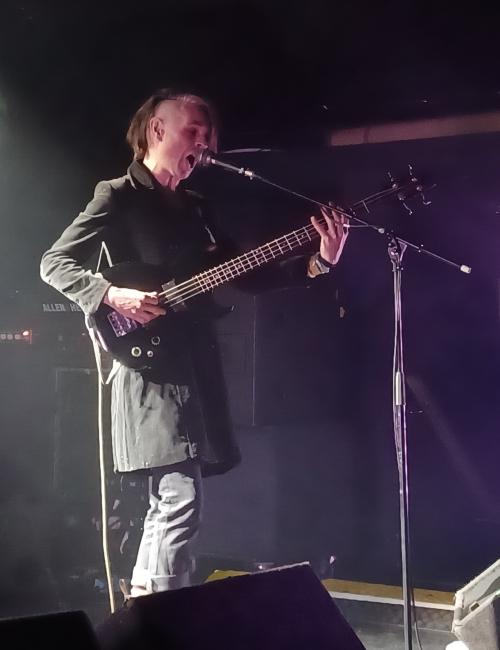
While Bic mostly devotes himself to yelp and clang, every now and again a little bit of his virtuosity surfaces. Little peals of finesse pearl darkly off the guitar sometimes – a swell or froth of texture, an ornate snag of clinging riff. Slashing and bouncing, Humanus Humanum draws on the same ska/prog/Devo minglings as very early Cardiacs with shifty, non-committal lyrics (“do it and follow it through, / if you think it’s the right thing to do.”). Protocol, commencing with artillery twirls, takes it even further: a dazzling parade of chopped-up moods which refuses to settle on a clear point. (with Bic warning that “just because I’m talking, doesn’t mean I have something to say.”) The Animals Laugh, meanwhile, recalls early-’80s Cure with attention deficit, sitting on a succession of ominous Gothic riffs, psychedelic downstrokes and non sequiturs (“pine goes with my furniture”, “over and over again and again”, “happy days are here again”).
With a volley of pummels, the Tim-Smith-co-penned More Money Than God closes the set. It’s another lace which tenuously ties Panixphere back to the Cardiacs mothership; but in all honesty the band (while sharing a number of roots and quirks) have proved themselves to be a parallel entity rather than a dependent. One suspects that after this micro-tour Bic will, once again, run Panixphere quietly back into his garage and close the door, but it would be a shame if that happened so easily. This band deserves to feel more live air running over its face. It needs to scamper more often and shake up some more audiences. It should be free to hurl its gritty little buckets of reflection and questions around, like a kid at the beach.

Pandy
Background Ploys
Humanus Humanum
Protocol
The Animals Laugh
Perfic (a.k.a. Angleworm Angel)
Red Herring
Scribbled He
Whiten the Rose
De-Fish-n-Sea
Interruption/Streuth
More Money Than God
Christian “Bic” Hayes – Vocals, Guitar
Nick Howiantz – Vocals, Bass Guitar
Bob Leith – Drums
SPRATLEYS

Drifting softly onstage to tremulous clock-winding backing music, like wind-blown paper dollies, Spratleys start sleepy with the creaking ghost-bicycle lurch of Pony – the title track of their original Tim Smith-helmed debut album from 1999. It’s a record whose shadow hangs powerfully over the band: a beloved obscurity mostly passed around between Cardiacs fans over the years in scrappy file-sharing samizdat, and it’s taken until this year for the band to revive and reissue it properly. Tim’s death in 2020 strengthened the shadow, with Pony seemingly becoming a road stepped onto just the once and never again; a might-have-been; for some, the path that should have been taken. Its eerie soundworld – songs apparently pulled out of dank forest wells and lovingly hand-dried; transfigured flights of birds and jargonated texts; broken and re-glued Faust-ian song structures, pulling insistently at and away from Cardiacs’ bucketing precisions – all rendered it a stand-alone slice of woody, fungus-tinged magic. A microdose, and a micro-legend.

You can only imagine how much all of this must have weighed on Jo Spratley over the years. The other half and heart of the band; the muse, then-partner and co-creative inevitably eclipsed by Tim’s reputation, but without whom none of it would have happened; and then the one left holding the story and the sounds while disaster and dystonia forced Tim away from it. Over the past decade, she’s achieved the small miracle of assembling a convincing Spratleys band without Tim (aided by Brightonian psych mainstays the Rodes brothers, plus her bass-playing son Jesse Cutts), and then having it accepted by the fiercely loyal, loving and critical Cardiacs fanbase. Although a few new Spratleys singles have dotted the years between then and now, this year saw the arrival of Bloom, the first Spratleys album in twenty-seven years… and the first Tim-less one. While the album’s already garnered some quiet heartland praise, taking it live is a bigger and much more emotional step. Are they going to let it stand beside its older brother? Displace some precious chunks of Smithery from the set? Or just hide behind the horse?
As it happens, we get an even split between each album tonight: which is as it should be, with the Pony songs serving as a reassuring and constant ribcage through which the fresher effusions of Bloom can peek. It’s perhaps no accident, though, that Spratleys immediately follow up their first piece with the closest that Pony came to a pop song – the bounding, stomping Fanny, its Prince-like funk-whap tipped with Adrien Rodes’ tinkling descending keyboards, while Jo’s incantatory vocal hops the beat and the octaves and slips through the compressions of a radio mic. A little further into the set, there’s a three song Pony sequence – Pond (a swaying cradle hung from a nodding walking-bass line), the jangling orphaned opening-jiggle of Burnt, and Vessel’s three-way tug-of-war between rockabilly twang, thunderhead keyboard swell and runic chorale. Before that, we’ve had the bucketing rain-spattered occultism of Klog (one of the harder Bloom moments, with its operatic touches and its intimations of mud and dog’s-eye-views) and this year’s dreamy Koiptics single, a cryptic time-and-glass folk dance paced by Étienne Rodes’ tremolo guitar.
If there’s something to be learnt about the post-Smith steps Spratleys are taking, it’s that while they’ve learned profoundly from his compositions, and can follow in their knotty footsteps, they’re bringing a gentler essence to the work. The songs are still formed from trepidatious, unusual Smith-y chord progressions, but they butt less against established structures, and expose less stubborn nerve. Where there was a claustrophobic aspect to older songs (such as the skeletal strum of Oh, played tonight and still suddenly slamming into its throbbing finale, like a mouse bursting out of a matchbox), most of the new band-written ones begin their expansion from the start, like great delicate jellyfish throwing out hoods and feelers. Jesse’s reworked Covid-era Heavy Lamb song, All Dust (pulled into the Spratleys orbit at Tim Smith’s request) adds some extra weight, and some Cardiacs-ian rhythmic puzzling. Hands to Why draws some sawing alt.pulse energy from shoegazery; while the perky Her Every Way disappears almost as soon as it appears (briefly airborne, then out of sight) and the stately, optimistic Ripe seems set to become a lynchpin of future Spratley sets.
It’s still difficult to peg where Spratleys site themselves, assuming that they ever do. Trying to draw clarity and placement out of them is like trying to read a waterlogged, mould-chewed book, in which the words are theoretically there but in practise are dissolved, mushed-up, over-printed by neighbouring script. In their way, rather than being having to be drawn along straightforward genre lines of psychedelia, prog or alt.rock, they belong with more off-kilter sui generis bands such as Pram – dust-embracing, deconstructive, forming their own peculiar exotica out of dreams, the debris of junk-rooms and half-abandoned places, and the cannibalised hauntological memories of spooky old theme tunes from children’s television.
The long, discovering wind-around of Mickey Ribbons (mostly instrumental) emphasises this sense of magical discovery. Pony stalwart Vine takes the same feeling, but injects rougher fuel and runs with it, as a quizzical Krautrock generator pulse gives way to see-sawing vocals and strolls into a ticking, tickling percussion break. At the end, it seamlessly heads off on a brain-twisting staccato dance-prog section. Heads bob and bounce in the moshpit while time signatures flicker and mutate seemingly every bar, somehow still keeping a pop beat going throughout.
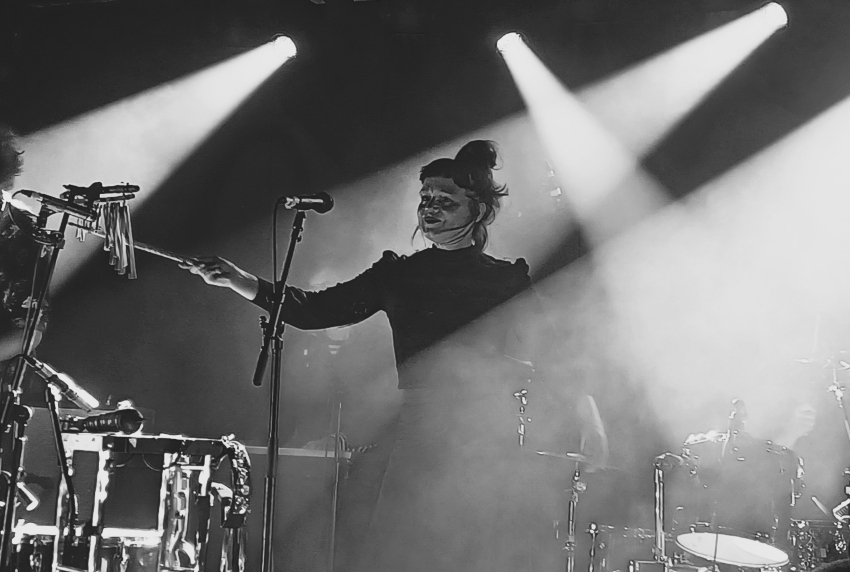
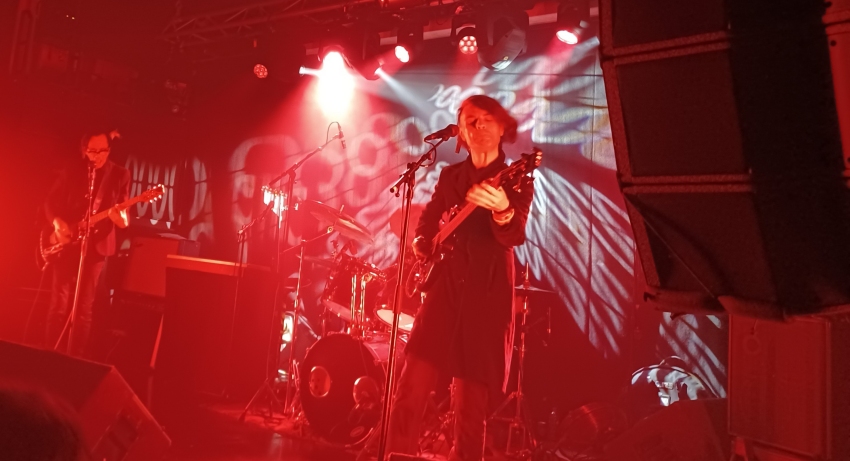
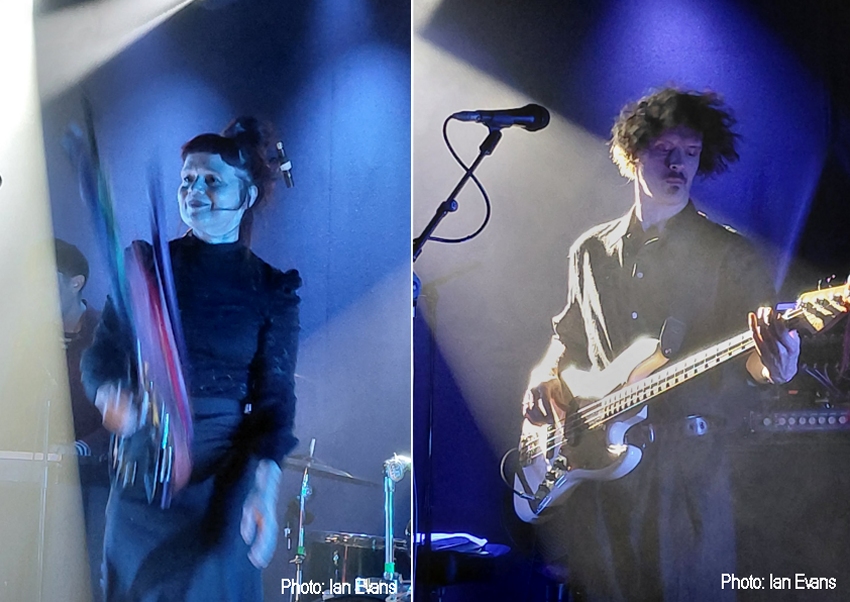
The Rodes-es, plus new drummer Benjamin Reed, quietly busy themselves with keeping all of these parts in place; and it’s there that most of the Spratleys delicacy occurs. Jesse towers at the other side of the stage, looking like a lost and woolly Cure member, nudging the bass lines along with a surprisingly meaty tone (like someone thumbing burger meat into a house brick). Meanwhile, Jo’s out centre-stage and casually eschewing most of the women-in-prog cliches. There are no floaty dresses – she looks more like Mary Poppins with a percussion rack. There’s no ethereal soprano trilling, and no precious faux-folk pieties. Instead, she sings like a working woman digging peat while being distracted and surrounded by lost, confused spirits, to whom she listens and to whom she matter-of-factly gives voice. At points there’s some of Siouxsie Sioux’s deep Gothic flint in her vocals. At others, she crosses over (via Danielle Dax) to a soft childlike chanting; or an echo of the departed Tim’s reedy, birdy timbre.
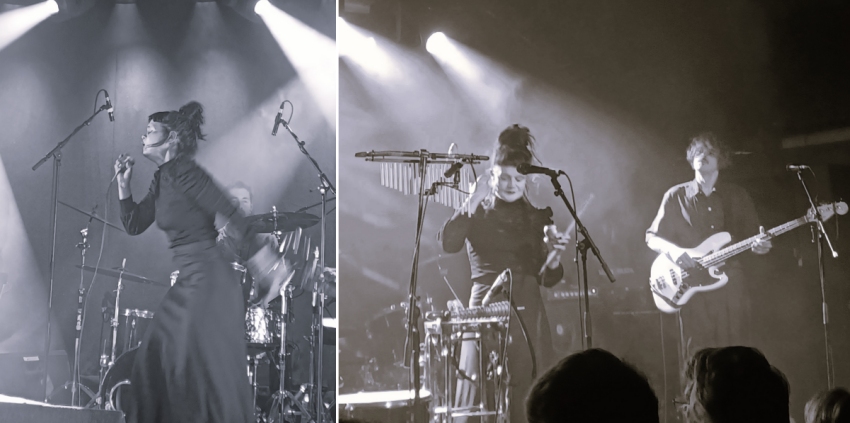
On top of that, there’s no winsome audience pleasing. Jo chats with us, a little elliptically. She ignores us in order to go into a bobbing, back-curling dance, or to trail the ribbon on her tambourine in broad untroubled arcs. And then there are the other startling times when she looks at us and things turn bizarre, because it seems as if Tim Smith is peering out at us through her eyes. The same amused, playful and speculative gaze; the same sense of mischief askew; the same affection posing as edgy blankness. It’s interesting how inheritance spread out across a family as the next generation move up, and the cluster of Cardiacs-related bands are more familial than most. Watching the revived Cardiacs play earlier in the year, I was struck by their seriousness and humility, especially with Mike Vennart stepping nervously and earnestly into the frontman role. Jo, in contrast, seems to have inherited the lateral thinking and the mystery. There’s a channelling… at least for now.
As the set comes to a close, Spratleys finally secure themselves with an earthing connection to alt.rock via a concluding, belting charge through Don’t You Ail, Flash the Sea to Steam.

For the encore, Bic joins Jo and the band for a chant through the title track of Bloom (part trudging chant, part valancing dusk-glimmer of keyboard) and the more hammering shoutfuzz of Nancy. Then, after a stately journey through the transmogrificatory fantasy of Jade, they’re off; their own people, for all of the past shadows; their peculiar energy winding down after them.
[Photos by Dann Chinn and Ian Evans]
SETLIST
Pony (instrumental)
Fanny
Klog
Koiptics
Her Every Way
Pond
Burnt
Vessel
Hands to Why
Vine
Oh
All Dust
Secret
Ripe
Mickey Ribbons
Don’t You Ail, Flash The Sea To Steam
~ Encore:
Nancy (with Bic Hayes)
Bloom (with Bic Hayes)
Jade
MUSICIANS
Jo Spratley – Vocals, Percussion
Étienne Rodes – Guitar
Benjamin Reed – Drums
Jesse Jo Cutts – Bass Guitar
Adrien Rodes – Keyboards


