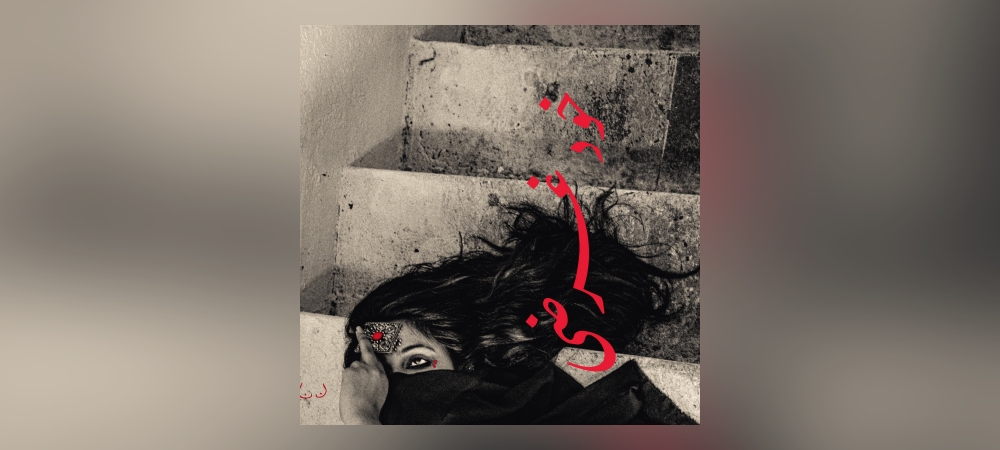
Emerging from the cracks and shadows is a concept album that’s a little different. A story played out in dark corners, behind smoky veils of gossamer, pain and injustice hidden from public view. A woman’s experience of the space between doing her duty and autonomy; sacrifice and survival. Listen as instruments from Hindustani, Turkish, Arabic and Carnatic traditions intertwine with weather recordings, breath, echoes, moans and the sounds of the animal world creating a wilderness of dystopic folk-noir.
It’s a world of stories and characters, lyrics mostly in Urdu, with passages in Tamil and English. It tells the plight of the so-called ’Khudgarz Aurat’— ’The Selfish Woman’. A charge levelled by a misogynistic domain at those women whose desire for the ability to make decisions and act independently is often met with an awful end.
This ten track album is shaped by personal heartache. Written in the wake of a broken engagement, the emotional album carries feelings of rage and guilt, the fear of not being good enough, or maybe giving too much, to a partner, to a family, or inherited moral and ethical customs. It serves as an oral archive for women who shapeshift between storytellers, courtesans, historians, survivors, and crucially, witnesses who are in one moment goddesses, and in the next, serial killers.
A cast of more than thirty musicians have contributed to the project, including Shunya, Ria Modak, Jay Chakravorty, Sarathy Korwar and Qasim Naqvi, while emerging India – based artists Irfana and Daatri Dadhich guest as sympathetic co-narrators, creating an exercise in shared storytelling.
The album opens with us being entreated and enticed by the character of Qatil (Murderess), a seductress bedevilled with homicidal tendencies. She sings, ”don’t lose, don’t open, don’t forgive, don’t forget” as she tells of her hands being tied physically and metaphorically, through the ages but now she will show their exceptional capability and wreak bloody retribution on any of her oppressors, who stand in the way.
Each track of the album unleashes a self-contained world, in Pakeezah (Pure One) it’s an an apparent enchanted alleyway disguising the sleaze and and dirt beneath the epidermis of it’s social skin. Innocence rots, the fabric of the female lives is torn with the putrid ooze staining the skirts of the innocent, purity is a dream.
On Registaan (Desert), the familiar breathy rusted vocal wavers, a shiver in the exposed cold of betrayal as Sheherazaad wanders, alienated into a vast expanse of a barren wasteland and blasted by gusts of lonesomeness, in search of freedom.
Through an atmosphere of intense aromatic smoke, blurring the sleazy and corrupt inner city alleyways the Gulukara (Songstress) appears singing a courtesans’ hymn. Hands adorned with intricately painted patterns and ring piercing in her nose, she weaves and sways in her naatadavu dance, golden bangles chiming as she swirls her arms to the mystifying music. Her song tells a story of servitude but using her artful seductions to navigate a way to the freedom sought, whilst the lyrics subtly reveal the injustices that thousands of women have suffered, bound within her tales and passed carefully through the feminine lines over the ages.
Slowly, the narrators reveal themselves as hushed orchestrators of the feminine resistance. In Mard (Man), a male spy is listening (he thinks) covertly eavesdropping on a chamber full of women, who are very aware he’s there. The women proceed to develop a cryptic code language, satisfying the predatory male’s curiosity without bringing danger to themselves, by creating an aura of innocence and smiles.
Despite its thematic density, Khudgarzi is marked by the spaciousness of a night sky. Pregnant pauses and brooding silences waft through mythical lyricism, where natural breath and instrument noise is preserved. “So much music feels like an assault to me,” Sheherazaad admits. “I want to open a gentle rupture, where a listener may truly sit with herself.” Whilst musically it is dissimilar, the pacing and use of space between the instruments and vocals are reminiscent of the way Talk Talk structured their songs.
In Haqeeqat (Reality), Sheherazaad feeds the reversed audio of the song unto itself, so she is duetting with herself, where veils of distraction and a multitude of disguises are hidden secretly for a while. Back to the reality of her existence and her own persona, until the time comes again for furtive tales divulging the struggle and encouraging her fellow women to stay strong and continue her work. During Andhera (Darkness) the reviled shape-shifting femme fatale exposes secrets of the birthright patriarchalism bestowed on the males of their population, before transforming into a shunned courtesan who conjures up an atmosphere of ethereal melancholy.
Zeher (Poison) – inhabits a bitter cold, rain-drenched archipelago of doom. A place where men are the darkness, ignorantly steeling the deepak (light) from their partners. It is a light only they may see but cannot because of their misogyny.
Sheherazaad describes each track on Khudgazi as one of her “little planets where the listener may inhabit and make home for a few days.”
Then on Kohinoor (Diamond) the final vocal track, she questions how this injustice could happen where women are kept subservient in this modern era as they were many years ago. Treated like a precious jewel, held at arms length but not allowed to be anything other than a trophy. What happened to cause this? Was consent ever given was it instilled by force, is the woman a gift or part of a deal? Is this is how it is meant to be or were they conquested in history? A hard, beautiful and cruel life.
The album plays out with the short melancholic, instrumental Haqeeqat II (Reality II) as if a curtain is slowly drawn across society closing them off to the outside world, confined to history and their own existence. Will they ever fully get to see the light of freedom.
It is quoted that ”In this living anthology, Sheherazaad does not equate feminine survival with purity, but rather, depicts it as a complex exercise in strategy, performance, and adaptation. Her characters are in one moment goddesses, and in the next, serial killers.”
Sheherazaad’s eccentric ringleader steers us through this modern, ongoing dilemma on an album which could not be described as Prog, but using various intriguing instruments, languages and sounds, creates and exposes a real life concept album. One to be listened to in a dimly lit room, under the smell of pervading incense and be seduced.
TRACK LISTING
01. Qatil [Murderess] (4:36)
02. Pakeezah [Pure One] (6:17)
03. Registaan [Desert] (4:24)
04. Gulukara [Songstress] (4:45)
05. Mard [Man] (4:32)
06. Haqeeqat [Reality] (5:05)
07. Andhera [Darkness] (4:56)
08. Zeher [Poison] (3:56)
09. Kohinoor [Diamond] (3:53)
10. Haqeeqat II [Reality II] (1:25)
Total Time – 43:49
MUSICIANS
Sheherazaad – Vocals
~ With:
Thirty or so musicians and narrators contributed to the album, however they are not listed individually
ADDITIONAL INFO
Record Label: Erased Tapes
Country of Origin: US
Date of Release: 20th November 2026
LINKS
Sheherazaad – Website | Facebook | Bandcamp | Instagram