Many bands have performed with an orchestra. From Metallica to Procol Harum, Deep Purple to Emerson Lake & Palmer, rock musicians have sought out the credibility and beauty that playing with a symphony can bring. However, there’s a huge difference between playing with a symphony and playing alongside a symphony. For all its critical acclaim, Days Of Future Past was a great idea, but its execution was lacking; the band and the orchestra largely performed in their own silos. Renaissance, on the other hand, seamlessly blended the two worlds on Live At Carnegie Hall, but it helped that much of their repertoire was already based on classical music.
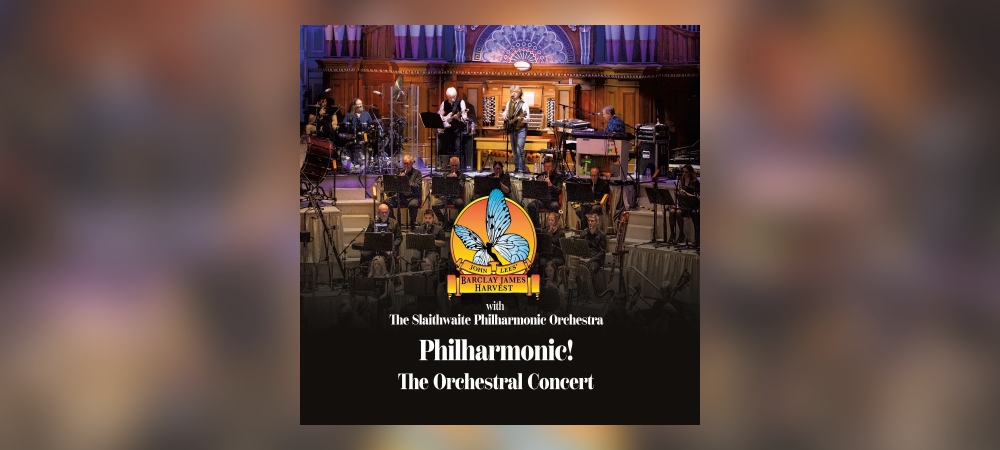
Barclay James Harvest used an orchestra on the first several albums. On their debut album, Robert John Godfrey (later of The Enid) arranged and conducted the orchestra as an essential part of the band’s sound. The band nearly bankrupted themselves taking an orchestra on tour following the release of their second album. When John Lees’ version of the band performed with the Slaithwaite Philharmonic Orchestra, under the direction of Benjamin Ellin, on 23rd September 2023, it was the first time in fifty years they had done so in the UK. The event was recorded and released the following year as a CD/Blu-Ray combo. The album was re-released this year in a CD-only version. Fifty six years after the band’s debut and numerous live albums later, you might be wondering why you (or anyone else) should care. The answer is simple: if you want to hear what a successful union of a rock band and orchestra sounds like, Philharmonic! The Orchestral Concert is a perfect example.
As if to whet the listener’s appetite, the orchestra take the stage first, serving up a splendid reading of Shostakovich’s Festive Overture. Having established their symphonic bona fides and signaling superb sound quality, John Lees’ Barclay James Harvest join the proceedings and launch into Fifties Child. The strings stay largely in the background until the final measures, but this approach serves to deepen and broaden the sound. The old chestnut Galadriel magnificently blends the mellotron with the live strings. John Lees’ voice is certainly not as powerful as it used to be, but the lived-in quality of his voice works well with the delicate string arrangement. The orchestra lays back for In My Life, allowing the dual synth and guitar lines of Jez Smith and John Lees respectively to stand out. Bassist Craig Fletcher’s vocals work well with the older material. A reworked version of Poor Man’s Moody Blues relies on an acoustic piano arrangement to bring out the song’s sublime melody with the strings providing a light touch. Lees has no trouble carrying the melody, and his weathered voice lays bare the pain and longing in the vocal line. This live version fulfills the promise that the original studio cut aspired to, making for an incredibly satisfying listen.
One of the more recent songs in the setlist, North shows the band taking command and proving they are still worthy of the BJH legacy. The sparse orchestration highlights the vocal interplay and Smith’s almost jazzy electric piano and synths. Fletcher and drummer Kevin Whitehead show off their chops while remaining respectful of the song’s tenderness. Summer Soldier exposes the rocking side of the band. This is Smith’s showcase, and he does not disappoint with his mellotron prevailing. When the orchestra joins the band five minutes into the eight minute piece, it gives the band some space while exemplifying how integral the arrangements are to these songs. The strings are not an afterthought; rather, they are an equal partner. The orchestra takes center stage on The Poet. With the band sitting this one out, the chamber-like arrangement encircles Lees’ voice in a warm and intimate embrace before segueing into the more powerful After The Day. This strong marriage of the band and orchestra reveals the rhythmic and emotional nature of both the song and the performers.
Disc two begins with another orchestra-only piece, the familiar strains of Hornpipe from Handel’s Water Music. In keeping with the idea of reimagining (and improving upon) some of the older material, Moonwater features guest vocalist Eleanor Sandars. Originally sung in falsetto by keysman Woolly Wolstenholme on the Baby James Harvest album, soprano Sandars deftly makes the song her own, floating along with the sensitive brass and woodwinds. Her performance will nearly make you forget the album version. This is followed by the classic Mocking Bird, with the brass once more heightening the airiness of the melody. When the guitar, organ and brass unite, the sound is glorious. The song’s dynamic range is a perfect fit for the orchestra and both the orchestra and the band make the most of it.
The band comes perilously close to rocking out on Loving Is Easy, the strings underline the edginess of the track, but once again it is Smith’s keyboards that steal the limelight. The band’s heavier side continues to express itself with She Said, the mellotron holding off the live strings until the halfway mark. Woodwinds feature in the interlude as the song turns inward before Lees and the band once more take over and bring the song home. Poor Wages gives the orchestra a moment to rest and allows the band to keep up the momentum until the two join forces for Medicine Man. By now it feels like Lees’ voice is flagging, but the instrumentalists give it their all. The centrepiece of BJH’s debut album was the lengthy Dark Now My Sky. With its introduction orated by Keith Domone in a less ham-fisted manner than the original, there is a feeling of grandiosity that the orchestration picks up on. Lees’ guitar is powerful, particularly when doubled by the strings. When the mellotron backs the vocals, it changes the flavour of the tune, again an upgrade of the music. On Leave provides a gentle respite during which the band display not just their technical skill but also their sense of restraint. The set ends with possibly the most anthemic song in the BJH catalogue, Hymn. Its impact is somewhat dulled by Lees’ voice losing steam, but the orchestra takes up the slack. Building from a light touch, it joins with the organ to subtly layer and lift the song to the transcendence of the loftiest hymn.
John Lees’ Barclay James Harvest have achieved something that few bands ever do: They have successfully united the orchestra and the rock band. Because many of the songs were originally envisioned with an orchestra in mind, the merging of the two worlds feels natural and comfortable. The contemporary arrangements have used the originals as a starting point and improved upon them, resulting in a grandeur that fleshes out what was previously sketched in. A must-have for fans of the band.
TRACK LISTING
DISC ONE
01. Festive Overture – Shostakovich (6:55)
02. Fifties Child (4:45)
03. Galadriel (3:37)
04. In My Life (5:16)
05. Poor Man’s Moody Blues (7:39)
06. North (7:45)
07. Summer Soldier (8:06)
08. The Poet (3:20)
09. After The Day (6:56)
Time – 54:19
DISC TWO
01. Hornpipe – Handel’s Water Music (3:42)
02. Moonwater (7:42)
03. Mockingbird (8:39)
04. Loving Is Easy (4:33)
05. She Said (8:26)
06. Poor Wages (4:01)
07. Medicine Man (5:32)
08. Dark Now My Sky (12:14)
09. On Leave (9:06)
10. Hymn (6:04)
Time – 69:59
Total Time – 124:18
MUSICIANS
John Lees – Vocals, Electric & Acoustic Guitars
Craig Fletcher – Vocals, Bass, 12 String Guitar
Jez Smith – Keyboards, Mellotron, Pipe Organ, Acoustic Guitar, Vocals
Kevin Whitehead – Drums, Percussion
~ With:
Eleanor Sandars – Vocals (CD2: 2)
Keith Domone – Orator (CD2: 8)
Orchestra – The Slaithwaite Philharmonic
ADDITIONAL INFO
Record Label: Esoteric Antenna | Cherry Red Records
Country of Origin: UK
Date of Release: 31st July 2026
LINKS
John Lees’ Barclay James Harvest – Website | Facebook | Release Info at Cherry Rred Records