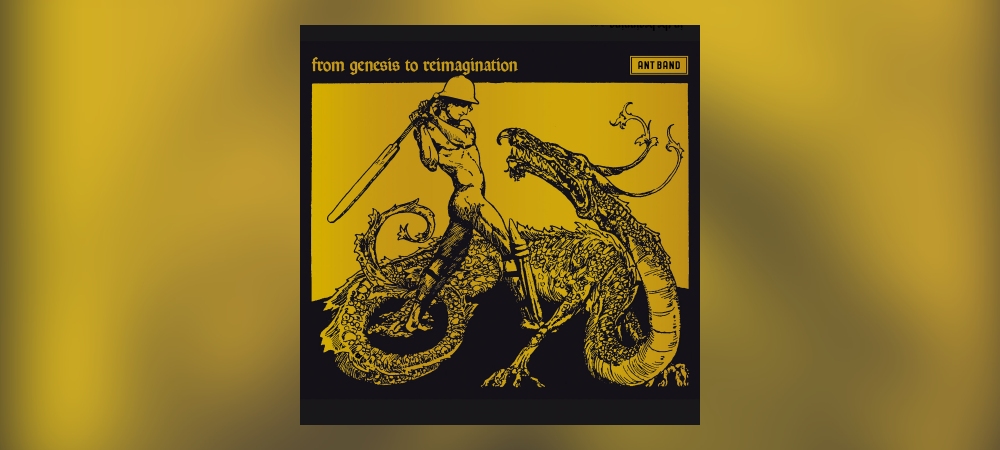
The Ant Band is a co-operative of German musicians, led by Tom Morgenstern, whose first mission was, in 2021, to create a tribute album to celebrate the work of Antony Phillips. The songs on A Light on the Hill turned out to be both faithful renditions and bold re-imaginings, as they remain true to the core elements and structures, but in arrangements suited to a modern pop/rock band.
Being 2021, there was more than a hint of ‘lockdown project’ about how the idea was developed. Nevertheless, on release, the album was well-received, and got the thumbs up from Mr Phillips himself, with the result that The Ant Band were encouraged to continue with a second assignment. This time, the band has re-visited the 1969 debut release by Genesis, From Genesis to Revelation, an album that is usually regarded as a collection of early demos rather than the band’s ‘official’ debut.
The back story here, of the schoolboy band under the wing of the then pop impresario Jonathan King, the disparate visions for the band resulting in a sequence of unsuccessful singles, and a kind of Frankenstein’s monster of an album is well documented. Despite this, the album remains of interest to Genesis completists, and it plays an important part in adding to the context of the band’s survival story through that period and its remarkable turnaround in fortunes, when, less than a year later, the band’s first classic progressive rock album Trespass was unleashed on an unsuspecting audience.
I will begin by focusing on the direct ‘reimaginations’ of songs from the original Genesis album, that begins with Where the Sour Turns to Sweet. The biblical theme that runs through the 1969 album starts with an opaque call to religious fervour. The ambiguously shady lyrics and Tony Banks’s piano melodies bear testament to the future direction of the band but the guitar parts are over-shadowed by the late-addition orchestral flourishes. The Ant Band address this incongruity head-on using the foundation of the main song structure, but turning it into a full-on pop/rock song complete with soaring electric guitar solo. Inevitably, some of the restrained menace of the original is missing, turning the song into a more passionate ‘call to arms’ to the masses. It actually works very well as a modern-day album opener, but signals, perhaps, that The Ant Band will lean into the pop/rock style rather than delve into the proggy recesses of the songs.
The religious theme continues with the creation story and the genesis of earth itself with In the Beginning. The other worldly opening instrumental is cleaned up and re-arranged to add a bit of life and zest, and vocalist Robin Morgenstern does a great job re-creating the intense style of Mr Gabriel, who was undoubtedly the star of the show in 1969, whilst imposing his own personality. This is one of the few songs on the 1969 album that didn’t need any orchestration to bulk out the arrangement, and this allows The Ant Band to keep true to the original song structure and style, and deliver a mean cover version.
Fireside Song explores the optimistic feelings imbued by the natural world. This time, on the 1969 album, Peter Gabriel sings in a higher register and when the strings are layered on top the song tends towards the twee and sentimental. The Ant Band approach is to fill out the musical arrangement with more ambitious acoustic guitar parts, Tony Banks style keyboard melodies, and synth soundscapes. It turns an uninspiring song demo into a And Then They Were Three-style pop song, that lacks sophistication but ticks most, if not all, of the pop/rock era Genesis sound.
A brooding instrumental section opens up the next 1969 song The Serpent. Another orchestral-free-zone, this one is in the style of The Ant Band’s interpretation of In the Beginning where the band stay true to the original to deliver another excellent modern-day cover. Next, the freshened up acoustic guitar opening to Am I Very Wrong is a positive move that ties the intro and the opening section together more tidily than the original. There are pronounced proto-Genesis moments of whimsy sprinkled through this track, a sign of things to come, that The Ant Band handles extremely well. The personality of the song is retained but the new version provides a more composed consistency about the arrangement, that has made a positive and enjoyable impact.
In the Wilderness, which, along with Window, is one of the Phillips/Rutherford penned songs, is a highlight for Peter Gabriel aficionados on the 1969 album. His performance is an archetypal example of his unique style. The Ant Band begin by extending the opening instrumental, adding some strings of their own and some Hackett-like guitar tones. Behind the verse and chorus the band have successfully transformed the backing arrangements to sound uncannily like authentic Genesis, and Tony Banks rather simple and subdued piano solo that reprises the main melody to close out the track is switched out with the more exotic tones of a classical guitar, echoing the 12-string segments that would soon become such a well-loved part of the Genesis sound.
It is noticeable that the band is approaching each song on its own terms. There is no formula being applied here, each song is re-imagined using whatever means that are most appropriate and provides the best style of enhancement. Whether the band creates a straight-forward cover, or it chooses to re-make/re-model, it seems to be able to hit the sweet spot.
The Conqueror is a song inspired by Rondo by The Nice, and this influence would show up again on Trespass in the form of The Knife. The Ant Band version, replete with jangly guitars, more emphasis on the swing beat, and a more melodic vocal approach, comes across as more alt-folk-rock. It’s similar, but different, with both takes on the song having upsides and downsides.
Lets face it, with In Hiding there isn’t too much to work with. In the 1969 song the simple guitar accompaniment, vocal harmonies, and strings arrangement never got past the demo stage. From this unconvincing base The Ant Band have skilfully created a pleasing and rather lovely pop song complete with organ and gentle electric guitar solo. What is most gratifying is that the band hasn’t tried to squeeze any particular Genesis tropes into the arrangement, the song remains the same, in effect, it has just been transformed from an untidy demo into a perfectly pleasurable pop song.
In contrast, on One Day, the original melodies and the dreamy, poetic lyrics were buried under faux horns and orchestral strings. It is crying out for a stripped back arrangement that brings the vocals to the fore, and this is exactly what The Ant Band deliver for us. Another highly successful re-imagination that brings out the true nature of the song so much better than the original.
Window gets a similar treatment to In Hiding, with a groovy drum beat driving the song forward and providing momentum in a way that the uninspiring string arrangement from 1969 couldn’t possibly achieve. The song itself isn’t particularly stirring but the re-imagined version has that bit more life in it. In Limbo is a much more interesting song and this time The Ant Band are a bit more playful with the re-arrangement. A homage to the introduction to It is switched in to launch the new version and the electric guitar continues to play a prominent part throughout the song, drawing out and emphasising the rock pedigree of the 1969 original.
Genesis’s first single Silent Sun is also re-imagined, but this track is only available on the vinyl version of The Ant Band’s album release. Awkwardly, the new version begins with a long pause, a Tull-esque china teacup experience, and a burst of the song as heard through the radio. The song itself, when it arrives, has a simple acoustic guitar accompaniment and all-in-all this is, to my ears, the first mis-step in the set. From Genesis to Revelation album closer is A Place To Call My Own and features another fine vocal performance from Mr. Gabriel. The original form of the track opened with a four-minute instrumental section, written by Antony Phillips, that was edited out for release. The Ant Band have included two versions on this release. Firstly, on vinyl, a faithful version of the shortened song, and on the CD, the instrumental opening section has been re-imagined with a dynamic Los Endos style mash-up of some of the main themes across the album. It’s a fun way to close out although the end section, another dull domestic scene caught on the mic is unnecessary and distracting.
The CD also includes, as extras, a fine updated version of Visions of Angels that is well worth a listen, and two songs that were recorded in the same sessions but not included on the 1969 album Image Blown Out and Build Me A Mountain. The first is a perfectly adequate 60’s pop song, whereas the second is treated to a rock makeover, with heavier drums and a strong electric guitar riff running through.
This project, getting to know From Genesis to Revelation better, and enjoying the verve and panache in the ways that The Ant Band have re-imagined the songs, has been tremendous fun. Now that it’s done, I’m wondering whether I can give you a whole-hearted recommendation?
On the downside, the original songs are a mixed bag, with the band, and Genesis fans, generally passing over the album when they discuss its historical significance. Whilst the makeovers are expertly fashioned, the truth remains that most of the songs are pretty forgettable 60’s pop songs, written by schoolboy, musical novices at a time when rock music, blues rock, heavy rock and progressive rock had already bolted from the stable, and pop music culture had been turned inside out. The album’s two redeeming features are Peter Gabriel’s unique voice, and the fact that its failure focussed the band’s attention on what they really wanted to do in the future.
However much as it pains me to say it, what From Genesis to Re-imagination isn’t, is a serious, stand-alone, pop/rock record. It’s a record that is umbilically linked to the context in which it was spawned, a child of a particular moment of inspiration that sought to pay homage to a piece of maligned history.
However, on the upside, I salute the ambition, the nerve, and the creativity of Tom Morgenstern and his Ant Band, and yes, I do recommend it, mainly because it is a fascinating sideways look at Genesis-in-the-making, and also in the hope that a quantum of success allows Tom and co. to venture on to the next project, and perhaps some original music of their own.
TRACK LISTING
01. In The Beginning (3:29)
02. Fireside Song (4:22)
03. The Serpent (4:55)
04. The Conqueror (3:28)
05. Build Me A Mountain * (4:54)
06. One Day (3:58)
07. In The Wilderness (3:51)
08. Where The Sour Turns To Sweet (3:30)
09. In Hiding (2:50)
10. Image Blown Out* (3:05)
11. Am I Very Wrong? (3:16)
12. Window (3:15)
13. Visions Of Angels* (5:36)
14. In Limbo (4:12)
15. A Place To Call My Own* (6:42)
16. A Place To Call My Own** (2:25)
17. The Silent Sun** (1:43)
* CD only
** Vinyl only
Total Time (CD) – 65:31
MUSICIANS
Tom Morgenstern – Electric & Acoustic Guitars, Keyboards, Bass, Cajón, Backing Vocals
Bert Wenndorff – Keyboards
Martin Brilla – Keyboards
Peter Mustó – Keyboards
Damian Krebs – Drums
Roland Manns – Drums
Gereon Schoplick – Classical Guitar, Waldzither
JanPeer Hartmann – Electric & Acoustic Guitars, Oud
Nina Morgenstern – Lead & Backing Vocals, Acoustic Guitar
Robin Morgenstern – Lead & Backing Vocals
Sascha Krieger – Electric & Acoustic Guitars, Keyboards, Bass, Backing Vocals, Percussion
~ With:
Christoph Piel – Guitar Solo (8)
David Dunnington – Party Blower & Backing Vocals (11)
Stefan Störmer – Organ (8)
ADDITIONAL INFO
Record Label: Independent
Country of Origin: Germany
Date of Release: 13th February 2026
LINKS
The Ant Band – Bandcamp