
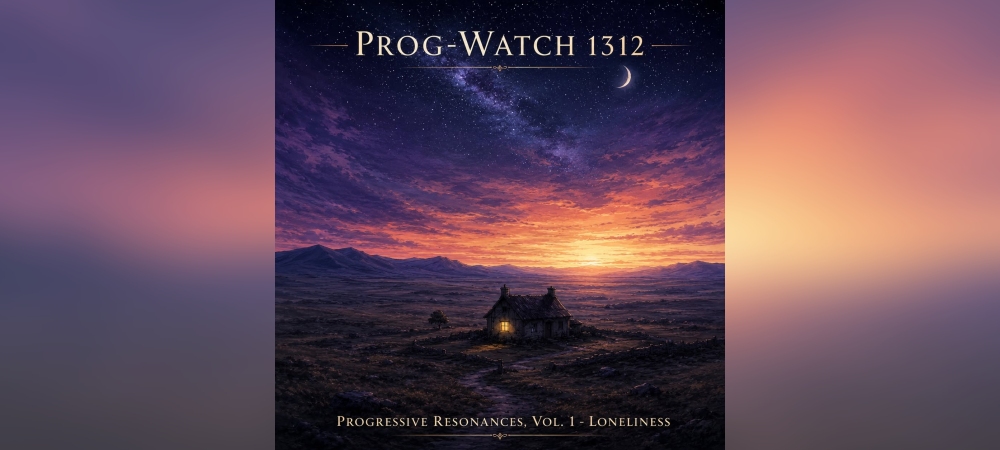
Introduction
3:23 am. It has become my favourite time of the morning. No. Seriously. If you’ve been there, and I bet most of us have, you’ll know it is a feeling unlike any other hour. The silence in the darkness is crystal clear. Outside, there is the cold light of the moon and the stars. Your partner is lying next to you, out cold, swatting camel flies. And there you are. Wide awake. Just you. With only your thoughts for company.
I have a lot of 3:23 am’s in my life. For a long while, I found it irritating. But now? Now I find it strangely comforting. Somewhere, over the years, I started whispering to myself the opening line of a song which somehow captures it all quite nicely: “Hello darkness, my old friend.” It’s a greeting, a welcome, maybe even an embrace. It’s as if the darkness and I have some kind of understanding. There is a familiarity, even a friendship, sitting companionably with each other for company, alone in the dark.
“Hello darkness, my old friend” started me thinking about this piece. It seems to me loneliness is one of those words we take as being mainly negative: something to be escaped, treated, medicated, solved. Yes, it can be all of these things. But I think it is also something stranger and much more interesting.
Being alone, loneliness, is a landscape. It’s a landscape where shadow and light intertwine and dance in all sorts of amazing ways. It is a place some of us visit involuntarily; it is a place some of us, quietly, choose.
We are going to spend time exploring this landscape. We’re going to move through three aspects of the terrain. First, we’ll look at the deep existential solitude of who we are. Second, we’ll rummage around the particular loneliness of modern life. Thirdly, we’ll explore the more bittersweet territory of nostalgia, of lost connections, of the people who are gone forever and the versions of ourselves we can’t return to.
Running through it all is a common theme. Melancholy. Not depression. Not despair. Something more personal and more complex than either, a feeling which tightly holds both the ache and the beauty simultaneously.
The music spans fifty years and several continents. Some of it is prog. Some of it sits at prog’s edges. All of it earns its place. We begin where I begin. In the dark. With a greeting.

Part 1: Loneliness and Isolation
Paul Simon wrote Sound of Silence in the dark. Literally sitting in his bathroom, at night, with the lights off and the water running. In the darkness, he found something he needed to hear. What strikes me about the song, every time I hear it, is that it isn’t really about being alone. It’s about our failure to connect. People talking, but not communicating. A neon light nobody reads. A silence growing between people who are standing right next to each other. There’s a gap, a space, where genuine contact should be but isn’t.
This gap, this empty space, sits at the heart of what we’re exploring tonight. Loneliness as a painful emptiness; loneliness as the ghastly unfulfilled yearning for connection. Peter Hammill and Van der Graaf Generator have spent a career wrestling with feelings like these. Our next track, recorded in 1970, plays with the image of a house with no door. The house is, of course, ourselves. But not as people stranded in an empty landscape. It’s about ourselves. Houses. With no door. Think about it. We’re not accidentally locked in. We’re not prisoners of circumstance. We are architecturally sealed. There’s no way out, and there’s no way in for anyone else either. This isn’t just loneliness. This is who we are. Alone.
There’s a brutal cruelty in the image of a house with no door. From the outside, it looks just like any other house. Nothing remarkable, nothing particularly distinctive. The person inside is invisible to the outside world. Invisible not because they’ve hidden, but because no one has taken the time to look closely enough to notice what is missing.
Steven Wilson brought to our attention the true story of Joyce Vincent. Joyce was found dead in her flat in North London in 2006. She had been lying there for about two years. The TV was still on. There were wrapped Christmas presents all around her. In all that time, nobody noticed she was gone. No knock on the door. No telephone call to check in and say ‘hi’.
It’s haunting. It’s awful. Joyce wasn’t a recluse. She wasn’t someone who had shut the world out. From what we know, she was outgoing, social, and lively. And yet somehow the connections frayed, one by one, until there was nothing left to tie her to the world. She disappeared, and the world carried on without noticing the shape of the space she’d left.
Wilson’s response was the album Hand. Cannot. Erase. It is an album of profound empathy. Of piercing recognition. A refusal to let her be forgotten. He doesn’t dramatise her story. Instead, He imagines his way inside it and takes us with him.
Happy Returns is one of the album’s most devastating tracks. I find it almost unbearable. At the same time, I also find it unspeakably beautiful. Both at once. It’s a letter to her brother, someone who she knows in her heart is already too far away for her to reach. She even jokes he probably thinks she’s dead. But even now, she still reaches across the distance, across time, to be recognised. To be remembered. To be known.
Then, in Ascendant Here Now, the feeling widens into something more cosmic, more searching. Transcendence, not absence. What happens when you try to rise above loneliness and isolation.
Listen for the way the music breathes. Listen for how it holds the ordinary and the heartbreaking in the same space.
There’s something remarkable about that title. Ascendant Here Now. She died. Nobody knew. Nobody came. But here, in this music, in this moment, she is ascendant. She is here. She is now. By listening, we become the witnesses she never had.
As we come to the end of the first section of the show, there is a phrase I’d like to share with you from the philosopher Charles Taylor. In his book ‘A Secular Age‘, he uses the phrase: the “buffered self”. What he means is we, as modern individuals, have become sealed off from the world, from other people, from any sense of something larger than ourselves. Inescapably, alone. The house with no door. The life nobody witnesses. Different images, but the same core truth. Not only are our bodies a natural barrier to the world outside. We have also become very good at building walls around us to keep the world, and everyone else, out.
But there’s another dimension to this kind of loneliness. Looking at the stars at night. Your neck aching from looking up at the vast landscape of stars and planets, as far as the eye can see. Are we the only ones here? To feel so painfully small, in a universe millions of years old, we are not even the blink of an eye. We are temporary. Insignificant in comparison to ‘what is out there’. And, possibly, all alone.
I stand there, frequently, in the garden at night. It’s awe-inspiring. But it’s also terrifying. How small we are. To coin a phrase from another philosopher, Blaise Pascal, we are everything, and yet we are nothing.
King Crimson captures something of this feeling on their 1974 album, Red. The album closes with a haunting piece: Starless. Twelve minutes that begin in a kind of grey, desolate beauty, build with inexorable patience to something enormous and overwhelming, and then, at the very end, return to that opening theme. As if the universe has simply continued, unmoved. John Wetton. Robert Fripp. Mel Collins on saxophone. Listen for that saxophone. It carries something that I genuinely don’t have words for.
When I posted about this programme on social media, asking friends and fellow music lovers what loneliness means to them and what music has carried them through it, I wasn’t quite prepared for the responses I received. They were generous, thoughtful, and in some cases, profoundly moving.
I want to share one of them with you now. It comes from Rick Peuser, a colleague and fellow writer at The Progressive Aspect. Rick gave me permission to read his words exactly as he wrote them, because some things don’t need to be paraphrased. Some things need to be heard in their original voice.
Rick writes:
“The impact that the track Shadow of a Lonely Man by The Alan Parsons Project had on me at one time was profound, and it still does. My father had died alone along a road from a heart attack, and I found him with the help of some neighbours. My mum had died of alcoholism three years earlier at 53 – she dropped dead in front of me. It was horrific for a fifteen-year-old to witness. My Dad was young too. Fifty-nine. After his wake, I played this track on repeat. I was alone, and the weight of the world was quite heavy at that time.”
Rick — thank you for letting us in, for sharing. For your honesty, as well as your trust.
That is what music does. This is why it resonates so profoundly, so deeply inside us. It doesn’t fix anything. It doesn’t explain anything. It simply makes room. It sits beside you, puts an arm around you and it is just….there. With you. A bond, a connection, unspoken. A presence which lets you know: you are not alone.
Part 2: Urban Anonymity and Modern Life
Rick’s story sits at the intersection of everything we’re exploring tonight: the existential weight of loss, the wrenching agony of being left, the image of a father found alone at a roadside. It is unbearable. And yet, we have no choice but to bear it.
But it also brings us somewhere new in our journey. What Rick describes isn’t just personal grief. It’s something our world makes possible; it’s something our world makes more likely. The erosion of the ties holding us to each other. The way modern life, for all its noise and connectivity, leaves people profoundly, devastatingly alone.
We have never been more connected. And we have never felt more alone.
This second part of our show explores this paradox: the loneliness not of the empty landscape, but of the crowded street. The loneliness of being unseen while living among millions.
We’re starting it with a song written for a man who had become, in a very real sense, unreachable. Syd Barrett, the founding visionary of Pink Floyd, retreated so far into himself that the people who loved him most could no longer find him. I think most of us have known someone like that. Or perhaps, in our lowest moments, we have been someone like that.
Roger Waters said that our next song is about the pain of missing someone who is still alive but emotionally unreachable. Present in body, unreachable in every way that matters.
“We’re just two lost souls swimming in a fishbowl.” What a line. It captures something peculiar to modern life: the sense we’re all circling the same small space, seeing each other, and yet, somehow, unable to build bridges, unable to genuinely connect.
It’s the strange experience of being close to someone, yet no longer truly in touch with them. And I think that’s where loneliness really begins. Not simply in separation, but in the fading of the natural responsiveness between two people: the easy resonance, the unspoken movement between one heart and another. When that goes, what’s left is distance. Then self-protection. Then a kind of hard clarity forms that can look, from the outside, a bit like composure.
That’s what Stevie Nicks understands so brilliantly in Dreams. It isn’t a song about collapse. It’s a song about aftermath. About standing in the stillness and hearing the sound of what’s gone.
“Listen carefully / to the sound of your loneliness / like a heartbeat drives you mad / in the stillness of remembering what you had / and what you lost.”
That’s the ache of it: the stillness of remembering not just what you had, but who you were together. And now, perhaps, what remains is only the distance between “we” and “you.” The distance is the loneliness.
Stevie Nicks, watching from behind glass. Cool. Certain. Already somewhere else in her mind before the door has closed.
Now what I want us to do is listen to what it sounds like on the other side of that door.
Phil Collins wrote Please Don’t Ask in 1980, in the aftermath of his own marriage breakdown. Where Dreams is composed and self-contained, this is raw. It hurts as nothing else can possibly hurt. The piano stripped back to almost nothing. The voice isn’t a performance; it’s more like testimony. Open. Honest. Almost desolate.
It sits in the silence of the space someone has left, and tells the truth about what that silence feels like. The mundane, aching, ordinary truth.
These two tracks together, Dreams and Please Don’t Ask, make a complete picture of something we rarely examine this honestly. The same ending, experienced from opposite sides. One person already free. One person left holding everything.
One person left holding everything.
I keep coming back to Rick’s words. His father, found alone at a roadside.
Steven Wilson wrote Heartattack in a Layby in 2002. It’s a musical vignette of a man pulled over at the side of a road. The engine is off, other cars are rushing past; he’s alone, the epitome of stillness inside a roaring landscape of noise and motion. We don’t know whether he’s unwell, or just exhausted, or something else entirely; Wilson doesn’t say. Despite the song’s title, the ambiguity of what might be going on inside the car is the point.
This is the image we need to grasp. The solitary figure, at the roadside, while everything around him keeps moving, feels like one of the most precise metaphors for modern loneliness I know. We are surrounded by motion, by noise, by the relentless momentum of other people’s lives. And sometimes we just stop. And nobody notices. And the world carries on.
I think sometimes the bravest thing we can do is simply stand still and be still. Take time out. Time away from all the noise. And wait. And trust the road will be there when you’re ready.
Part 3: Nostalgia and Lost Connections
We’ve been on quite a journey tonight. From the philosophical silence between people who can’t quite reach each other. Through the raw scars of loss and grief. Through the particular loneliness of modern life, the crowded street, the empty room, the door closing which never opens again.
In this final part of the show, I want to take us somewhere different. Somewhere that might surprise you.
There’s a dimension to loneliness we don’t always talk about. Something which takes us back to the very beginning, to a time before we were adults.
I am grateful to Bronwen Trimming for suggesting the next song. I’ve been thinking about where loneliness starts. Not the thing which causes it, but the original point of impact. The first time the world didn’t quite make room for you. The first time you looked around and felt, with a child’s bewildered clarity, you were somehow different. The world no longer makes sense.
For some, the wound heals. For others, it becomes the lens through which we see everything ever after.
Andrew Gold released this song in 1977. On the surface, it sounds jaunty: a bright, radio-friendly melody, a song you might half-remember from childhood without quite knowing why it stayed with you.
Now is the time to listen to the words…
Did you hear it? Underneath the jollity and skipping melody is the heartbreaking story of a boy displaced by the arrival of a sister. His parents turn their attention elsewhere. A child left to make sense of a world where suddenly, without explanation, something else is more interesting than him.
It’s almost unbearably precise. What makes it devastating is that Gold never lets the melody betray the darkness. The song keeps smiling. Just as people do. Just as the lonely boy grew up to do; carrying it quietly, functioning, wondering somewhere underneath what he did to make it happen and why the world never quite felt like it had.
I think Supertramp captures this feeling of innocent betrayal. The one who grew up carrying something he couldn’t name. Who moved through life with his dreams slightly out of reach, not because he lacked ability or intelligence, but because something happened in his formative years which made things skewed, off-kilter.
Rudy is on a train to nowhere. A man so achingly observed with extraordinary compassion, his ordinariness, his quiet desperation, his sense that somewhere there was a life meant to be his, and somehow, it never quite arrived; it was always beyond his grasp.
I find Rudy both heartbreaking and deeply comforting. He is someone who we immediately recognise. Being honest, I suspect most of us have felt like Rudy at some point. Standing at the edge of our own life, wondering when it’s going to begin.
Rudy. Still waiting for the world to notice him. “All through your life / All through the years / Nobody loved, nobody cared.”
There is the unique quality of loneliness: cut off, chronically alone. The kind of loneliness which has become so familiar, it has become part of who we are. Like a flowing river, loneliness is sediment. It simply settles over the years into the texture of our lives and the fabric of our selves. It is the oxygen we breathe rather than anything specific or identifiable.
It takes music of a very different kind to name it. Not the delicacy of the tracks we’ve listened to so far. Something that meets unbearable weight with an equally suffocating weight.
Black Sabbath are a band you wouldn’t normally expect in a programme like this. But James Turner, another TPA colleague who responded to my Facebook post, suggested this track, and I’m grateful he did. Heaven and Hell is one of my favourite albums. I know it well. And when I listened back to Lonely is the Word with this programme in mind, I understood immediately why James thought of it.
It doesn’t dress loneliness up. It doesn’t make it beautiful, or philosophical, or bittersweet. It simply states it. With the full heaviness the feeling deserves.
Ronnie James Dio’s voice on this track carries something I find genuinely moving. A vocalist of extraordinary power and range who understood instinctively how to carry emotional and musical weight. He knew, from the inside, loneliness isn’t always the absence of people. Sometimes it’s the presence of everything except the one thing you need. Listen also for the guitar solo, where it appears in the track and what it adds. It has presence.
The title says it all…
We’ve been deep waters. Rightly so, I think. Loneliness has interesting similarities to a swimming pool. Sometimes you find yourself in the shallow end, up to your waist. Sometimes you are flailing in the deep end, unable to touch the bottom, running out of steam. Loneliness deserves honest attention. You have to be willing to sit with it, recognise it, acknowledge it. Our feet won’t touch the bottom again until we’ve come to terms with where we are.
I’d like to throw in an extra thought for us to think about. A turn in the road, if you like.
When I posted about this programme on Facebook, I received a response from a dear friend, Jamie Robertson. Some of you may know Jamie’s wonderful book, Music Measures Memories, which I had the privilege of working on with him as his book coach and editor. Jamie’s book is a revelation about what music can do in our lives: how it works, why certain pieces find us at certain moments and do things for us nothing else can.
I’m going to read you what Jamie wrote. It changed something in how I was thinking about this programme. It’s an important resonance which probably speaks to all of us.
Jamie writes:
“I like to listen to instrumentals when I am feeling lonely, as these music-only moments allow me to fill in the gaps with my own imagination. Sometimes I can’t cope with lyrics, as they get in the way of my own thoughts and feelings. Instrumentals give me space to think freely and transform my mindset from one of feeling alone to a sanctuary of solitude, which makes me feel more comfortable.”
A sanctuary of solitude. Wow. There you have it. A profound and deeply personal insight which captures the heart of what we’ve been exploring tonight. Loneliness and solitude are not the same thing. One can be transformed into the other. The place we retreat to in our lowest moments can, with time and music, become somewhere we choose to be.
Jamie isn’t describing escape. He’s describing transformation. This is Tangerine Dream. Beach Theme, from the soundtrack to the 1981 film Thief. It asks nothing of you. It simply makes room.
I hope you found something in such a bewitching musical space.
We’re almost at the end of our journey. And I want to close with a song I keep returning to. The resonance with loneliness is poignant and deeply moving.
We began at three in the morning. In the dark. With a greeting to an old friend. What we’ve discovered on our journey together is loneliness is not one thing. It’s a landscape. It has geography. It has a childhood and an adulthood. It has both the cosmic scale of King Crimson and the intimate elegance of Phil Collins at a piano. It has Rick’s unbearable grief and Jamie’s quiet sanctuary. It has the bright deception of Andrew Gold and the honest weight of Black Sabbath.
It is nuanced, richly textured, with unspeakable depths and unbearable pain; it has proud walls and stubborn boundaries. But. Here’s the thing I always keep coming back to.
We are never alone in our loneliness.
Every person who has lain awake at three in the morning. Every person who has felt the particular ache of a door closing, or a connection fraying, or a life not becoming what we dreamed it was meant to be. Every person who has reached for a piece of music because nothing else was large enough to hold what they were feeling.
We are, all of us, in this together. Alone together.
The Polish band Quidam have captured this in ways I cannot begin to describe. Their album, from which this final track is taken, is called Alone Together. And the track itself – “We Are Alone Together” – seems to me to say, in eight minutes of music, everything I have been trying to say tonight in words.
The experience of loneliness, when we face it honestly, recognise it for what it is, even embrace it, becomes something else. We too often speak of loneliness in a negative light. Perhaps, when we look it in the face and see it for what it is, it is not the absence of connection. It is something we live, something which accompanies us on our journeys, something which is a co-traveller with us in everything we do and everything we are.
Thank you for spending this time with me. Thank you to Rick, James, to Jamie, and to Bronwen for their extraordinary honesty and trust. And thank you, always, to and for the music.
LINKS
Facebook (Prog-Watch) | Facebook (Anthony Rowsick)
Progzilla Radio – Website | Facebook (Progzilla Radio)