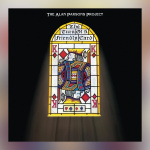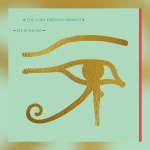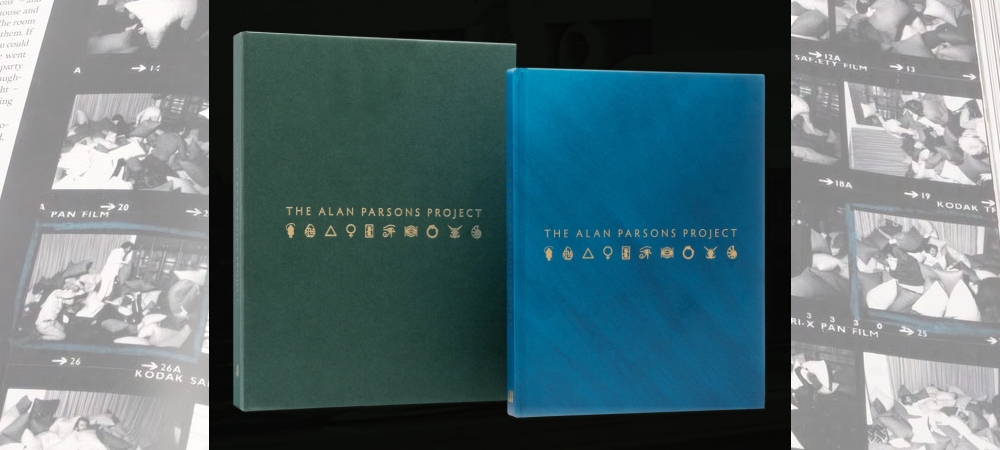
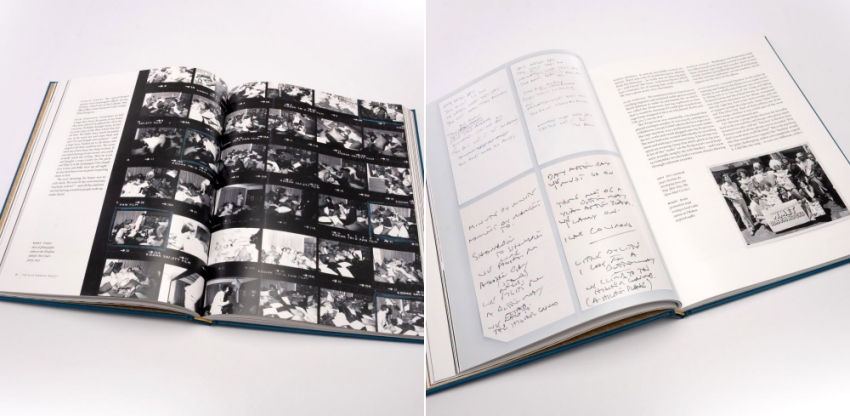
My first experience with the publishing company Rocket 88 came back in 2017 with Rich Wilson’s Time Flies: The Story Of Porcupine Tree. Full of delicious detail, a few pages of high quality photos, and an obvious love for the subject of the book, Time Flies was impressive both in its exposition of the band’s story and in the detail that went into presenting the book itself. Fast forward nearly ten years, and we have a new book, simply titled The Alan Parsons Project. As is Rocket 88’s hallmark, the book itself is sumptuous with its high quality paper, binding and presentation. Rare photos and band-related paraphernalia (such as promo items, hand-written lyrics, posters and album artwork) grace nearly every page. The approach to the artist this time around is not nearly as clinical as in other such books. Instead, author Joel McIver introduces each chapter chronologically, setting the scene for each album, then allowing the performers and Eric Woolfon’s surviving family members tell the tale in their own words.
The book begins with a Preface by Arista Records founder Clive Davis. As he tells it, having heard the Tales Of Mystery and Imagination album, he “was attracted to their music because it seemed to capture something about the mid-seventies that made [him] believe it could reach a large audience”. As usual, Davis’s instincts were spot on. Alan Parsons himself contributes a Foreword to the book in which he extends his appreciation to Davis, Woolfson, the musicians and fans. McIver then introduces the book with a brief history of Parsons as folk-rock guitarist to engineer extraordinaire, as well as Woolfson’s humble beginnings as a songwriter working for Rolling Stones manager Andrew Loog Oldham, then as a manager/performer/producer. The fateful meeting between Parsons and Woolfson came in the cafeteria in Abbey Road studios, where they were both working at the time, but more on that shortly.
As a young man, Woolfson worked in the family furniture business. At that time, he took a class in marketing where he learned that no film based on an Edgar Allen Poe story had ever lost money. That fact remained with him, and he worked with guitarist Rick Westwood of The Tremeloes to create a demo album of Poe-inspired songs. Woolfson was working as a session player at Abbey Road when he ran into Parsons. As he describes the encounter: “We were waiting in line in the canteen for some lunch, I think. He and I were similar heights, which is a good foot taller than most anybody else, and so we saw eye to eye and naturally gravitated to each other.” Parsons booked him for a session, noting that the session player made more than the engineer, and asked Woolfson to manage him. Woolfson put together a report positing the combination of his songwriting skills with Parson’s engineering and production talents and submitted it to 20th Century Records, home of both his client Carl (“Kung Fu Fighting”) Douglas and Ambrosia (whose debut album Parsons produced). The book is rich with such minutiae, and concentrates more on the personal aspect of the artists than on details relating to the creation of the Project albums, though there are enough to satisfy the curious.
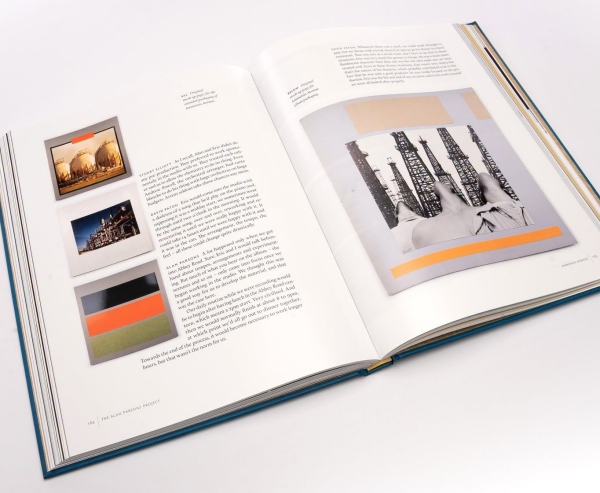
Each chapter of the book covers one of the Project albums, often with commentary from the musicians and vocalists working on each one. Tales abound of Woolfson’s love of good food and fine wine, his generosity to all those around him, and his obsessive work ethic. He would often take the band out for a lavish dinner each night while recording. While composing at home, Woolfson’s darker side would appear, as his wife and daughters recount stories of his demand for quiet while he worked – which seemed to be constantly – and how he was largely a loving, but absentee, father and husband. Much of the book concentrates on Woolfson. Partly because his family are given the chance to opine on most everything, and partly because Parsons appears to keep his commentary at arm’s length. There is an obvious brotherly love between the two, as well as a shared work ethic, but Parsons keeps his commentary largely to the working relationship.
I would have like to hear more from Andrew Powell, whose contributions to the sound of the Project via orchestration are inestimable. Many of the vocalists who became Project regulars were invited because Parsons had worked with them previously. Such is also the case with guitarist Ian Bairnson, bassist David Paton, drummer Stuart Tosh, and keyboardist Billy Lyall, all of the band Pilot, whom Parsons produced. Parsons resisted using Woolfson as a musician or vocalist for some time, which comes across as a bit of a sore spot for Woolfson. That said, Woolfson rarely questioned Parsons’ choices, and their ensuing success appeared to justify those decisions. There are stories about the album covers (Woolfson felt the design for Eve totally missed the point he was making about strong women), living as tax exiles in Monaco, and an album that was never intended to be (The Sicilian Defence).
One of the more interesting stories centres on the Project’s bestselling album, Eye In the Sky. Its opening instrumental, Sirius, found a life of its own as a sports anthem, in addition to extensive use on TV and in film. Apparently, Woolfson was completely unaware until friends pointed out how the Chicago Bulls used the music as an introductory theme and assumed it was making them rich. According to Parsons, the song’s main composer: “Music played in a venue is not subject to any specific payments to the performers or writers – it just gets lumped into the blanket fees that venues pay to collection agencies such as BMI, ASCAP or SESAC.”
Andrew Powell’s album of orchestral versions of APP classics gets a mention, as does the officially solo album by Woolfson, Freudiana. The latter was the breaking point for the two partners. Woolfson wanted sole writing credit, and a third party was brought in to take the music from the studio to the stage. That left a bad taste in Parson’s mouth; so much so, that when Woolfson approached him about doing another Project album, Parson replied: “I don’t think so. I think it’s run its course.”
Unusually, there are a few flaws in the book. There is a quote from Colin Blunstone at the bottom on page 91 that stops midsentence, and when the page is turned what follows is not a continuation of Blunstone’s thoughts, but something (someone?) entirely different picking up midsentence. Elsewhere, what is captioned as the lyrics for Time appears instead to be some sort of promo material. Still, these are minor quibbles about what is sure to be a delight for fans of The Alan Parsons Project. While I had hoped for some scholarly opinions in the music, there is still much to love in this book. Especially endearing are the stories from Project members about the creation of the albums, the happy memories associated with each, and camaraderie and companionship they all shared. The Alan Parsons Project is a feast for the eyes, the brain and the heart.
ADDITIONAL INFO
Publisher: Rocket 88
Length: 240 pages
Author: Joel McIver
Date of Publication: 24th November 2026
LINKS
Rocket 88 – Website (APP Book) | Facebook | YouTube | Instagram
Alan Parsons – Website | Facebook | YouTube (APP) | YouTube | X | Instagram