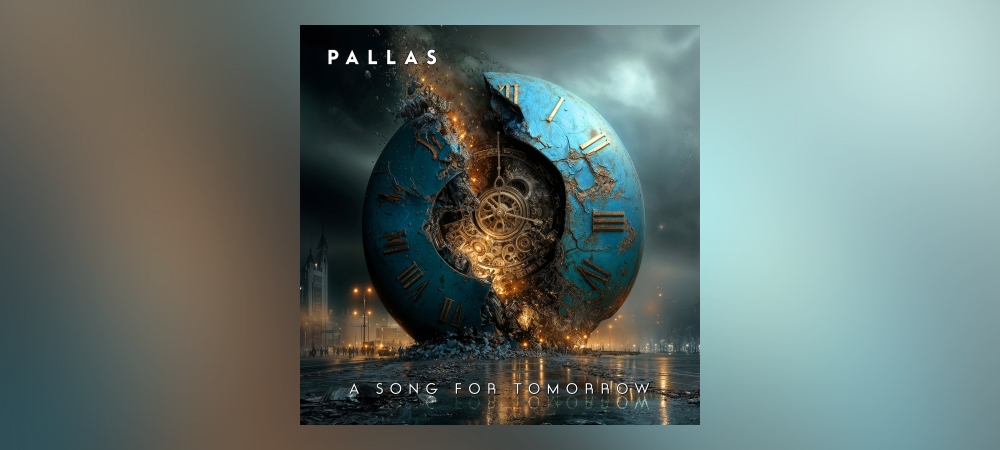
2023’s The Messenger was a welcome surprise from Pallas. An agreement between Alan Reed and the band that he had fronted for so long led to a renaissance for all of them, albeit one which would be a studio project rather than a live concern. The Messenger exceeded my expectations and that of many other members of Pallas’s fanbase. Whilst a few were unhappy with the absence of a drummer, no one was in doubt about the quality of the material on offer. It was, quite simply, one of their finest albums. Fast forward three years and we get to enjoy the follow-up, though framed with the sad news of Reed’s Parkinson’s diagnosis in 2025. My suspicion was that this, and Reed’s forthcoming solo album, were likely to carry a lot of emotional weight. I wasn’t wrong.
My first listen to A Song for Tomorrow was not an enjoyable one. Unlike The Messenger, this album was less immediate. The dystopian themes that are a hallmark of Pallas were there in the lyrics, but something jarred. I went straight back to the start and tried again before realising that what I was finding difficult was something quite simple – lead vocal duties were being shared across the band. Reset burst in with its cinematic, symphonic intro before Graeme Murray started singing. Murray is actually in fine voice here and ably backed, knowing what to expect the second time around, I’m treated to the kind of grand melodic rock which wouldn’t have been out of place on Beat the Drum.
The opener flows naturally into the thundering nihilism of Rage, a mostly instrumental track with the bass end from Murray and Brown leading whilst Mathewson plays an accompanying guitar part over the top. This is very reminiscent of one of the best tracks on The Dreams of Men, Mr Wolfe. The chaos of the music is layered effectively over the accompaniment with an energy that gives me ‘Michael-Douglas-in-Falling-Down’ vibes. I guess that’s probably the intended kind of mental image it should conjure. Then, a moment of peace – until ‘the rage is at the door’ and were back to that bass end piano. Cue the police sirens.
The title track follows. This must be one of the most unusual pieces Pallas have ever written. Beginning with an airport departure call, the haunting voice of Natasha O’Neil, possibly filtered through a vocoder, appears over keyboards. The voice sounds like a lone choir girl, alongside music box and lush strings. I feel as though this is some post-human science fiction nightmare I’ve been transported too which, again, is exactly what the lyrics want me to feel. It’s an extraordinary, and haunting, piece of music which I can’t get out my head.
The Private Collector is much more familiar Pallas territory, though once again with an unconventional approach to the vocals, with the higher and lower voices layered directly over each other. It lends an unusual quality to the track. The first half of the piece is essentially keyboard, drums and voice. Halfway through, the rest of the band kicks in and we’re treated to a more conventional slice of ‘Pallas prog’ before the song relaxes into its denouement. This track is definitely one of the album’s highlights.
DIRT follows. This is the first track which is noticeably led by Reed’s voice. The echoey keyboard intro has that cinematic feel which was resonant on Reset. There are some lovely piano fills on this track. The drama of the music builds up to a powerful chorus which reminds me of Heavy Air from the last album. Mathewson’s guitar work at the end is superb. At this juncture, I feel it is appropriate to say something about the quality of the production on this record; it simply oozes it. From the arrangements and orchestration to the balance of sound and the distinct spaces given to each voicing, Pallas have done a fantastic job here. Songs carry the listener in a way that is never muddied or fatiguing.
Aspirations is a track which takes the pace back down again. Murray sings lead here with acoustic guitar and strings carrying us along. There’s a beautiful, elegant, yet simple acoustic guitar solo about halfway through. Then the sedated people of the track drift with the threatening undercurrent of the chords towards the end. It’s a lead-out that reminds me of ‘70s Jarre or Tangerine Dream.
Rushing Headlong opens with sparkling keyboards ushering in a driven guitar riff. Murray takes lead vocals again here. This is very like the upbeat rock of Beat the Drum wedded to something like Rabin-era Yes. The chorus is really catchy, too. If we were living in an era of an old-fashioned singles chart, this would have been the cut for lead single. I like the urgency of the music in this song, once again perfectly fitting the lyrics. It sets up the album’s closing tracks very well.
Mathewson takes the lead vocal for The Avenue of Broken Dreams, a song which builds very gradually from the voice to the full band at around two and a half minutes. There’s a creepy piano melody, a repeated refrain, which lets the guitar part build by degrees towards the song’s end. It’s a horror story unfolding across the track with that sort of slow build up which formed the basis of a number of Fish’s longer post-Marillion tracks.
We’re back to Reed for his last lead vocal on this album. Mother, a deeply emotional song of tenderness and intimacy, which finds Brown’s piano backing Reed’s voice. The pain of childhood and loss is stripped bare here. When Reed is joined by O’Neil the fragility of the singer becomes more apparent. This is a deeply moving track, with textural strings sitting alongside the piano. It suits Reed’s voice perfectly.
Closer, Inside Outside, is Brown’s lead vocal on this album. The longest song at just over nine minutes, there is a chance for Pallas to flex their muscles here. Piano and acoustic guitar combine for a beautiful verse. A solid and memorable chorus follows. The architecture of the song calls to mind the folk-prog of Renaissance. At around the four-minute mark, the chorus’s vocal theme gets a workout on the electric guitar. There is a bit of everything to this track – the light and the dark, the soft and the heavy. The orchestration is fabulous, too. The track builds to a climax across its remaining runtime. It’s a fitting closer.
It will be a great shame if this is the last we hear from Pallas, but even if that proves to be the case, this and The Messenger are two superb albums to end on. Many fans, and the band included, may well look back and wonder at the various periods of lost time across their career but they can take heart from knowing that it is far better to release a few career-defining records than a string of mediocre efforts every other year or so. With that in mind, Pallas have several truly great albums under their belt. There’s no doubt that this is one of them. A Song for Tomorrow deserves a place in every prog fan’s collection. This is a stunningly good album.
TRACK LISTING
01. Reset (4:15)
02. Rage (5:51)
03. A Song for Tomorrow (6:20)
04. The Private Collector (8:22)
05. DIRT (6:10)
06. Aspirations (6:30)
07. Rushing Headlong (4:32)
08. Avenue of Broken Dreams (7:06)
09. Mother (4:50)
10. Inside Outside (9:10)
Total Time – 62:54
MUSICIANS
Alan Reed – Vocals
Graeme Murray – Bass, Vocals
Ronnie Brown – Keyboards, Vocals, Drums, Percussion
Niall Matthewson – Guitar, Vocals, Keyboards, Drums, Percussion
~ With:
Natasha O’Neil – Vocals (3)
ADDITIONAL INFO
Record Label: Esoteric Recordings | Cherry Red Records
Country of Origin: UK
Date of Release: 30th October 2026
LINKS
Pallas – Website | Facebook | Bandcamp (Cherry Red Records) | YouTube