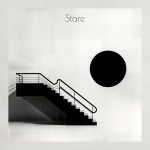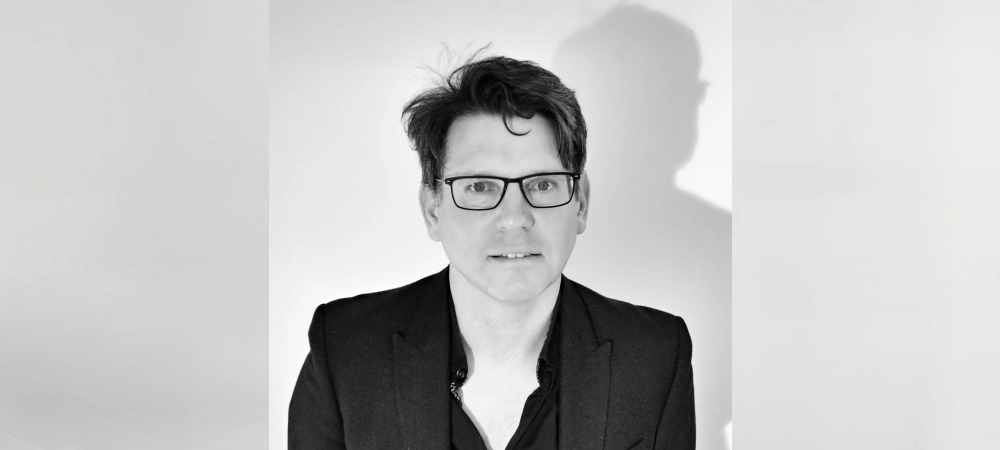
First let me thank you for sharing your time with The Progressive Aspect. We have a few questions for you regarding the new album, Stare.
My pleasure – thanks for taking the time to listen to my music.
The sound of Stare puts the emphasis on the contemporary half of the phrase Contemporary Classical. Who would you say are your influences, past and present, and how do they figure into the music on this album?
The American minimalists of the 1970s were a big influence on me, particularly Steve Reich (although I acknowledge that he doesn’t like the term minimalist). Most of the minimalist/post-minimalist music that I write is tonal, but one of the tracks (‘Ice Fossils‘) uses some minimalist/post-minimalist techniques in an atonal context.
Avant-garde/experimental sounding contemporary classical music has also been an influence. In my youth I went to a lot of contemporary classical concerts at the South Bank Centre. I enjoy the music of uncompromisingly atonal composers such as Sir Harrison Birtwistle, as well as enjoying the music that was a reaction against that kind of academic composition. I also enjoy the post-modernism of a composer like Alfred Schnittke who was able to juxtapose contrasting compositional styles within a piece.
I take the approach that we now have a huge range of compositional options available to use, and we are free to use whichever techniques we want to express what we want to express. I enjoy the creative freedom we now have.
What, if any, musical training do you have, particularly with respect to your classical career and what drew you to composers such as Reich and Schnittke?
A-level music and grade 8 in tuba. The rest is generally self-taught.
In terms of Reich I think it was the sense of a composer who helped to reintroduce the consonance and pulse as legitimate options for a contemporary classical composer. For Schnittke I think it was the willingness to play with the assumptions of existing styles of music and juxtapose them in playful ways.
I am interested in how your pieces develop. Is it a matter of trying out new layers atop an established bedrock, or do you have an idea of where you want the song to go when you begin writing?
It varies. For the classical pieces, sometimes I might start with a title, and that inspires the track. For other pieces I might start with a particular sound/instrumentation in mind, or an overall musical structure.
Sometimes what I’m trying to express is what it feels like to be inside my brain on a good day. Those are often the ‘burbling’, fairly fast minimalist pieces, where relatively simple thematic material is gradually altered, with patterns emerging from the interaction of the instruments. For those pieces, as a listener I find that different patterns emerge depending on which part of the music I’m focusing my attention on.
For one of my longer pieces, I’ll generally have a structure planned fairly early on. For the opening track on this album (‘Under Countless Stars‘) I was aiming for a gradual build-up of bubbling instrumental textures, then an extended ebb-and-flow as different instruments slowly emerge or submerge into the texture. At a fairly early stage I had sketched out where I wanted the musical climaxes to occur, and where to have less intense sections. I gradually add parts track by track, but then at least as importantly later on go through track by track removing elements, whether sections or individual notes, to allow other parts of the music to emerge.
The second track ‘Natrolite‘ is more cinematic and abrasive sounding. In contrast to the first track, which started with the title, I didn’t decide the name for this one until the piece was almost finished. I was looking for a mineral that had a similar spiky quality to the music, and came across natrolite, which has a profusion of needle-shaped crystals.
For ‘Scherzo No.1‘ I started with the intention of writing something short and playful with chamber-music scale instrumentation.
Sometimes a track might start as a particular mental image that inspires the music. ‘Ice Fossils‘ started with an imagined image of an ancient fossil of a huge creature made of ice (which I realise isn’t scientifically plausible), existing for eons in the ground, being dug up, then gradually melting, dripping away to nothing.
‘A Lacquered Ceramic Owl‘ in contrast is more strictly minimalist (in the sense of gradual development of simple thematic material) even though the actual sound is more jazzy than I’d normally use for this kind of music. It started as an experiment in using a funky/jazzy melodic pattern, but to manipulate it using the compositional techniques I’d often use for minimalist music. The piece gradually removes the jazzier notes, until it sounds more like a classical minimalist piece, then reverses the process and ends up back where it started. The title is a reference to Philip K Dick’s ‘The Zap Gun’, but the music doesn’t aim to directly portray anything from the novel. I’m just a PKD fan.
The last main track on the album is ‘Ostinato for Electric Guitar and Laptop‘. My aim with this was to write a minimalist piece that I could potentially perform live on my own with a live guitar and backing track. The guitar part mostly stays within the confines of a simple riff, but the backing changes throughout the piece.
TPA: Would you ever consider composing something along the lines of a Stravinsky or a John Adams?
I admire both. Stravinsky was an incredible genius who had a major role in transforming music. I’ve loved seeing The Rite Of Spring live.
I’m open minded about using whichever techniques or styles (within my capacity), which seem to suit the kind of music I’m trying to express at the time
It feels like you have shied away from too much overt melodic development. The interest feels more along the lines of subtle shifts and the tension between the orchestral parts and the keyboards. Would you say that’s a fair assessment?
I think it’s fair to say that on this album melody isn’t the primary focus. There are melodic fragments, but generally with the minimalist tracks I’m interested in the interaction of simple elements to produce more complex emergent patterns, that hopefully subtly emerge from or submerge within the textures. There is gradual evolution of the material, but not traditional melodic development.
What do you use to create your orchestral sounds?
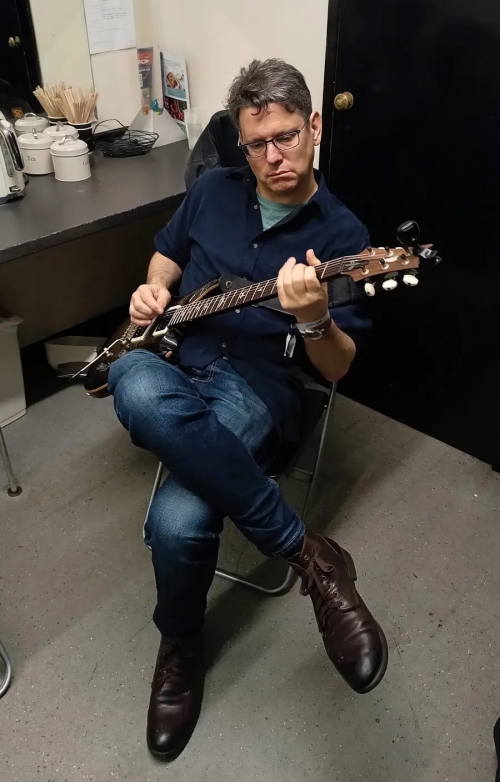
Apart from the lead electric guitar part in ‘Ostinato‘, for which if I remember correctly I used my PRS guitar, the other instruments on the album are all produced within my laptop. I use a variety of virtual orchestral, keyboard, and synth instruments. On this album several of the string and brass virtual instruments are from 8Dio. I write in Sonar/Cakewalk as my DAW.
How do you decide if an idea is more appropriate for the band or for your solo projects?
My solo releases tend to be less melodically driven and don’t have lyrics. My solo tracks are often quite long, letting the textures gradually evolve without having to worry about them ending up being too long to fit on a CD.
Sometimes I’ve started writing something imagining that it will end up being a solo classical piece, but it hasn’t really felt like it needed to be more drawn out, and it has become the basis of, or part of, a HOGIA track. An example of that would be the opening choral section of Just Hold On. I used to think that my classical/minimalist side and my rock side were very different, but over time I think I’ve noticed that they are more closely linked than I’d realised. For example, I tend to use suspended seconds in my harmonies in both sides of my music quite a lot.
The album incorporates elements of classical, jazz, rock and electronica. Do you have a formula, or does the song tell you where it needs to go?
It really depends from track to track. Some pieces have a clearly defined structure and sound and it feels more like writing down what is already in my head. Other times there is an element of exploration and experimentation, and often a combination of the two.
Some of the pieces on Stare, such as Natrolite and Ice Fossils, feel cinematic in scope, as if they are trying to tell a story. Was that your intention?
‘Ice Fossils‘ had a specific image in my mind (and a narrative structure that determined the shape of the piece). For ‘Natrolite‘ the image came after I’d mostly finished writing the piece. In terms of cinematic scope, I generally like pieces, particularly the longer ones, to have a sense of ebb and flow. Even when there isn’t a specific narrative or image, I would like them to feel as if they are following some kind of journey or story, even if it isn’t explicitly stated.
I’m always curious about how you arrive at a title for an instrumental piece. Any stories you can tell about that?
Sometimes I have a title at the beginning, before I start writing any music down, like with ‘Under Countless Stars‘, but often choosing a title is difficult. Sometimes I’ll scan through lists of random words and see if something jumps out at me. I’ve got a list of possible titles to use in the future, and if I come across a phrase that resonates with me, I’ll add it to the list. I’ve sometimes used words or phrases relating to science for my titles (such as ‘Kites and Darts’ which relates to a form of mathematical tiling, ‘Wasp-76b’ – named after a giant exoplanet, or ‘The Haber Process’ – named after the process of combining nitrogen and hydrogen to form ammonia. It is tempting to do something like the composer Nik Bärtsch, who calls many of his pieces ‘Modul’ followed by a number (he is one of post-minimalist composers whose music I most enjoy).
Where do you see this aspect of your career going next?
Being able to create music is very important to me. I would really struggle mentally if I didn’t have the outlet of music to express myself. I’ve got various medical challenges, and have to spend a lot of my time lying down, but fortunately am able to compose with a laptop in bed. I’ve more recently had a diagnosis of a rare neurodegenerative retinal disease, which is pretty frustrating. Last year I got a new laptop with a large 18″ screen to help me keep seeing what I’m doing, which helps. I am noticing it getting more difficult visually when using the laptop which is frustrating, but I’ll keep creating for as long as I can. I may have to adapt how I work in the future if my eyes progress as predicted, but I’ll do my best to cross that bridge as and when I have to. Mark (Gatland, the other half of Hats Off Gentlemen Its Adequate) is very supportive, and has said in terms of live gigs that however bad things get, he’ll make sure I can keep playing.
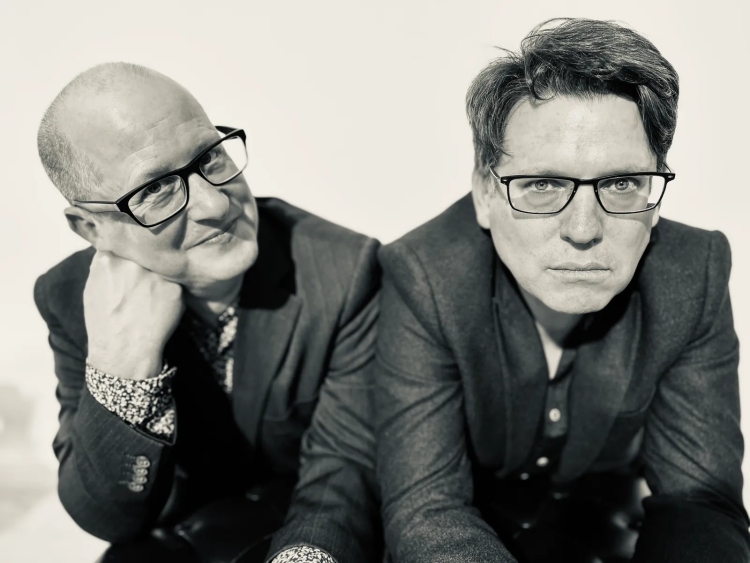
In terms of my next classical album, I’ve got a couple of possible options I’m considering. I would be interested in writing more pieces for a live instrument and backing track, and would like to collaborate with interested instrumentalists on the writing of more of those. I’m also interested in the moons of Jupiter and Saturn, and am considering an album of tracks inspired by some of them.
Do you have anyone in mind that you’d like to work with and why?
I don’t have any specific ideas in mind for that, but would be open to collaborating with other instrumentalists, and learning from them.
I greatly appreciate your time and the opportunity to have an early listen to the album. I’ve rather enjoyed living with it the last few months.
My pleasure – many thanks for the support.
[You can read TPA’s review of Malcolm Galloway’s Stare album HERE]
LINKS
Malcolm Galloway – Website (HOGIA) | Facebook | Facebook (HOGIA) | Bandcamp | YouTube