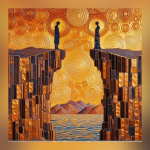
Throughout our lifespan we are constantly transforming. Some of these changes are voluntary while others are forced upon us by circumstance, but after they have occurred we are not quite the same person as before. And as we approach the end of our life and take stock, are we beset with guilt and regret or are we learning to find acceptance and a deeper sense of understanding? These are some of the themes John Holden is contemplating in his latest studio album, Thresholds. Each track is inspired by a transformative turning point, a threshold we must cross, sometimes explored from a personal perspective and sometimes focusing on the experiences of others.
As we have come to expect from John’s albums, the musical language is vivid and evocative, rich in melody and sparkling with vibrant symphonic colours. The complexity of progressive rock is tempered by a desire for accessibility and a flair for emotive, cinematic soundscapes that effortlessly draw the listener into the narrative. For the first time, there are no guest instrumentalists. John is fully responsible for all the instrumentals on the album – and very fine they are too, with dynamic keyboards, expressive guitar breaks and agile bass lines. Where programmed sounds are used, John has taken painstaking care to ensure they feel as authentic as possible. On vocals we have the legendary Peter Jones, familiar from Tiger Moth Tales and Red Bazar among other manifestations, together with That Joe Payne (The Enid) and the female vocals of Sertari (Karnataka) and Sally Minnear (Iona, Celestial Fire).
The initial inspiration for this, John’s seventh studio album, was the famous “Seven Ages of Man” speech from Shakespeare’s As You Like It. We open with his own take on Seven Ages, examining life’s journey from a more personal viewpoint, acknowledging the highs and lows and accepting that as we move through each different version of ourselves, each era brings its own gift. The track’s structure reflects this perfectly, with the gently rippling piano theme from the opening reappearing in different guises throughout the track in response to the different stages of the journey. John’s melodic gift is beautifully showcased here, from the sweepingly cinematic instrumental themes to the boldly optimistic lines of Peter Jones’ vocals. Pete’s sensitive delivery brings out every nuance of John’s thoughtful lyrics. After treating us to a gloriously expressive guitar solo and a rhapsodic final chorus, the track closes reflectively with Pete’s stirring spoken rendition of the opening and closing lines of Shakespeare’s monologue.
Shape Remains continues the theme of personal change, celebrating how our core personality remains intact despite life’s challenges. The soulful vocals of Sertari bring a passionate warmth to the music. The beautiful opening features atmospherically layered wordless vocals, reminiscent of Gaelic “mouth music”. The energetically leaping vocal lines of the catchy chorus and a lyrical violin solo reinforce the folky feel, but there are other influences apparent here, with rocky elements in John’s guitar work and jazzy syncopation in the drums and bass, powering the build from the dreamy and reflective opening to a confidently defiant final chorus.
Mohawk River is the longest and most ambitious track on the album. Its three parts tell the story of the Native Americans from the Haudenosaunee community who left their homelands in the 1920’s to help build the steel structures of the New York skyline. Spirits of the Plain is a reflective instrumental invoking memories of life in the homelands. Serene but infused with nostalgia, this atmospheric soundscape features flowing keys, gently chiming guitars and an evocative harmonica solo. Between Two Worlds is an emotionally-charged portrait of the first generation of workers launching out on their new life. In a tour-de-force vocal performance That Joe Payne eloquently expresses their sense of loss and displacement, and the struggle to reconcile the old ways and values with the new. The instrumental sonorities and relentless pace match the unfamiliar manmade environment, with hectic synths, restlessly offbeat drums and brash cymbals. Joe’s vocal lines are athletic and wide-ranging, scaling dizzy heights like the steelworkers walking the narrow beams high above the city. The final section, High Wires, features tribal drumming patterns punctuated by hard, brassy stabs, perhaps depicting the men on the wires who are balanced, both literally and metaphorically, between two very different worlds. The anthemic chorus has an appropriately heroic feel, but the introspective coda recalls the regretful nostalgia of the middle section:
This son has lost his way
And the hopes of yesterday
In Zero Minus we enter the glamorous and thrilling world of espionage movies. The visual element is very important in John’s work. His music uses vibrant splashes of instrumental colour to paint vivid pictures in sound, and this is complemented by his stunning music videos and the artwork he has created for each track. His “sleeve notes” are full of insights into his inspiration and intentions, informing and enhancing the listening experience. Accompanying this particular track, as well as a poster-style image of a suitably rugged secret agent in a snowbound landscape, John has created a mock-up script for the first scene of the movie, complete with stage directions, and it is the sound effects described in this screenplay that open the actual track. Here we have all the ingredients of a classic James Bond score, including a subtle reference to the iconic four-chord sequence, tense tremolando strings, ominously pounding drums and a swaggeringly seductive guitar solo, plus Sertari’s sensuous vocals which are perfect for the obligatory song theme. In this highly atmospheric and technically polished track John has totally nailed the musical style while adding his own personal touch. If the next Bond movie doesn’t feature music by John Holden there is no justice in the universe!
Surrender addresses those all-too-familiar moments when every news story seems to be about conflict, leaving us overwhelmed by hopelessness. John has created a vibrant and eclectic sound palette to bring this track to life. Arabic scales and exotic instrumental sonorities evoke a Middle Eastern flavour, perhaps referencing the constant tension in that part of the world. Short and pithy motifs flash in and out of the texture like the constant barrage of images on our phone and television screens. The insistent patter of tabla-like drums raises the tension, driving the music forwards with restless energy. The vocal work is shared between Pete Jones and Sally Minnear, bringing further opportunities for variety and some beautifully layered vocal harmony. Despite the subject matter the music feels upbeat, with sprightly melodies and snappy rhythms.
In contrast, A Silent Spark offers space for quiet reflection. Inspired by John’s visit to Anne Frank’s house in Amsterdam, the song bears testimony to Anne’s courage and gentleness, blazing like a solitary candle in a world of darkness and cruelty. Sertari’s warm and tender vocals take centre stage, the introspective verses supported by a gentle background of acoustic guitar and soft focus keys, while the emotive chorus melody, with its dramatically wide leaps, leans in the direction of musical theatre. The track opens with a heart-warming motif introduced on keys; with its wistfully yearning quality it seems to me to represent the voice of hope, the Silent Spark of the title. This motif recurs throughout the track, expanding into an exquisitely tender passage for acoustic guitar over a lush background of symphonic synths. After a final heartfelt reprise of the chorus, a passionate electric guitar break embellishes the “Hope” theme before the track ends quietly and movingly with Sertari’s vocals supported by simple piano chords.
If I Knew adopts the perspective of someone approaching the final threshold of their life journey, looking back over their choices and realising that the things that seemed to matter most at the time were often the ones that held them back. But there is no regretful nostalgia here; from the off, this final track is bustling and up-tempo, with bold splashes of layered keyboards and jazzy syncopations from drums and bass. Pete’s vocal lines are punchy and energetic, and the prominent use of synthesised brass brings a note of defiant positivity. The bridge and final chorus are more reflective and expansive, leading to a gloriously cinematic and spine-tingling reprise of the main themes from the opening track. The instrumental colours John creates for this epilogue deliver all the excitement of a live symphony orchestra to end the album on a note of vibrant optimism.
Each of John’s albums has its own character. The musical style here feels more contemporary, with slightly less reference to prog tropes, and the prevailing mood is one of optimism. Its vision acknowledges the challenges and adversities of life, but redefines them as opportunities for growth and the acquisition of wisdom. John’s decision to perform or create all the instrumental sounds without the aid of special guests feels, quite appropriately, like the crossing of a new threshold and gives the album a strong sense of unity and coherence. The sound production is as superb as ever, emphasising clarity and balance and allowing every detail to shine through. This is an album for our times and for every time, delivering a moving, uplifting and highly enjoyable listening experience that perfectly expresses the optimism and wisdom of the lyrics.
TRACK LISTING
01. Seven Ages (8:25)
02. Shape Remains (5:44)
03. Mohawk River (13:08)
04. Zero Minus (5:22)
05. Surrender (6:43)
06. A Silent Spark (5:08)
07. If I Knew (10:43)
Total Time – 55:13
MUSICIANS
John Holden – Keyboards, Guitars, Bass
~ With:
Peter Jones – Vocals (1,5 & 7)
Sertari – Vocals (2,4 & 6)
Joe Payne – Vocals (3)
Sally Minnear – Vocals (5)
ADDITIONAL INFO
Record Label: Independent
Country of Origin: UK
Date of Release: 2nd October 2026
LINKS
John Holden – Website | Facebook | Bandcamp | YouTube | X