Find a different way
Let go of what has gone
And cannot be returned”
These lyrics from Woodcut, Big Big Train’s sixteenth studio album, seem singularly appropriate. As the founder, bassist and last standing original member of the band, Gregory Spawton has kept the Train on track despite many changes in line-up, the most tragic being the untimely death of much-loved front man David Longdon in 2021. When Alberto Bravin stepped in as lead vocalist his role was not to fill David’s shoes but to help move the band’s sound forward in a new direction, while still embracing the legacy of its history. 2024’s The Likes Of Us was a magnificent transitional album, firmly rooted in the band’s signature sound though offering tantalising glimpses of things to come, but in Woodcut we see a band ready to take risks, strike out and “find a different way”.
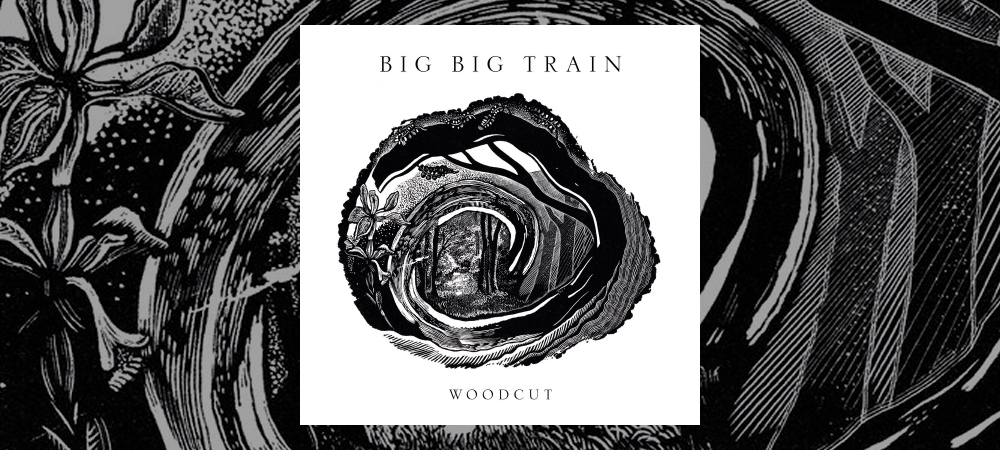
The inspiration for Woodcut sprang from an early morning visit to a museum in Oslo where the band were touring. Gregory and Alberto chanced upon a temporary exhibition of Edvard Munch’s woodcuts, and were instantly fascinated. To make a woodcut print, the artist fashions a negative image by cutting into the wood, creating a raised surface that is then covered in ink and transferred to paper. Since the print is monochrome, much of the image’s depth and impact comes from the contrast between negative and positive images. Both musicians intuited parallels between this process and the lows and highs of all artistic creativity, and the concept behind the album gradually took shape. The metaphors of digging deep to create something new and the symbolism of positive and negative images are deeply embedded throughout the album both lyrically and musically, generating a tightly integrated structure which is, in every sense of the term, a concept album. There is an underlying symmetry within the structure, with pairs of tracks from the first and second halves of the album sharing thematic material and acting as positive and negative versions of each other. The album’s organic nature is strengthened by the way in which tracks are designed to flow naturally into each other, forming what Gregory describes as “a single epic song from which other shorter songs can be pulled”.
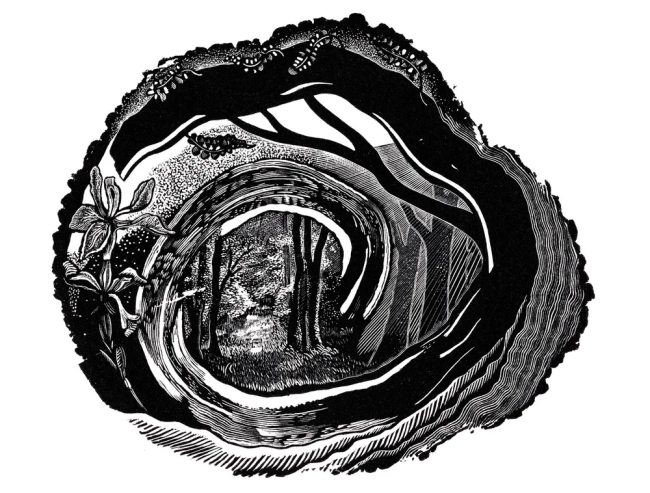
The album’s artwork also sees the band finding “a different way”. In response to the subject matter, rather than continuing to use Sarah Ewing’s artwork, the design for Woodcut is – of course – a black and white print made from a woodcut specially commissioned from artist Robin Mackenzie.
BBT have always been open to collaborative working, and this album unashamedly exploits the remarkable blend of talents exhibited by the current line-up. Each band member has a significant lead vocals moment, while the lyrics result from a partnership between Gregory and violinist Clare Lindley. Gregory and Alberto are the main song writers but the music incorporates ideas from all the band, including tracks by Clare, drummer and percussionist Nick D’Virgilio (NDV), and guitar maestro Rikard Sjöblom. For the first time, it is Alberto who has shouldered the monumental burden of production, expertly combining the various threads to create an album that is richly varied yet feels satisfyingly organic.
The album falls into three parts, with the first five tracks introducing all the key musical themes that will recur throughout the album. Like the leitmotifs common in 19th century classical music, these instantly recognisable melodies function like musical glue, establishing unity throughout the album – a technique that the band experimented with in The Likes Of Us. More subtly, each motif is used to represent a central lyrical concept, which is subconsciously recalled when the motif recurs – a device which becomes more powerful with repeated listening.
The first of these themes, a folksong-like melody in a minor key, emerges in the sombre and introspective Inkwell Black, the first of three short but intense instrumentals which punctuate the album and reflect Gregory’s love of classical music. This theme seems to symbolise the Artist’s blade or the act of carving. The narrative launches with The Artist, a track from Rikard which introduces the protagonist through whose eyes we experience the ensuing events. Lyrics and music present a vivid depiction of that niggling sense of self-doubt suffered by so many creators:
But second-guessing everything
To carve a thousand birds
And never hear them sing”
The track prepares us for the rich range of styles on offer within the album, opening reflectively with 12-string acoustic guitar and flute but interrupted by urgently percussive rhythms. A chaotic instrumental episode suggests the Artist’s inner turmoil, before a broad theme on Paul Mitchell’s trumpet restores an element of serenity. The chorus melody, rising and falling like the gentle contours of the English countryside, is another recurring theme representing the urge to follow one’s dreams. The Lie of the Land finds our Artist leaving his studio, hoping to find release and inspiration in nature. The music gradually builds in intensity from the dreamily alternating piano chords of the opening, and the “Dreams” motif rings out in vibrant harmony vocals as the Artist feels supernaturally guided to the piece of heartwood that will inspire his next woodcut.
Lyrics and music for The Sharpest Blade are provided by Clare, and her vocals and violin dominate this folk-inspired track, underpinned by the hypnotic beat of NDV’s kick drum. The music is based on the “Blade” motif introduced in Inkwell Black, and here the driving rhythms give it a fierce energy that matches the Artist’s sense of purpose. There is a dark edge to Clare’s vocals, mirroring the lyrical hints at supernatural forces, and the pain that results from deep cuts.
The final thread in the thematic tapestry is an angular, seven note melody with a syncopated rhythm which is later used to set the words “I only dream in black and white”. It monopolizes the tense and frenetically charged Albion Press, progressively bulldozing its way into every instrumental part in turn against a background of increasingly discordant accompanying voices. This is a new, harder-edged BBT sound incorporating elements from rock and jazz that was occasionally hinted at in The Likes of Us and will reach its apotheosis in the instrumental Cut and Run. The track – and the first part of the album – ends with a brief reappearance of the “Dreams theme”, as the Artist muses:
A world that feels so perfect
How could it ever be a dream?”
The four tracks comprising the central part of the album take a deep delve into the Artist’s fragile mental state as he becomes disturbingly obsessed with the world of his woodcut. The ambiguous lyrics allow each listener to decide whether he is actually dreaming, experiencing a supernatural vision or suffering from a mental breakdown. Arcadia’s richly coloured vision of pastoral perfection is conveyed by a luminous soundscape of flute, strings, 12-string guitar, bell-like keys and Alberto’s emotionally charged vocals. After reaching a rhapsodic climax the vision gradually fades, and bleak piano chords and mournful cello evoke a sense of disillusion.
The second of the instrumental interludes, aptly titled Second Press, is a desolate meditation on the “Blade” theme, offering a moment of contemplation before the frenetic and jazz-infused energy of NDV’s signature track, Warp and Weft erupts upon the scene. Obsessive rhythms, twisty time signatures and strident instrumental sonorities powerfully evoke the destructive compulsion driving the Artist to carve ever deeper into the heartwood which is now a metaphor for his own psyche. The saturated instrumental texture becomes suddenly stark, with four unaccompanied voices entering in turn each with a different melody, creating a vivid musical depiction of the clamouring inner voices impelling the Artist to the edge of insanity. Breathtaking synth and guitar solos drive the track relentlessly towards its conclusion.
With its warm, acoustic soundscapes, folky vibes and strong kick drum beat Chimaera forms a positive counterpart to The Sharpest Blade, its minor key twin. The Artist takes a step back to reflect, pondering on the nature of reality. Although the music is positive and affirming, with sumptuous textures and bright, major key harmonies, the track ends with the uncertainty unresolved; a chimaera, after all, is “a thing that is hoped for, but is illusory or impossible to achieve”.
The Artist’s grip on reality becomes still more fragmented in the masterly Dead Point. Both the opening vocals and the mysterious accompaniment on reverberated acoustic guitar constantly loop back on themselves, perfectly evoking what Clare Lindley describes as “that liminal space when the artist’s life feels in the balance”. Alberto’s vocals assume a darkly dramatic tone as he confronts a shadowy figure who reaches out to him. The use of two superimposed voices (inspiredly casting Rikard as the alter ego) dramatically conveys the juxtaposition of the two worlds of dream and reality, negative and positive, and the Artist’s struggle to choose between them. As he elects to abandon reason and embrace the danger, we plunge into a sinister, chaotic world of dark tone colours and crunching metallic riffs, finally breaking through to a brief but triumphant return of the track’s opening melody, now in a major key but fading wistfully into the looping acoustic guitar pattern from the opening.
The album’s concluding section begins with Light Without Heat. Several musical ideas from The Lie of the Land are reprised, but here hope is replaced by bitter disillusionment as the Artist realises that the world of his vision “seems to be a lie”. His sense of loss is eloquently captured by Alberto’s tenderly regretful vocals, a dreamily nostalgic synth solo from Oskar Holldorff and a superb guitar break from Rikard, oozing with both longing and resignation. Dreams in Black And White brilliantly repurposes Dead Point’s vocal quartet device to depict the conflicting voices in the Artist’s mind as he struggles to regain his grip on reality and find “a way back to the past that leads me home”. All the album’s recurring themes are recalled like the flashbacks of a dying man, as the Artist remains trapped between the positive and negative images of his creation. The blistering instrumental Cut And Run, based on the “Black and White” theme from Albion Press, vividly showcases the exceptional musicianship of this band. Jarring dissonances, distorted electronic soundscapes and frenetically spiralling synths plunge us deep into the heart of darkness in a white-knuckle ride combining elements of rock, jazz and classic prog.
Hawthorn White, the final instrumental interlude, is a contrapuntal dialogue between piano, cello and violin based on the Dreams theme, providing a moment of respite and preparing us for the glories of the next track. The transcendently beautiful Counting Stars rewards the listener with more 12-string guitar, booming bass pedals, ecstatically soaring and deeply emotional vocals from Alberto, yearningly nostalgic melodies that are pure BBT and an unexpected treasure – Gregory’s vocals delivering the album’s central message:
Let in the light
And then outrun your fear
Put it out of sight
You can choose any path
But aim for the heights”
A heartrendingly passionate guitar solo – possibly the finest of so many on this album from Rikard – wraps up the track, leading straight into the finale, Last Stand. Here all the album’s key motifs are triumphantly reprised, along with material from Light Without Heat and finally, closing the cycle, The Artist. But although musically we end where we began, we have learned wisdom along the way and the final message is one of hope:
Find it
Keep moving on”
.
Woodcut may not be the album that fans were expecting, but in its attention to detail, thoughtful lyrics, emotional depth and spectacular musicianship it is very much a BBT album, and quite possibly one of their finest yet. The decision to keep individual songs short gives each track a concision and intensity which has not always characterised the band’s writing. Like a woodcut image, many layers of meaning are conveyed in a small space, using skill, imagination and an all-enveloping vision. And with each new listen there is more to discover – this is an album you could never tire of. Woodcut is truly a team effort, with each musician adding their stamp to the overall effect, but thanks to the synergy between members, and to Alberto’s flair for production, the result is so much more than the sum of its parts. Where next for the Big Big Train? Whatever path they choose, this band will always aim for – and reach – the heights.
Shortly before the release of Woodcut Alex Driessen spoke with Clare Lindley – you can read his interview HERE.
TRACK LISTING
01. Inkwell Black (0:56)
02. The Artist (7:16)
03. The Lie of the Land (2:55)
04. The Sharpest Blade (4:16)
05. Albion Press (5:46)
06. Arcadia (5:46)
07. Second Press (0:37)
08. Warp and Weft (3:45)
09. Chimaera (5:37)
10. Dead Point (5:28)
11. Light Without Heat (3:22)
12. Dreams in Black and White (2:34)
13. Cut and Run (6:19)
14. Hawthorn White (1:54)
15. Counting Stars (5:40)
16. Last Stand (3:34)
Total Time – 65:45
MUSICIANS
Alberto Bravin – Lead Vocals, Guitar, Keyboard
Nick D’Virgilio – Drums, Percussion, 12-string Acoustic Guitar
Oskar Holdorff – Keyboards, Vocals
Clare Lindley – Violin, Acoustic Guitar, Vocals
Paul Mitchell – Trumpet, Piccolo Trumpet, Vocals
Rikard Sjöblom – Guitars, Keyboards, Vocals
Gregory Spawton – Bass, Bass Pedals, 12-string Acoustic Guitar, Mellotron, Vocals
ADDITIONAL INFO
Record Label: InsideOut Music
Country of Origin: UK
Date of Release: 6th February 2026
LINKS
Big Big Train – Website | Facebook | Facebook (Group) | Bandcamp (InsideOut Music) | YouTube | X | Instagram